


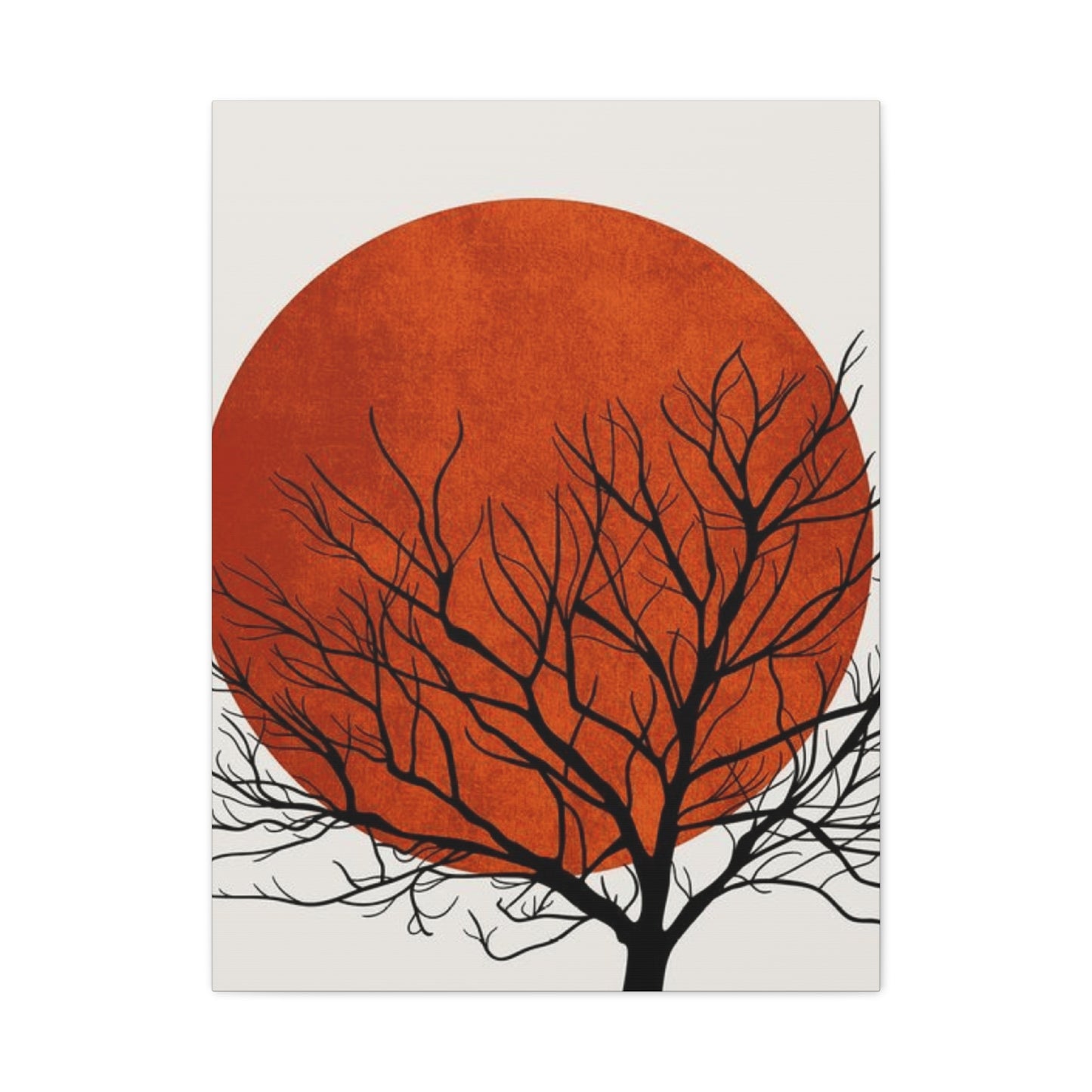

Orange Sunset Wall art Silhouettes: Artistic Expression Through Bare Trees and Radiant Skies
The marriage of natural elements in visual art has captivated humanity for centuries, and few combinations evoke as much emotional resonance as the stark silhouette of bare branches against a luminous sunset backdrop. This comprehensive exploration delves into the multifaceted world of wall art featuring dry tree silhouettes framed by warm, glowing orbs of orange and amber light. These pieces have transcended mere decoration to become powerful statements of aesthetic philosophy, blending minimalist sensibilities with the raw beauty of nature's cycles.
Vibrant Hues: Orange Sun Meets Bare Trees
The intersection of vibrant orange solar imagery with the skeletal forms of leafless trees creates a visual dialogue that speaks to contrasts in nature and life itself. This artistic pairing draws upon the psychological impact of warm color palettes while simultaneously acknowledging the dormant beauty found in winter landscapes and twilight moments. The orange sun, whether rendered as a perfect circle or a diffused glow, becomes the focal point that draws the eye before leading it through the intricate network of branches that frame the composition.
Artists working in this genre understand that the success of such pieces lies in the balance between positive and negative space. The bare tree serves not merely as a subject but as an architectural element that divides the canvas into meaningful sections. Each branch becomes a line that guides visual flow, creating pathways for the viewer's gaze to travel throughout the composition. The warm orange tones of the setting or rising sun provide emotional warmth that counterbalances the apparent coldness of lifeless branches, creating a harmonious tension that makes these pieces endlessly contemplative.
The cultural significance of sunset imagery combined with bare trees taps into universal human experiences. Across different societies and time periods, the setting sun has represented transitions, endings, and the promise of renewal. When paired with deciduous trees in their winter state, the imagery becomes a meditation on cycles, patience, and the beauty found in periods of rest and dormancy. Collectors and homeowners gravitate toward these pieces because they offer both aesthetic appeal and deeper symbolic meaning that resonates with personal experiences of change and perseverance.
Contemporary interpretations of this classic pairing have expanded beyond traditional realistic representations. Some artists employ geometric abstraction, reducing the tree forms to simplified angular shapes while maintaining the essential silhouette quality. Others embrace painterly techniques that blur the boundaries between tree and sky, creating atmospheric pieces where the orange sun bleeds into surrounding space, and branch forms dissolve into suggestion rather than precise delineation. This diversity of approach means that this artistic theme can accommodate various interior design styles, from ultra-modern minimalist spaces to more traditional rustic environments.
The technical execution of these pieces requires careful consideration of value relationships. The silhouette effect depends on maintaining strong contrast between the dark tree forms and the lighter sky. Artists must decide whether to render trees as pure black shapes or to incorporate subtle gradations that suggest dimensionality without breaking the silhouette effect. Similarly, the treatment of the orange sun requires decisions about whether to portray it with hard edges or soft transitions, whether to include atmospheric effects like hazing or cloud interference, and how much of the composition it should dominate.
When selecting or creating artwork in this category, consideration must be given to the emotional temperature of the space it will inhabit. The warm orange tones naturally create feelings of comfort and coziness, making these pieces particularly suitable for spaces intended for relaxation and contemplation. Living rooms, reading nooks, and bedrooms benefit from the calming yet engaging presence of sunset tree silhouettes. The artwork provides visual interest without overwhelming, offering a focal point that invites periodic attention without demanding constant engagement.
Minimalist Nature: Dry Tree Silhouettes on Canvas
Minimalism in art strips away excess to reveal essential truths, and when applied to natural subjects like bare trees against simplified backgrounds, the results can be profoundly moving. The minimalist approach to dry tree silhouettes emphasizes clean lines, limited color palettes, and the power of empty space. These compositions reject unnecessary detail in favor of distilled forms that capture the essence of their subjects rather than photographic accuracy.
The philosophy behind minimalist nature art aligns perfectly with the inherent structure of bare deciduous trees. Without foliage to obscure their architecture, these trees reveal the mathematical beauty of their branching patterns. Each division follows organic principles that mirror fractal geometry, creating naturally pleasing compositions that satisfy our inherent attraction to pattern and order. Artists working in this style often enhance these natural patterns through selective editing, choosing which branches to include or emphasize to create the most harmonious overall composition.
Canvas as a medium brings particular qualities to minimalist tree silhouettes. The texture of canvas, whether left visible or smoothed through layers of gesso and paint, adds a tactile dimension that connects the viewer to the handmade nature of the artwork. The edges of gallery-wrapped canvas eliminate the need for framing, creating clean presentations that align with minimalist aesthetic principles. The three-dimensional aspect of stretched canvas, even when shallow, adds subtle shadow play that changes with varying light conditions throughout the day, making the artwork a dynamic presence in the space.
Color restriction is a defining feature of minimalist dry tree silhouettes. Many pieces limit themselves to two or three hues, relying on the relationship between these limited colors to create impact. A common approach uses variations of a single warm tone for the background, whether orange, amber, or coral, contrasted against the deep charcoal or pure black of the tree silhouette. This restriction forces viewers to appreciate subtleties in tone and texture that might be overlooked in more complex compositions. The eye becomes attuned to slight variations in the orange sky gradient or the precise edge quality where branch meets background.
Scale considerations play a crucial role in how minimalist tree silhouettes function within interior spaces. Large-scale pieces command attention and can anchor entire rooms, their simplified forms readable even from a distance while revealing increasing complexity upon closer inspection. Smaller works function more intimately, inviting viewers to approach and engage with the details of branch structure and paint application. Series of related pieces in various sizes can be arranged to create installation-style presentations that maintain minimalist principles while filling larger wall areas.
The emotional resonance of minimalist dry tree art stems from its ability to evoke without overwhelming. Unlike busy, detail-rich compositions that demand active viewing, minimalist pieces offer calm presence. They provide visual anchors in spaces without contributing to sensory overload, making them particularly valuable in contemporary environments where multiple stimuli compete for attention. The simplicity allows the artwork to coexist peacefully with other design elements while still maintaining its ability to draw contemplative attention when desired.
Production techniques for minimalist canvas art range from traditional painting methods to digital creation and printing on canvas. Hand-painted pieces carry unique qualities like visible brushstrokes and slight variations that signal human creation. Digital approaches allow for precise control over composition and color, with the ability to iterate designs until achieving perfect balance. Hybrid methods combine both, perhaps using digital planning followed by hand-painting execution. Each approach offers distinct advantages, and the choice often reflects both practical considerations and philosophical positions about art-making in contemporary culture.
Warm Tones: Orange Sun Wall Décor Inspiration
The psychology of color profoundly influences how we experience interior spaces, and warm tones, particularly oranges and related hues, create specific atmospheric effects that make them valuable tools in home decoration. Orange exists in the spectrum between the energy of red and the cheerfulness of yellow, combining elements of both while maintaining its own distinct character. When featured as a dominant element in wall décor, especially in the form of a glowing sun behind bare tree silhouettes, it introduces warmth, optimism, and gentle stimulation to the environment.
Historical use of orange in decorative arts reveals its enduring appeal across cultures and periods. From the ochre pigments used in prehistoric cave paintings to the vermilion and cadmium oranges of Renaissance masters, this color family has consistently served to convey vitality and importance. In traditional interior design, orange appeared in textiles, ceramics, and painted elements, often in spaces designated for social gathering or creative activity. Contemporary use of orange in wall art continues this tradition while adapting to modern aesthetic sensibilities that favor cleaner presentations and more sophisticated color relationships.
The range of orange tones available for sunset-themed wall décor provides abundant creative possibilities. Peach and coral oranges lean toward pink undertones, creating softer, more romantic effects suitable for bedrooms and intimate spaces. True oranges deliver bold, energetic presence ideal for social areas and creative studios. Burnt orange and rust tones incorporate brown undertones that add earthiness and pair well with natural wood finishes and organic textures. Artists and decorators can select specific orange variants based on the desired emotional effect and the existing color scheme of the space.
Complementary color relationships enhance the impact of orange sun imagery. The complementary opposite of orange is blue, creating natural harmony when cool blue-gray tones appear in tree silhouettes or surrounding sky areas. Analogous color schemes using adjacent hues like yellow-orange and red-orange create cohesive warmth, particularly effective in spaces seeking unified cozy atmospheres. Monochromatic approaches using various tints and shades of orange from pale peach to deep burnt sienna demonstrate how much variety exists within a single color family.
Lighting considerations affect how orange sun wall décor appears throughout the day and under various illumination conditions. Natural daylight reveals the truest color relationships, with morning and evening light adding its own warm tones that can intensify or harmonize with the orange in the artwork. Artificial lighting choices significantly impact perception: warm incandescent or LED bulbs enhance orange tones, making them glow more vibrantly, while cool fluorescent light can deaden the warmth. Strategic accent lighting directed at the artwork can emphasize the sunset effect, especially in evening hours when the piece might otherwise fade into shadow.
Textural elements in orange sun wall décor add dimension beyond pure color. Impasto painting techniques create physical texture through thick paint application, catching light and casting tiny shadows that animate the surface. Matte finishes absorb light for contemplative, non-reflective presence, while glossy or semi-gloss surfaces reflect light, adding luminosity that enhances the glow effect of the sun element. Mixed media approaches might incorporate materials like metallic leaf in orange or copper tones, creating literal reflective elements that shift appearance with viewer position and light source changes.
The placement of orange sun wall décor within a room requires consideration of sight lines, focal point creation, and relationship to other design elements. Positioning the piece opposite windows allows natural light to illuminate it throughout the day, while placement adjacent to seating areas brings it into frequent view during use of the space. In open-plan living areas, such artwork can help define zones while maintaining visual connection through color and theme. The warm tones naturally draw attention, making these pieces effective tools for directing traffic flow and creating visual hierarchy within complex spaces.
Modern Rustic: Dry Tree and Sun Art for Living Rooms
The modern rustic aesthetic represents a design philosophy that honors natural materials and organic forms while embracing contemporary simplicity and function. This approach rejects both the coldness sometimes associated with stark modernism and the clutter that can accompany traditional rustic styles. Dry tree and sun art serves as an ideal visual component in modern rustic living rooms, bridging the gap between raw natural beauty and refined artistic presentation.
Living rooms designed in the modern rustic style typically feature exposed wood elements, whether in flooring, beam work, or furniture pieces. The wood shows its character through visible grain, knots, and color variation rather than being painted or heavily finished. Against this backdrop, wall art featuring bare tree silhouettes creates visual resonance, echoing the wooden elements while adding vertical interest and focal points. The organic branching patterns of the trees mirror the natural irregularities in the wood, creating a cohesive aesthetic language throughout the space.
Color coordination in modern rustic spaces influences art selection and placement. Neutral bases of cream, gray, and taupe allow natural wood tones to stand out while providing calm backgrounds that prevent visual chaos. Into this neutral framework, the warm orange of sunset artwork introduces carefully controlled color that adds energy without overwhelming. The orange tones often complement the warm undertones in natural wood, creating harmony between art and architectural elements. Some designers choose to echo the orange in small doses throughout the space through accessories like throw pillows or ceramics, creating a cohesive color story.
Furniture arrangement in modern rustic living rooms affects how tree and sun art functions within the space. Low-profile sofas and chairs with clean lines don't compete visually with statement wall art, allowing the pieces to command attention. Positioning art above key furniture pieces like sofas creates natural focal points where the eye lands upon entering the room. The scale of the artwork should relate proportionally to the furniture below it, generally spanning half to three-quarters of the furniture width to create visual balance without dominating.
Layering is a key principle in modern rustic design, and wall art participates in this layering strategy. Rather than placing art in isolation on blank walls, the modern rustic approach might combine the tree and sun canvas with other elements like floating shelves displaying natural objects, or hanging the piece above a console table styled with organic accessories. This creates depth and interest while maintaining the clean lines that distinguish the modern rustic aesthetic from more cluttered traditional rustic styles.
Lighting design in modern rustic living rooms enhances the impact of dry tree and sun art. Recessed ceiling fixtures provide general illumination without visual intrusion, while carefully placed accent lights can highlight the artwork. Picture lights or adjustable track lighting allow homeowners to emphasize their art collection during evening hours. In keeping with the natural aesthetic, fixtures in materials like oil-rubbed bronze, weathered iron, or natural brass complement both the rustic elements and the organic subject matter of the art.
The social function of living rooms influences art selection in meaningful ways. These spaces host conversation, entertainment, and family gathering, making them settings where art should facilitate rather than hinder these activities. Tree and sun silhouette art provides visual interest without the busy complexity that might distract from social interaction. Guests naturally comment on striking art pieces, making them conversation starters that add to the social dimension of the space. The universal appeal of nature imagery ensures that the art resonates with diverse audiences, unlike more controversial or highly personal artistic choices.
Seasonal changes in modern rustic living rooms can be subtle, and tree silhouette art with its dormant winter imagery maintains relevance year-round while taking on different resonance with the seasons. During actual winter months, the bare branches in the art echo the landscape outside, creating connection between interior and exterior. In summer, the same imagery provides contrast, a reminder of seasonal cycles. The warm orange sun maintains consistent appeal across seasons, evoking summer and autumn sunsets while providing visual warmth during darker winter months.
Sunset Landscapes: Capturing Nature in Wall Art
Landscape art has served as a primary means of connecting human environments with the natural world since the earliest artistic expressions. Sunset landscapes occupy a special category within this tradition, capturing the fleeting moments when daylight transitions to darkness and the sky becomes a canvas of extraordinary color. When these landscapes focus on silhouetted bare trees against luminous skies, they distill the essence of these magical transitional moments into forms suitable for permanent display in human spaces.
The technical challenges of capturing sunset light in any artistic medium require sophisticated understanding of color theory and light behavior. During sunset, the atmosphere scatters light in ways that create the characteristic warm glow, with shorter blue wavelengths scattered away and longer red and orange wavelengths reaching the viewer. Artists representing these conditions must convey not just the colors themselves but the quality of light that makes sunsets distinctive. This involves careful attention to value relationships, color temperature shifts, and the ways light interacts with forms in the landscape.
Compositional approaches to sunset landscape art vary widely based on artistic intention and style. Traditional compositions often place the sun in the upper third of the canvas, following the rule of thirds to create balanced yet dynamic arrangements. The tree or trees might anchor one side of the composition, creating asymmetry that adds visual interest. More contemporary approaches might center the sun, creating symmetrical compositions that emphasize the meditative, icon-like quality of the imagery. Some artists choose to crop the sun partially, showing only its glow and allowing viewers' imaginations to complete the form.
Atmospheric effects distinguish memorable sunset landscapes from generic representations. The scattering of light through moisture and particles in the atmosphere creates halos, rays, and gradients that add drama and authenticity. Artists might represent these effects through glazing techniques that layer transparent colors, through digital gradient tools that create smooth transitions, or through more expressionistic approaches that interpret atmospheric conditions as abstract color fields. The inclusion or absence of clouds dramatically affects the character of sunset art, with clear skies offering clean simplicity while clouded skies provide opportunities for complex color interaction and dramatic light effects.
The foreground treatment in sunset landscape art deserves careful consideration. When trees occupy the foreground as silhouettes, artists must decide how much detail and texture to include versus maintaining pure dark shapes. Some pieces include subtle variations within the dark areas, suggesting bark texture or slight dimensional modeling, while others commit fully to flat silhouette treatment. Ground plane treatment varies similarly, with some pieces including landscape elements like hills or fields and others simplifying to suggest the tree emerging from undefined space, focusing all attention on the tree and sky relationship.
Regional landscape characteristics influence the specific types of trees featured in sunset art. Oak trees with their sturdy, spreading branches create different visual effects than tall, vertical poplars or the delicate tracery of birches. Artists familiar with specific ecosystems incorporate the distinctive branching patterns and overall forms characteristic of local tree species, adding authenticity that resonates particularly with viewers who know those landscapes. This regional specificity can make sunset tree art especially meaningful for people displaying pieces that reference their own geographic connections.
The scale of landscape art affects its impact and the level of detail that remains visible and effective. Large-scale pieces allow for complexity in branching patterns and subtle color gradations that reward close viewing while maintaining clarity from a distance. Medium-scale works provide sufficient presence to function as focal points without overwhelming residential spaces. Smaller pieces work well in groupings or in more intimate spaces where they can be viewed from nearby positions. Artists must adjust their technical approach based on intended scale, with large works potentially requiring bolder, simpler elements and smaller works allowing for finer detail.
The democratization of wall art through various reproduction technologies has made sunset landscape imagery widely accessible. Original paintings remain prestigious and unique, offering the presence and investment value of one-of-a-kind artworks. Limited edition prints provide a middle ground, offering some exclusivity and often including hand-finishing by artists. Open edition prints and digital reproductions make the imagery available at various price points, allowing broader audiences to enjoy professionally created designs. This range ensures that sunset tree landscape art can enhance spaces across all budget levels while still maintaining artistic integrity.
Evening Glow: Orange Sun Behind Bare Trees
The specific phenomenon of the orange sun positioned behind bare tree forms creates distinctive visual effects that artists and designers have long recognized as particularly powerful. The backlighting effect transforms the trees into pure silhouettes while the sun becomes the light source within the composition itself, creating a self-illuminating quality that draws the eye irresistibly. This arrangement mimics what occurs in nature during those brief moments when the sun descends to just the right position relative to foreground trees, creating scenes of breathtaking beauty.
Understanding the optical principles behind this effect enhances appreciation and artistic representation. When a bright light source appears behind objects, those objects lose visible detail and surface information, becoming shapes defined primarily by their outlines. The contrast between the brilliant light and the shadowed side of objects creates the silhouette effect. In successful artistic representations, this contrast must be maintained strongly enough to read clearly while avoiding harshness that might make the image feel artificial or graphic rather than naturalistic.
The positioning of the sun relative to the tree structures offers numerous compositional possibilities. Centering the sun directly behind the trunk creates a symmetrical, mandala-like effect with branches radiating outward from the light source. This arrangement has spiritual or meditative connotations and works well in spaces intended for contemplation. Offsetting the sun to one side creates dynamic asymmetry, with the tree acting as a visual anchor that prevents the composition from feeling unbalanced. Partially obscuring the sun behind branch networks creates intricate light effects as the glow filters through the gaps between branches.
Color relationships become particularly important when the orange sun serves as the light source in the composition. The area immediately surrounding the sun typically features the most intense color saturation, with the orange at its purest and brightest. Moving outward, the sky might transition through related warm tones toward cooler colors at the edges of the composition. Some artists maintain warmth throughout, using gradients from bright orange through amber to deep rust. Others introduce cooler purples or blues in the upper portions of the sky, creating temperature contrasts that add depth and atmosphere.
The emotional associations with evening glow imagery tap into primal human responses to sunset. As diurnal creatures, humans have always responded to the setting sun with awareness of approaching night and the need for shelter and rest. Artistically capturing this moment brings these associations into interior spaces in controlled, aesthetically pleasing ways. The warm orange light signals warmth and safety, the completion of daily cycles, and the beauty found in transitions. These unconscious associations contribute to why evening glow art feels particularly appropriate in spaces designed for relaxation and unwinding.
Technical execution of backlighting effects varies across artistic media. In painting, artists might start with the lightest colors, building up darker tones and finally adding the deep darks of the tree silhouettes. This layering approach allows the light areas to maintain luminosity. Digital artists can use layer blending modes to create glow effects, with the background light seemingly emanating from behind the tree forms. Photography-based approaches might begin with actual sunset photographs, manipulating them to enhance the silhouette effect and adjust colors to achieve the desired aesthetic impact.
The role of negative space becomes critical in backlighting compositions. The gaps between branches, the spaces where sky shows through the tree structure, these negative spaces become active participants in the composition rather than empty areas. They create patterns of light against dark that add visual interest and complexity. Artists must carefully consider the balance between positive and negative space, ensuring that the tree structure remains coherent and readable while allowing sufficient light through to maintain the backlighting effect.
Variations in tree species create distinct effects when silhouetted against orange evening light. Trees with dense branching patterns like oaks create intricate lacework effects with numerous small light spots filtering through. Species with more open branching like certain pines or deciduous trees in early winter create bolder patterns with larger areas of visible sky. Dead or dying trees with broken branches and irregular forms can create dramatic, somewhat melancholic imagery that adds narrative dimension. Artists select specific tree forms based on the emotional and aesthetic effects they wish to achieve.
Silhouette Stories: Dry Tree Art for Home Spaces
Every piece of art tells a story, whether explicitly narrative or through the emotions and associations it evokes. Dry tree silhouette art, while often minimalist in execution, carries rich narrative potential. The bare tree can represent dormancy, waiting, endurance through harsh conditions, the beauty of aging, or the cyclical nature of life. When combined with sunset imagery, additional layers of meaning emerge around transitions, endings that promise new beginnings, and the beauty found in letting go.
Integrating narrative art into home spaces creates opportunities for personal connection and meaningful decoration. Unlike purely abstract or decorative art, pieces that suggest stories invite viewers to bring their own experiences and interpretations to the work. A dry tree silhouette might remind one viewer of childhood landscapes, another of a particularly meaningful sunset witnessed during important life moments, and yet another of meditation practices or nature photography expeditions. This openness to interpretation makes such art personally relevant to diverse audiences.
Different rooms in the home offer distinct narrative contexts for dry tree art. In entryways, these pieces create first impressions, suggesting the personality and aesthetic values of the inhabitants. The imagery can signal appreciation for nature, minimalist sensibilities, or contemplative tendencies. In living spaces, tree silhouettes contribute to the overall atmosphere, supporting the narrative of the home as a place of peace, natural connection, or artistic sophistication. Bedroom installations of such art support narratives of rest, cycles of sleep and waking, and the transition points between conscious and unconscious states.
The size and placement of tree silhouette art affects its narrative impact. Large statement pieces command attention and assert their narrative importance, dominating the visual field and demanding consideration. Medium-sized works integrate more subtly into the overall design scheme while still contributing their narrative elements. Small pieces work intimately, rewarding close viewing and creating opportunities for private contemplation. Gallery wall arrangements that combine multiple tree silhouettes can tell sequential stories, perhaps showing different seasons, times of day, or stages of tree growth and decay.
Combining tree silhouette art with other decorative elements creates layered narratives. Pairing such artwork with natural objects like branches, stones, or dried flowers in nearby displays reinforces the nature narrative and creates dialogue between representation and actual natural forms. Combining the art with books on nature, photography, or poetry suggests intellectual engagement with the themes presented visually. Lighting choices that illuminate the art during evening hours when natural sunsets occur creates temporal narratives that link interior and exterior experiences.
Personal stories can be explicitly incorporated into tree silhouette art through custom creation. Commissioning an artist to render a specific tree meaningful to the client, perhaps from a family property or significant location, transforms the artwork from generic natural imagery to personal history documentation. Some artists can work from photographs provided by clients, capturing the distinctive branching patterns and proportions of specific trees. The resulting artwork carries narrative weight that generic pieces cannot match, becoming heirlooms that document family or personal stories.
The symbolism of bare trees spans multiple cultural traditions, adding depth to the narratives these pieces can convey. In many traditions, deciduous trees losing their leaves represent necessary sacrifice, the wisdom of conservation during difficult times, and faith in renewal. The bare branches reaching skyward can suggest aspiration, prayer, or connection between earth and heaven. These symbolic dimensions operate whether consciously recognized or simply felt at intuitive levels, adding to the emotional resonance of the artwork.
Changing personal narratives over time can shift how viewers relate to their tree silhouette art. A piece selected during one life phase might take on different meanings as circumstances change. What once represented optimistic new beginnings might later speak to endurance through difficult times, and still later to satisfaction with life's cyclical patterns. This ability of the artwork to grow and change in meaning along with the viewer creates lasting value that transcends purely decorative function.
Nature's Palette: Warm Orange Sun and Trees
The color palette of nature has inspired artists throughout history, offering proven harmonious combinations that resonate deeply with human perception. The warm orange tones of sunlight filtered through atmosphere, combined with the earth tones and silhouettes of trees, represents a natural palette that feels instinctively correct to viewers. This combination appears throughout the natural world in various contexts, from autumn foliage against backlit skies to the warm glow of fires with surrounding forest at dusk, creating multiple reference points in human experience.
The specific hues within the warm orange family each carry distinct characteristics and emotional associations. Pure orange sits at the balance point between red and yellow, combining the energy of red with the optimism of yellow. It suggests vitality, creativity, and warmth without the aggression sometimes associated with red or the high energy of pure yellow. Burnt orange introduces brown undertones, creating earthier, more grounded effects appropriate for spaces seeking natural warmth with sophistication. Coral orange leans toward pink, softening the intensity and creating more romantic, gentle effects particularly suited to intimate spaces.
The interaction between warm orange skies and dark tree silhouettes creates opportunities for subtle color work within the apparently simple compositions. While the tree might appear pure black from a distance, closer inspection often reveals dark browns, deep charcoals, or even hints of cooler colors that prevent the silhouette from becoming a flat void. These subtle variations add depth and prevent the artwork from feeling simplistic or commercial. Similarly, sky treatments rarely consist of flat, uniform orange but incorporate gradients, textures, and related warm tones that create atmospheric depth.
Complementary and analogous color relationships expand the palette possibilities while maintaining the essential warm orange and tree silhouette theme. Introducing small amounts of complementary blue or blue-green in the sky, perhaps at the upper edges or as hints in atmospheric effects, creates visual vibration and depth through color contrast. Analogous schemes using yellow-orange and red-orange alongside true orange create rich, complex warmth that envelops viewers in cohesive temperature. Triadic color schemes might introduce unexpected accents while maintaining overall harmony.
The psychological effects of color choices in home décor influence how the warm orange and tree palette functions in daily life. Warm colors advance visually, making walls appear closer and spaces feel more intimate. This effect can be advantageous in large rooms that might otherwise feel cold or impersonal, though it requires careful consideration in smaller spaces where additional visual closeness might create uncomfortable feelings. The warm tones stimulate without overwhelming, creating environments that feel alive and welcoming without the restlessness that brighter, more saturated colors might induce.
Natural light conditions affect how the warm orange and tree palette appears throughout the day and across seasons. Morning light, often cool and blue-tinted, creates strong contrast with warm orange artwork, making the pieces appear to glow against the cooler ambient light. Midday light reveals colors most accurately, showing the true relationships and tones. Evening natural light adds its own warmth, harmonizing with the orange in the artwork and creating intensified warm atmospheres. Seasonal changes in light quality, with summer light being more white and winter light having warmer qualities, subtly alter how these pieces appear across the year.
Combining the natural warm orange and tree palette with interior color schemes requires consideration of existing tones and desired effects. Neutral walls in cream, taupe, or gray provide clean backgrounds that allow the artwork to stand out as a colorful focal point. Walls painted in harmonious warm tones create enveloping warmth but require careful value relationships to prevent the artwork from disappearing into its surroundings. Cool-toned interiors in blues or greens create dramatic contrast that emphasizes the warmth of the artwork while creating dynamic, energizing environments.
Material choices throughout the space interact with the warm orange and tree palette in meaningful ways. Natural wood finishes echo the organic tree imagery while their warm tones harmonize with orange hues. Metals in copper, bronze, or brass reflect and amplify warm tones, creating cohesive metallic accents throughout the space. Stone materials in warm grays or earth tones ground the palette while providing textural contrast to painted or printed surfaces. Textiles in complementary or neutral tones distribute color throughout three-dimensional space, creating fully realized color environments rather than limiting color to wall surfaces.
Tranquil Views: Dry Tree Silhouette Canvas Ideas
Tranquility in interior design involves creating environments that support relaxation, mental clarity, and emotional balance. Visual elements play crucial roles in establishing or disrupting tranquil atmospheres, making art selection an important consideration for peaceful spaces. Dry tree silhouette canvas art, with its combination of natural imagery, simplified forms, and contemplative subject matter, offers excellent possibilities for enhancing tranquility in residential and commercial environments.
The concept of visual noise versus visual calm helps explain why minimalist tree silhouettes support tranquility more effectively than busier imagery. Visual noise consists of excessive detail, clashing colors, chaotic compositions, or imagery that demands active interpretation. Visual calm presents clear focal points, harmonious color relationships, balanced compositions, and subjects that invite passive contemplation rather than active analysis. Dry tree silhouettes against simplified skies epitomize visual calm, offering enough interest to prevent boredom while maintaining the simplicity that allows the mind to rest.
Canvas as a medium contributes to the tranquil quality of tree silhouette art through its material properties. The slight texture of canvas, even when gessoed smooth, creates surfaces that absorb rather than reflect light harshly. This soft light interaction creates gentle visual presence rather than the glare associated with glass-covered prints or highly glossy surfaces. The frameless presentation common with gallery-wrapped canvas eliminates hard rectangular frames that can feel rigid or confining, allowing the artwork to feel like natural extensions of the wall rather than separate objects demanding attention.
Color psychology principles explain why warm orange tones in tree silhouette canvas art support rather than disrupt tranquility. While bright, highly saturated oranges might feel energizing to the point of agitation, the more subdued, dusty, or burnt orange tones common in sunset imagery create warmth without overstimulation. The association of these tones with natural sunset light taps into biological rhythms that prepare the body for rest as day transitions to night. This unconscious association contributes to the calming effect of the imagery in ways that bypass conscious aesthetic judgment.
Horizontal versus vertical orientation affects how tree silhouette canvas art contributes to tranquil environments. Horizontal orientations echo the horizon line found in natural landscapes, creating stable, grounded feelings. Wide horizontal pieces can make rooms feel more expansive and open, reducing feelings of confinement. Vertical orientations draw the eye upward, creating lift and aspiration, though potentially introducing slight tension compared to the stability of horizontal formats. Square formats offer balanced neutrality, neither emphasizing horizontal calm nor vertical lift.
The integration of tree silhouette canvas art into intentionally tranquil spaces requires consideration of the overall sensory environment. Visual calm works best when supported by other sensory elements that reinforce rather than contradict the peaceful atmosphere. This might include appropriate lighting that can be dimmed for evening relaxation, sound considerations that minimize noise intrusion, and thoughtful arrangement of furniture that supports comfortable positions for viewing the art. Scent elements like subtle essential oils or natural materials can create multi-sensory experiences that deepen the tranquil quality of the space.
Meditation and mindfulness practices can engage directly with tree silhouette canvas art as focal points for attention. The simplified forms provide clear objects for visual meditation without the complexity that might lead to mental wandering. Focusing on the shapes of branches, following their lines from trunk to tips, or resting attention on the warm glow of the sun element creates anchored awareness that supports meditative states. Even without formal practice, occasional contemplative viewing of such art offers brief respites from daily mental activity, supporting overall well-being.
Series or collections of related tree silhouette canvases allow for sophisticated approaches to creating tranquil environments. Multiple pieces in related but not identical designs can be arranged to create visual rhythm and flow, guiding the eye in gentle progression around the space. Variations in tree forms, sun positions, or color gradients across multiple canvases tell subtle stories of change while maintaining overall aesthetic consistency. These installations create more complex visual experiences while preserving the essential calm quality of individual pieces.
Statement Wall Art: Bold Sun and Tree Compositions
Statement art serves as the commanding visual element in a space, establishing aesthetic direction and creating memorable impressions. When tree silhouettes and sun imagery are rendered at bold scales or with striking compositions, they transcend mere decoration to become defining features of rooms. Creating effective statement pieces with these natural elements requires understanding principles of scale, color impact, compositional drama, and the relationship between art and architectural space.
Scale represents the most direct route to statement-making impact. Large-format artwork commands attention through sheer physical presence, occupying significant portions of wall space and dominating the visual field. Tree silhouette compositions scaled to six, eight, or even larger foot dimensions create immersive effects, particularly when installed on walls visible immediately upon entering spaces. The size allows for complexity in branching patterns and subtle color gradations invisible in smaller formats, rewarding both distant and close viewing with different levels of detail and impact.
Color intensity distinguishes bold statement pieces from more subtle decorative art. While many tree silhouette works embrace muted, sophisticated color palettes, statement pieces often employ more saturated, vibrant hues that demand attention. Brilliant orange suns, dramatic contrasts between light and dark elements, or unexpected color combinations that stretch beyond realistic representation create visual excitement that establishes these pieces as focal points. The color choices should be confident and unapologetic, embodying the assertive quality that defines statement art.
Compositional approaches in statement tree and sun art often embrace unusual perspectives or arrangements that distinguish them from conventional landscape imagery. Rather than centered, balanced compositions, statement pieces might feature dramatically off-center elements, extreme close-ups of tree sections with partial sun views, or multiple suns and trees in unexpected arrangements. Some pieces work with triptych or multi-panel formats that allow for large overall dimensions while creating rhythm through the breaks between panels. These unconventional approaches signal artistic.
Conclusion
Orange Sunset Wall Art Silhouettes: Artistic Expression Through Bare Trees and Radiant Skies celebrates the poetic union between light, shadow, and emotion. Through its delicate interplay of silhouettes and color gradients, this art form transforms the natural phenomenon of sunset into a deeply expressive visual experience. The contrast between the dark contours of bare trees and the glowing expanse of the orange sky creates a composition that transcends mere decoration—it becomes a meditation on transience, beauty, and serenity. Within interior spaces, such artwork evokes a timeless atmosphere of calm and introspection, offering viewers a daily escape into the rhythmic harmony of nature.
At its core, orange sunset wall art is about balance—the equilibrium between light and darkness, stillness and motion, warmth and melancholy. The setting sun, captured in glowing hues of amber, tangerine, and gold, conveys both the closure of day and the quiet promise of renewal. Against this luminous backdrop, the stark silhouettes of trees add structure and depth, embodying endurance and resilience. The resulting imagery merges emotion with geometry, producing a visual language that is at once tranquil and evocative. This inherent duality makes such pieces universally appealing, bridging modern and traditional aesthetics while resonating on a deeply emotional level.
From a design perspective, orange sunset silhouette art offers exceptional versatility. Its warm tones introduce comfort and vitality, making it ideal for spaces that require both energy and relaxation—living rooms, bedrooms, studies, or creative studios. The gradient transitions of the sky bring softness and depth to walls, while the sharp lines of silhouetted trees introduce contrast and visual rhythm. Whether displayed as a panoramic canvas, a triptych set, or a single minimalist composition, the artwork establishes a focal point that draws the eye and anchors the room’s aesthetic narrative.
Moreover, this genre’s emotional impact extends beyond color and form. The sunset symbolizes reflection and transition, moments when nature pauses between the day’s brilliance and the night’s mystery. The trees, stripped of leaves yet standing firm, evoke endurance amid change—a subtle metaphor for strength and acceptance in life’s shifting cycles. When brought into the home, this visual dialogue transforms interiors into contemplative environments that encourage stillness, gratitude, and emotional grounding. It’s an art form that speaks to the heart as much as it pleases the eye.
Orange sunset wall art also aligns beautifully with principles of psychological design. Warm hues such as orange and gold are known to evoke positivity, creativity, and warmth, while dark silhouettes ground the composition, preventing overstimulation and maintaining equilibrium. The balance of these elements promotes mental relaxation and emotional well-being, making the artwork not just visually engaging but therapeutically enriching. For homeowners seeking to cultivate harmony and comfort, this combination of chromatic energy and minimalist design offers a timeless solution.
In contemporary interiors, these pieces can serve as both accent and anchor. When paired with neutral walls and natural materials—like wood, rattan, or linen—the radiant tones come alive, illuminating the space with understated vibrancy. Alternatively, in darker or industrial environments, the orange sunset theme introduces warmth and balance, softening edges and adding emotional depth. Lighting further enhances this effect: soft illumination can replicate the glow of dusk, extending the visual experience and transforming the artwork into an ambient feature after sundown.
Ultimately, Orange Sunset Wall Art Silhouettes demonstrates the enduring power of nature as muse. It reveals how something as fleeting as twilight can be immortalized on canvas, allowing viewers to experience its tranquility and warmth every day. The bare trees, rather than symbolizing loss, stand as emblems of endurance, connecting humanity to the perpetual rhythm of natural change. Through this lens, the artwork becomes more than a scene—it becomes a spiritual encounter with light, memory, and transformation.
In essence, this form of wall art transforms ordinary interiors into spaces of contemplation and emotional richness. It harmonizes color and form to tell a universal story of resilience, transition, and grace. By capturing the magic of the orange sunset and the quiet strength of bare trees, these canvases invite a deeper appreciation of life’s fleeting beauty and the comfort found in its constancy. Whether viewed at dawn, dusk, or in the glow of lamplight, orange sunset wall art continues to inspire awe—a timeless reminder that even in endings, there is radiant, transformative light.


