


Exploring the Iconography and Story Behind "Supper at Emmaus" Wall Art
The world of fine art reproduction has opened remarkable opportunities for homeowners and art enthusiasts to bring museum-caliber works into their personal spaces. Among the most sought-after pieces for sophisticated interiors stands one particular Renaissance masterwork that continues to captivate viewers centuries after its creation. This transformative painting captures a pivotal biblical moment with dramatic intensity, combining spiritual significance with technical brilliance that speaks to both believers and art lovers alike.
When selecting artwork for your home, few choices carry the gravitas and visual impact of this particular scene. The interplay of light and shadow, the emotional depth of the figures, and the compositional mastery make it an ideal centerpiece for spaces that demand something extraordinary. Whether you're drawn to its religious significance or simply appreciate the artistry involved, understanding how to incorporate such powerful imagery into contemporary living environments requires thoughtful consideration of multiple factors.
Refined Wall Decorations Featuring This Biblical Scene for Traditional Settings
Creating an atmosphere of sophistication in traditional interiors calls for artwork that honors classical aesthetics while maintaining relevance to modern sensibilities. This particular biblical scene offers exactly that balance, presenting a narrative moment frozen in time with such realism that viewers feel transported to the very table where this recognition unfolds. The warm tones and earthen palette complement wood furnishings, leather upholstery, and rich textiles commonly found in traditional spaces.
For homes decorated in traditional style, this masterwork serves multiple purposes beyond mere decoration. It establishes a focal point that commands attention without overwhelming the space, invites contemplation and conversation, and demonstrates the homeowner's appreciation for cultural heritage and artistic excellence. The scene depicts the moment of recognition with such emotional authenticity that it resonates across centuries, making it perpetually relevant regardless of changing design trends.
When integrating this piece into traditional settings, consider the existing color schemes in your room. The painting's dominant amber and brown tones work beautifully with burgundy, forest green, navy blue, and cream color palettes. The dramatic use of shadow provides depth that can make walls appear more substantial, while the illuminated central figures draw the eye naturally, creating movement within static spaces.
Traditional interiors benefit from the formal composition and balanced arrangement of elements within the painting. Unlike more chaotic or abstract works, this piece maintains order and structure that aligns with traditional design principles. The triangular composition guides the viewer's eye through the scene systematically, creating a sense of stability and permanence that traditional design seeks to achieve.
Placement becomes crucial when working with such visually powerful imagery. Dining rooms present the most thematically appropriate location, given the subject matter, but libraries, studies, and formal living rooms also provide excellent settings. The key is ensuring adequate viewing distance so observers can appreciate both the overall composition and the exquisite details that make the work extraordinary.
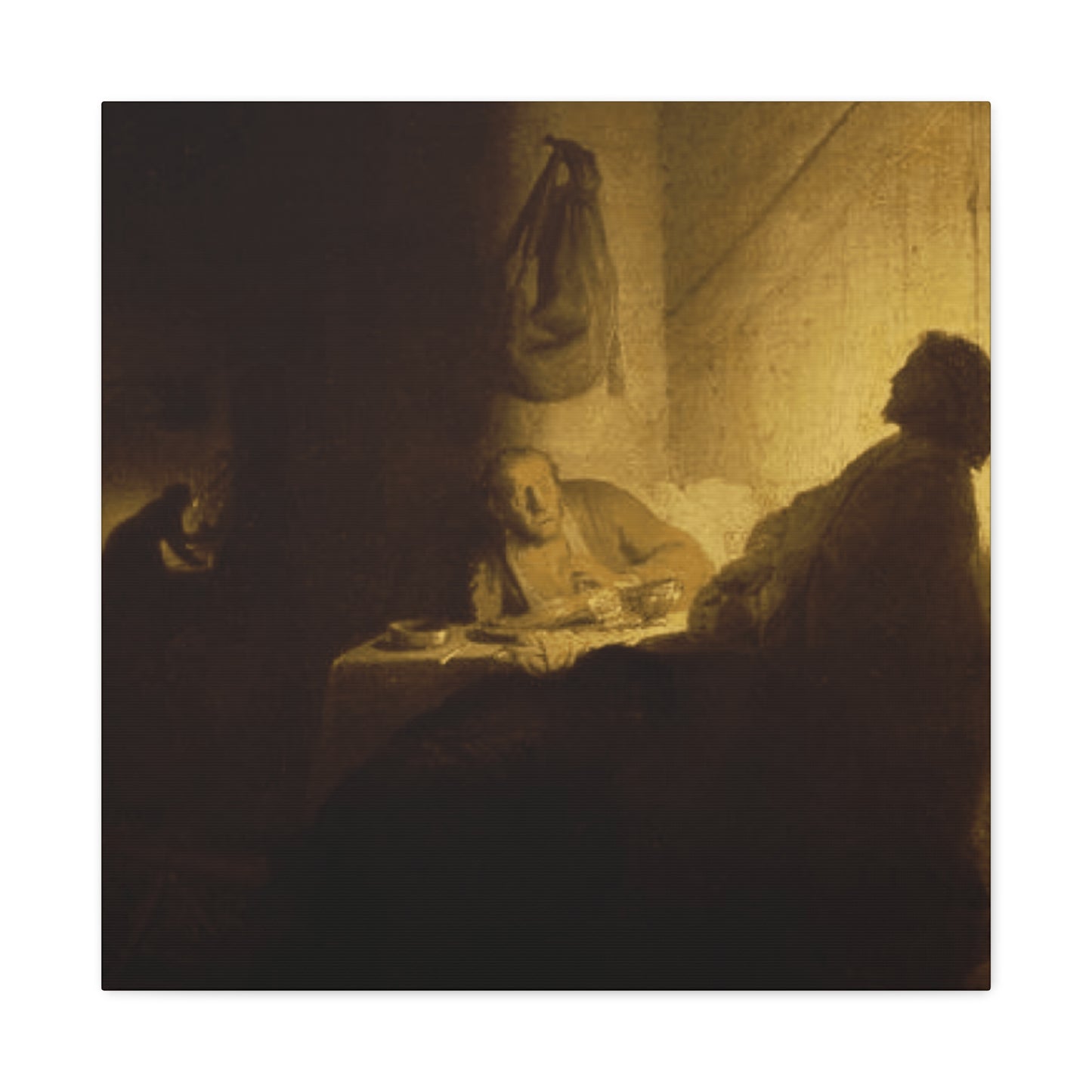
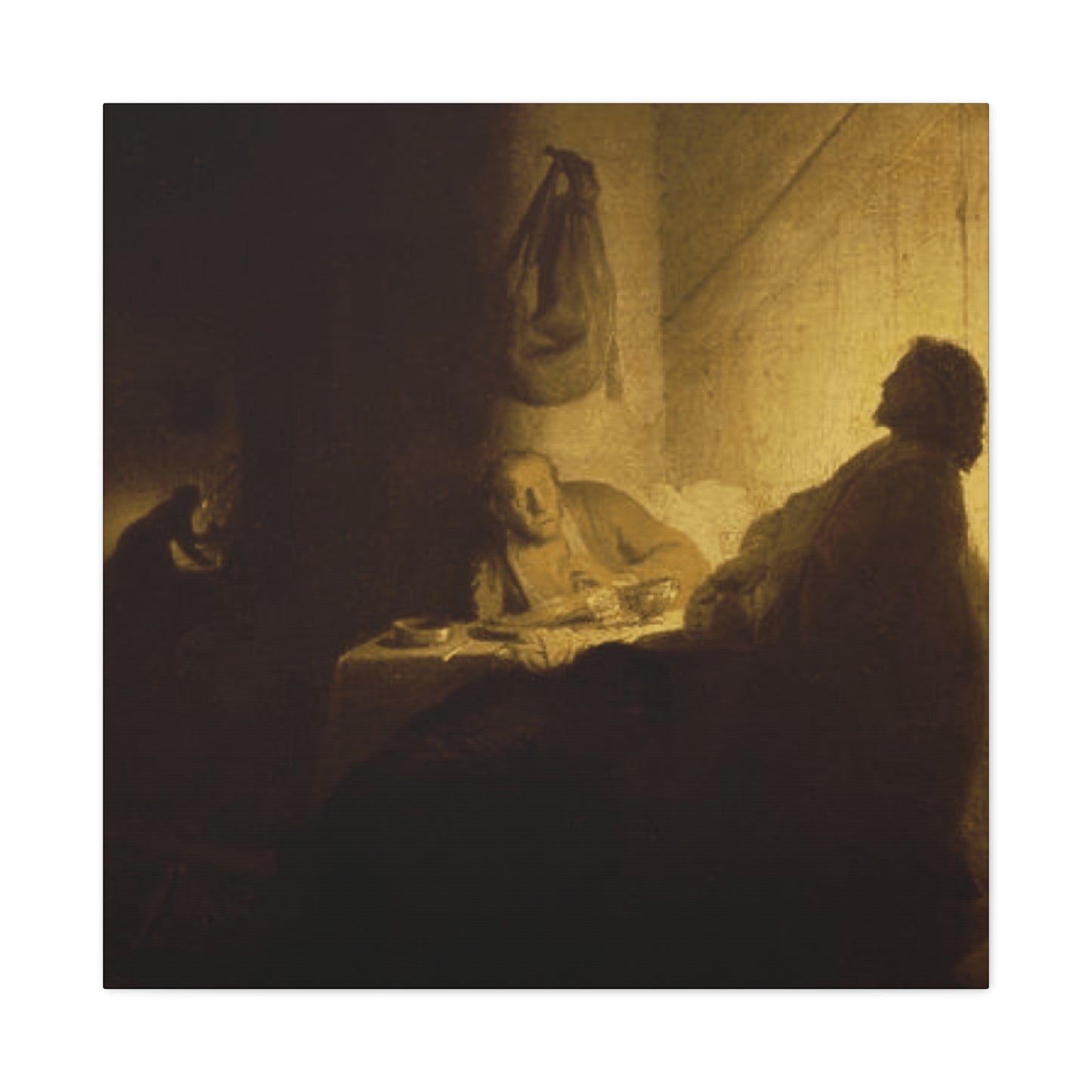
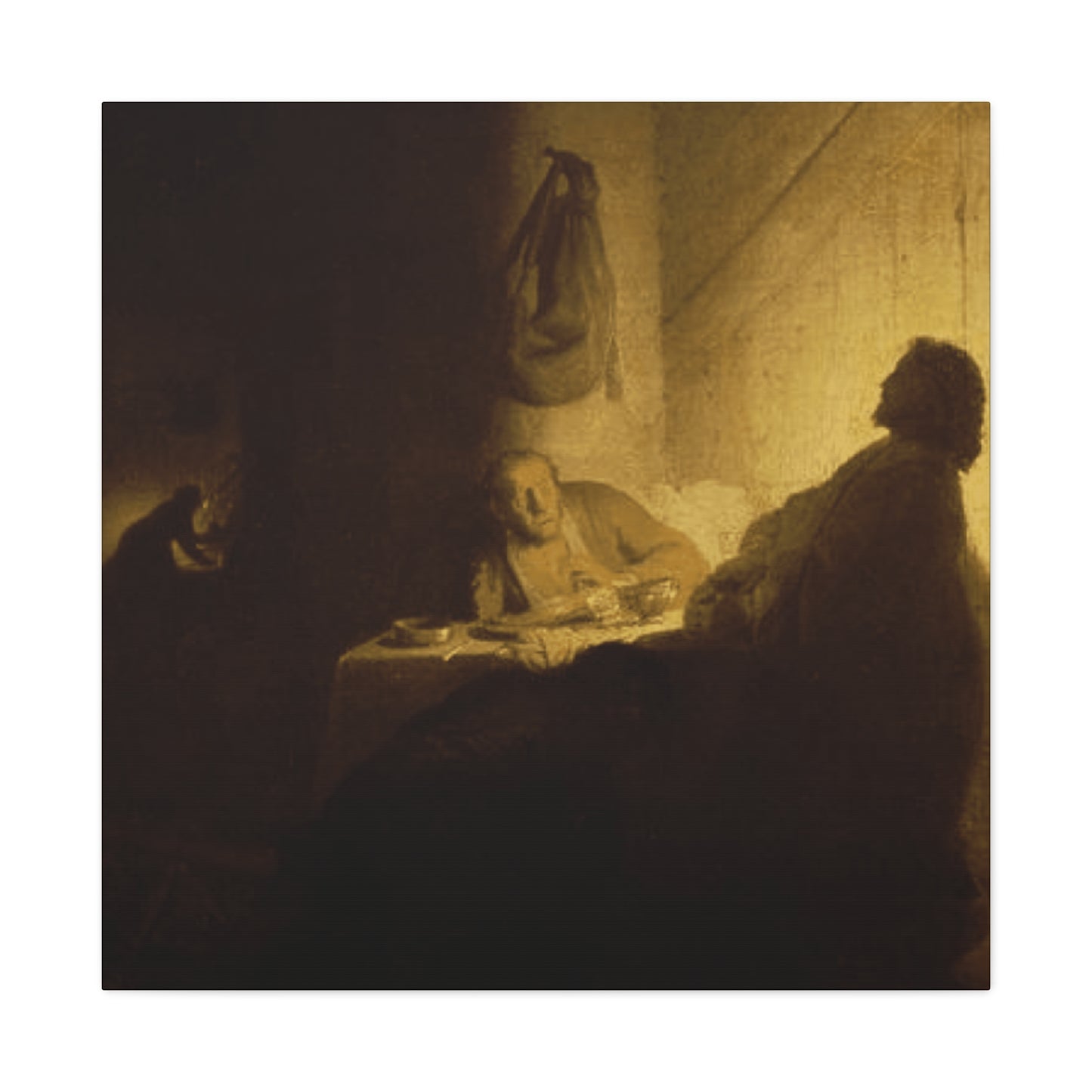
Lighting considerations cannot be overlooked when displaying this piece in traditional settings. The original work employs chiaroscuro technique with masterful skill, using dramatic contrasts between light and dark to create volume and focus. Reproducing this effect in your home requires careful attention to ambient and accent lighting that enhances rather than contradicts the internal light source depicted within the painting.
Enduring Reproductions of This Pivotal Recognition Scene
The timeless quality of certain artworks transcends their original context, speaking to fundamental human experiences that remain constant across generations. This particular recognition scene possesses exactly such universal appeal, capturing surprise, revelation, and spiritual awakening in ways that continue resonating with contemporary audiences. High-quality reproductions allow more people to experience this masterwork's power without requiring museum visits or extraordinary financial investment.
Modern printing technology has revolutionized how we can bring fine art into our homes. Advanced giclée printing processes use archival inks and museum-grade materials to create reproductions that capture subtle color variations, tonal gradations, and textural details with remarkable fidelity. These reproductions allow viewers to appreciate nuances that might be difficult to perceive even in museum settings, where distance and protective glass often separate observers from originals.
The longevity of quality reproductions makes them valuable investments for homes. Properly displayed and maintained pieces can retain their visual impact for decades, developing their own patina and history within your family. Unlike trendy decorative items that quickly feel dated, this scene's classical composition and eternal themes ensure it will never fall out of favor or clash with evolving interior design sensibilities.
Collectors and decorators increasingly recognize that reproductions serve different purposes than originals. While original artworks carry historical significance and investment value, reproductions democratize access to cultural treasures, allowing wider audiences to engage with important works. For most homeowners, a high-quality reproduction provides more practical benefits than an original ever could, offering beauty and inspiration without security concerns or prohibitive costs.
The scene's dramatic narrative makes it particularly suitable for spaces where people gather and converse. The painting invites extended viewing and interpretation, providing visual interest that rewards repeated observation. Unlike purely decorative pieces that might be absorbed at a glance, this work contains layers of meaning and technical virtuosity that reveal themselves gradually over time.
Reproduction quality varies significantly across providers, making informed selection essential. The best reproductions use color-matching technology to ensure accuracy to the original palette, employ fade-resistant inks that maintain vibrancy for years, print on acid-free materials that won't yellow or deteriorate, and utilize sufficient resolution to capture fine details even in larger formats. Understanding these technical specifications helps consumers make choices that will satisfy for years rather than disappointing after a short period.
Incorporating Renaissance Masterworks Into Contemporary Living Environments
The notion that classical art belongs only in traditional settings represents an outdated perspective that limits creative possibilities. Contemporary interiors benefit enormously from the visual weight and cultural depth that Renaissance masterworks provide, creating fascinating juxtapositions between old and new that make spaces more dynamic and interesting. The key lies in understanding how to bridge these seemingly disparate aesthetics thoughtfully.
Modern minimalist spaces, with their clean lines and neutral palettes, actually provide ideal backdrops for dramatic Renaissance paintings. The simplicity of contemporary design allows such artworks to command attention without competing against busy wallpapers, ornate moldings, or cluttered surfaces. A single powerful painting can transform a stark modern room from cold and impersonal into cultured and intentional.
Color coordination becomes especially important when mixing classical art with modern design. The warm earth tones found in this particular work pair beautifully with contemporary materials like concrete, steel, and glass. The painting's golden hues can be echoed in brass fixtures, amber accent pieces, or warm wood elements, creating cohesion between disparate time periods.
Scale considerations differ in modern versus traditional settings. Contemporary spaces often feature higher ceilings and more open floor plans, allowing for larger-scale reproductions that would overwhelm smaller traditional rooms. A substantial canvas spanning five or six feet can anchor an entire wall in a modern loft, providing the visual weight needed to balance expansive spaces without resorting to multiple smaller pieces.
The contrast principle works powerfully when combining Renaissance art with modern interiors. The painting's rich detail and narrative complexity provide relief from the visual simplicity of contemporary design, while the modern setting prevents the artwork from feeling stuffy or museum-like. This tension between styles creates energy and interest that makes spaces memorable.
Furniture selection plays a crucial role in successfully integrating classical art into modern homes. Mid-century modern pieces, with their warm wood tones and organic forms, bridge the gap between Renaissance aesthetics and contemporary sensibilities particularly well. Similarly, modern furniture with classical proportions creates visual harmony that allows seemingly disparate elements to coexist comfortably.
Framing choices significantly impact how classical artwork reads in modern settings. While ornate gilded frames suit traditional interiors, contemporary spaces benefit from simpler frame treatments that honor the artwork without competing against modern design elements. A substantial frame in matte black, dark walnut, or even a floating mount can present classical imagery in ways that feel fresh and current rather than dated.
Inspiring Reproductions of This Moment of Recognition
Certain artistic compositions possess the power to inspire viewers on multiple levels simultaneously. This particular scene accomplishes exactly that, offering spiritual inspiration through its subject matter, aesthetic inspiration through its technical mastery, and intellectual inspiration through its layers of symbolism and meaning. Quality reproductions make these inspirational qualities accessible to anyone seeking to create environments that nourish more than just physical comfort.
The psychological impact of surrounding ourselves with meaningful imagery deserves consideration when selecting artwork for our homes. Unlike abstract or purely decorative pieces, narrative paintings provide content that engages our minds and imaginations. This engagement creates ongoing interest that prevents visual fatigue, making such works suitable for spaces we occupy daily over many years.
For individuals of faith, this scene carries particular resonance, depicting a foundational moment in Christian tradition with human warmth and relatability. The figures display genuine emotion rather than idealized piety, making the spiritual accessible and personal rather than distant and formal. Having such imagery in one's home serves as both decoration and devotional focus, enriching daily life with reminders of faith traditions and values.
Even viewers without religious connections find inspiration in the work's universal themes of recognition, revelation, and transformation. The painting captures that precise moment when understanding dawns and perception shifts, an experience everyone has had in various contexts. This universality ensures the work speaks across cultural and philosophical boundaries, making it appropriate for diverse households.
The composition's balance between restraint and drama provides inspiration for those seeking to understand artistic principles. The way the artist directs attention through light placement, gesture, and arrangement offers lessons in visual communication that translate to photography, graphic design, and even interior decoration. Studying such masterworks cultivates aesthetic sensibilities that enhance how we perceive and create beauty in all areas of life.
Reproductions of exceptional quality allow for detailed examination impossible even in museums, where viewing distance and protective measures limit close observation. Being able to study brushwork, color transitions, and compositional details at leisure deepens appreciation and understanding, transforming passive viewing into active learning. This educational dimension adds value beyond mere decoration, making the investment in quality reproductions worthwhile.
The inspirational power of great art extends beyond individuals to influence entire households. Children growing up with such works develop visual literacy and cultural awareness naturally, absorbing aesthetic principles and historical narratives through daily exposure. This informal education enriches their understanding of human creativity and spiritual traditions in ways formal instruction cannot replicate.
Premier Versions of This Biblical Scene Available in Printed Format
Navigating the marketplace for art reproductions requires understanding quality distinctions that separate exceptional offerings from mediocre ones. Not all printed versions of this masterwork deliver the visual impact and longevity that justify their purchase. Discerning buyers need criteria for evaluating options and identifying versions that will satisfy for decades rather than disappointing after brief enjoyment.
The printing method fundamentally determines reproduction quality. Giclée printing, which uses specialized inkjet technology with archival pigments, produces superior results compared to standard printing methods. These museum-quality processes can reproduce over sixteen million color variations, capturing subtle tonal shifts and color harmonies that cheaper methods cannot match. The difference becomes immediately apparent when comparing examples side by side.
Canvas material selection impacts both appearance and durability. Premium reproductions utilize heavyweight canvas with appropriate texture that mimics the surface qualities of original paintings. Less expensive versions often use thin, smooth materials that look obviously printed rather than painted. The texture contributes to the illusion of depth and authenticity, making it a crucial quality indicator.
Color accuracy represents perhaps the most critical quality factor. The best reproductions result from careful color matching that accounts for how the original appears under proper lighting conditions. Some providers oversaturate colors to create immediate visual impact that actually distorts the artist's intentions. Others fail to capture subtle mid-tones that give the work its characteristic atmosphere. Comparing reproductions against high-quality photographs of the original helps identify accurate versions.
Print resolution determines how much detail the reproduction can capture. Higher resolution means finer details remain sharp even in larger formats, while lower resolution results in blurriness or pixelation when viewed up close. This factor becomes especially important for works like this one, where small details in facial expressions, fabric textures, and still-life elements contribute significantly to overall impact.
Stretching and mounting quality affects both appearance and longevity. Gallery-wrapped canvases, where the image continues around the sides of the stretcher bars, create a finished look suitable for frameless display. The stretching should be tight enough to eliminate wrinkles but not so tight that it distorts the image. Corner construction and staple placement reveal attention to craftsmanship that correlates with overall quality.
Provider reputation matters significantly when investing in premium reproductions. Established companies specializing in fine art reproductions typically maintain higher standards than general poster printers. Reading customer reviews, examining return policies, and requesting samples when possible helps identify trustworthy sources committed to customer satisfaction.
Devotional Imagery for Home Environments Featuring This Biblical Scene
The tradition of displaying devotional imagery in homes extends back centuries across multiple faith traditions. Such artwork serves purposes beyond decoration, functioning as focal points for prayer, meditation, and spiritual reflection. This particular biblical scene, with its powerful depiction of divine revelation in an intimate setting, proves especially suitable for homes where faith plays a central role in daily life.
Creating sacred spaces within secular homes helps establish boundaries between the mundane and the meaningful. Designating a wall or corner for devotional purposes transforms ordinary rooms into environments that support spiritual practices. The artwork becomes an anchor point, marking this space as different from surrounding areas dedicated to entertainment, work, or casual activities.
The scene's depiction of a meal carries particular significance for Christian households, evoking both the Last Supper and ongoing communion traditions. Having this imagery in dining areas creates natural connections between daily sustenance and spiritual nourishment, encouraging mindfulness and gratitude around meals. This integration of faith into routine activities represents a practical approach to living religious principles rather than compartmentalizing them.
Unlike overtly pious or sentimental religious artwork, this piece presents its spiritual content through genuine human emotion and realistic detail. The figures display authentic surprise and reverence rather than artificial poses or expressions. This authenticity makes the work more approachable and relatable, especially for younger family members who might find more stylized religious art alienating or irrelevant.
The scholarly dimensions of the work add intellectual depth to its devotional function. The painting contains numerous symbolic elements and compositional choices that reward study and interpretation. Families can use the artwork as a starting point for discussions about biblical narratives, artistic techniques, and how visual culture expresses and shapes religious understanding across different periods.
Placement of devotional artwork requires thoughtful consideration of function and aesthetics. While some households prefer dedicated prayer spaces or home chapels, others integrate such imagery into living areas where it influences daily life more naturally. Neither approach is inherently superior; the choice depends on individual family practices and spatial constraints. The key is ensuring the artwork receives appropriate respect through proper framing, lighting, and surrounding decor.
The communal aspect of this particular scene makes it especially appropriate for family-oriented devotional purposes. Unlike paintings of solitary saints or abstract religious symbols, this work depicts people sharing a meal and experiencing revelation together. This communal dimension reflects and reinforces the family as the primary unit of religious practice and spiritual formation in many traditions.
Traditional Devotional Artwork for Enhancing Living Spaces
The category of traditional devotional artwork encompasses vast stylistic territory, from Byzantine icons to Renaissance altarpieces to Baroque ceiling frescoes. Within this rich tradition, certain works stand out for their ability to communicate spiritual truths through visual beauty and technical mastery. This recognition scene exemplifies the pinnacle of devotional art, combining theological content with aesthetic excellence in ways that elevate both.
Understanding the historical context enriches appreciation of such works. This piece emerged during a period when religious art served as primary religious education for largely illiterate populations. Artists bore responsibility for making biblical narratives accessible and memorable through visual means. This pedagogical function influenced compositional choices, encouraging clarity, emotional expressiveness, and inclusion of identifiable details that helped viewers understand the story being depicted.
The theatrical quality evident in this work reflects broader cultural developments in religious practice during its creation period. Worship services became more dramatic and emotionally engaging, incorporating music, architecture, and visual arts to create immersive experiences. This painting embodies those same principles, using light, gesture, and composition to create a scene that draws viewers into the narrative rather than keeping them at distant observational remove.
Traditional devotional art often incorporates symbolic elements that add layers of meaning beyond literal narrative depiction. In this work, the still-life elements visible on the table carry symbolic significance related to sacrifice, resurrection, and divine provision. Understanding these symbols deepens engagement with the work, transforming casual viewing into interpretive exercise that reveals new insights with each observation.
The technical virtuosity displayed in masterful devotional works commands respect even from viewers who don't share the religious traditions depicted. The way this artist captures fabric textures, renders human flesh with warmth and volume, and creates convincing spatial depth demonstrates skills that required years of disciplined practice to develop. This craftsmanship reminds us that creating beauty worthy of sacred subjects demands excellence and dedication.
Contemporary homes decorated with traditional devotional art make statements about values and priorities. In secular cultures where religious practice often remains private, displaying such imagery publicly within one's home demonstrates willingness to integrate faith visibly into daily life. This visibility can encourage household members in their spiritual practices while also expressing identity to guests and visitors.
The market for traditional devotional art includes both antiques and contemporary reproductions. While original period pieces carry historical significance and potential investment value, high-quality reproductions offer practical advantages for most households. They cost significantly less, require less security, and can be replaced if damaged without devastating financial loss. For devotional purposes, where the image's spiritual function matters more than its monetary value, reproductions often serve better than originals.
Frame Selection and Presentation Concepts for This Biblical Canvas
The frame surrounding artwork significantly influences how viewers perceive and respond to the image. Framing represents the transition between the artwork's world and our own physical space, either enhancing the piece's impact through appropriate choices or diminishing it through conflicting aesthetics. For this particular biblical scene, frame selection demands careful consideration of multiple factors including period authenticity, color harmony, and spatial context.
Traditional frame styles, particularly those mimicking period-appropriate designs, create continuity between the artwork's historical origins and its current display context. Ornate gilded frames with carved details were standard for important paintings during the era this work was created. Such frames signal the artwork's significance while their warm gold tones complement the painting's amber and brown palette beautifully. However, these traditional frames require sufficient surrounding space to avoid overwhelming smaller rooms.
Contemporary frame options offer alternative approaches that work better in modern settings or minimalist interiors. A substantial frame in dark wood with clean lines can provide visual weight without ornate decoration, allowing the painting itself to remain the focal point. Matte black frames create sophisticated contrast that makes the warm tones within the painting appear even more luminous. These simpler approaches suit contemporary aesthetics while still showing appropriate respect for the artwork.
Frame width and profile affect the painting's visual impact significantly. Wider frames create buffer zones between artwork and surrounding walls, helping the piece feel more important and contained. This separation proves especially valuable when hanging the work on patterned wallpaper or colored walls, as it prevents visual confusion between image and environment. Conversely, thinner frames minimize separation, allowing the painting to integrate more fully into its surroundings.
The decision between framed and frameless presentation depends on multiple factors. Gallery-wrapped canvases, where the image extends around the edges, can hang without frames for a contemporary, casual appearance. This approach works well in modern spaces where formality would feel misplaced. However, frames provide physical protection for canvas edges and add perceived value, making them preferable for more traditional settings or when treating the artwork as a significant investment.
Matting, while uncommon for canvas works, can be employed when reproducing the painting as a paper print. A mat creates breathing room around the image, preventing it from feeling cramped within its frame. Mat colors should be chosen carefully, with cream, warm gray, or soft brown options that harmonize with the painting's palette typically working better than stark white, which can create harsh contrast.
Glass or acrylic glazing represents another decision point for framed works. While glazing protects prints from dust and environmental damage, it also creates reflections that can interfere with viewing. Museum-quality non-reflective glass minimizes this problem but significantly increases costs. For canvas reproductions, glazing is typically unnecessary, as the texture and surface treatment of quality canvases already provide reasonable protection.
Custom framing versus pre-framed options involves trade-offs between cost and customization. Pre-framed pieces offer convenience and lower prices but limit choices in frame style, color, and quality. Custom framing allows perfect tailoring to your specific aesthetic preferences and spatial requirements but commands higher prices and requires more time. For important artwork destined for prominent placement, custom framing typically justifies its additional cost through superior results.
The Enduring Significance of This Biblical Recognition Scene
Certain artworks transcend their original contexts to become cultural touchstones recognized across geographical and temporal boundaries. This moment of recognition has achieved exactly such status, remaining visually powerful and thematically relevant more than four centuries after its creation. Understanding what makes this particular work endure helps explain its ongoing popularity and suitability for contemporary home display.
The psychological realism captured in the figures' expressions and gestures gives the work timeless relatability. Rather than depicting idealized holy figures removed from human experience, the artist presents individuals reacting authentically to extraordinary circumstances. This humanistic approach allows viewers across centuries and cultures to connect emotionally with the scene, recognizing universal experiences of surprise, revelation, and transformed understanding.
The technical innovation evident in the work influenced countless subsequent artists and continues informing how we understand visual storytelling. The dramatic use of light emerging from darkness to illuminate key narrative elements became a defining characteristic of an entire artistic movement. Studying this work provides insights into how light direction, intensity, and quality affect mood, focus, and emotional response, principles that remain relevant in photography, cinematography, and stage design.
The composition's sophisticated balance between complexity and clarity demonstrates masterful control of visual elements. The scene includes numerous details and multiple figures yet never feels cluttered or confusing. Each element serves clear purpose, either advancing the narrative, creating atmosphere, or demonstrating the artist's technical skill. This economy of means, where nothing is superfluous yet nothing essential is omitted, represents an ideal that artists still pursue.
The painting's theological content carries significance beyond its specific Christian context. The work depicts themes of presence, recognition, and revelation that resonate across spiritual traditions and secular philosophies. The notion that the divine might manifest in ordinary moments, requiring only perception to reveal itself, offers comfort and challenge to viewers regardless of their religious commitments.
The work's influence extends beyond fine art into popular culture, appearing in references, parodies, and homages across various media. This cultural saturation means even people unfamiliar with art history often recognize the composition's basic elements, creating shared visual vocabulary that facilitates communication and connection. Having such culturally significant imagery in one's home demonstrates engagement with broader cultural conversations and traditions.
From a purely formal perspective, the work exemplifies principles of strong composition that remain instructive for anyone interested in visual communication. The triangular arrangement of figures creates stability, the use of diagonals generates dynamic movement, and the strategic placement of light creates focal hierarchy. These compositional strategies work as effectively in contemporary graphic design and photography as they did in seventeenth-century painting.
The painting's continued relevance stems partly from its successful balance between specificity and universality. While depicting a particular biblical narrative with historical details, the core situation resonates with fundamental human experiences of recognition, reversal, and transformation. This duality allows the work to function simultaneously as religious narrative, historical documentation, and exploration of timeless themes.
Highly Regarded Reproductions for Art Collectors and Enthusiasts
The art collection community has evolved significantly regarding attitudes toward reproductions. While original works retain primacy for serious collectors focused on investment and historical preservation, high-quality reproductions have earned respect as valuable acquisitions in their own right. This recognition scene, being among the most celebrated compositions in Western art, occupies a central position in conversations about reproduction quality and collectibility.
Collectors approach reproductions with criteria distinct from those applied to originals. Provenance and authentication, crucial for originals, become less relevant than production quality and accuracy. Instead, collectors evaluate factors like printing method, color fidelity, paper or canvas quality, edition size, and whether the reproduction includes documentation explaining its production process and relationship to the original.
Limited edition reproductions command particular interest from collectors who value scarcity even when acquiring copies rather than originals. Some producers create numbered editions of several hundred or thousand prints, each signed or certified to verify its status within that limited run. While these pieces will never appreciate like originals, their limited availability creates collectible value exceeding that of open edition reproductions.
The ethical dimensions of reproduction collecting deserve consideration. Responsible producers work with museums and estates holding rights to original works, ensuring appropriate permissions and compensation for image use. Collectors should verify that reproductions come from legitimate sources respecting intellectual property rights rather than supporting piracy or unauthorized copying.
Documentation accompanying quality reproductions enhances their collectible value. Certificates of authenticity explaining the production process, edition size if applicable, and relationship to the original provide important context. Some premium reproductions include essays by art historians discussing the work's significance, technical details about its creation, and information about the artist's life and career.
Display conditions affect reproduction longevity and should concern collectors as much as decorators. Even archival-quality prints fade when exposed to direct sunlight or harsh artificial lighting. Controlling temperature and humidity prevents canvas warping and paper degradation. Using UV-protective glazing for framed works slows deterioration. These conservation measures preserve investments and maintain visual quality over decades.
The collecting community increasingly recognizes reproductions' role in democratizing art access. Most people will never own original old masters, but quality reproductions allow broader audiences to live with and learn from important works. This democratization enriches cultural life by making artistic excellence accessible regardless of financial means, spreading visual literacy and aesthetic appreciation more widely than would otherwise be possible.
Collectors often curate reproduction collections thematically, gathering multiple works exploring similar subjects or from particular movements. This biblical scene might anchor a collection of religious narratives, works employing dramatic chiaroscuro techniques, or pieces from the same artistic period. Such curated collections demonstrate sophisticated understanding of art history while creating cohesive visual environments within collectors' homes.
Museum-Grade Reproductions Suitable for Residential Display
The distinction between museum-quality and consumer-grade reproductions involves multiple technical and material factors that significantly impact appearance, durability, and overall satisfaction. Museums maintain exacting standards when creating reproductions for their gift shops and educational programs, standards that discerning consumers should understand and seek when selecting pieces for their homes.
Color management technology ensures museum-quality reproductions accurately match original paintings' colors. This process involves photographing originals under controlled lighting conditions, creating detailed color profiles that account for every subtle variation, and calibrating printers to reproduce those profiles exactly. Less rigorous production methods skip these expensive steps, resulting in colors that approximate rather than accurately replicate originals.
Paper and canvas substrates used in museum-quality reproductions meet archival standards designed to prevent yellowing, brittleness, and degradation over time. These materials have neutral pH levels and contain no lignin or other compounds that deteriorate with age. The surfaces accept ink optimally, allowing colors to appear vibrant while penetrating sufficiently to resist fading and flaking.
Ink formulations separate museum-quality from consumer-grade reproductions. Pigment-based inks resist fading far better than dye-based alternatives, maintaining color accuracy for decades rather than years. Museum-quality productions use inks tested for light-fastness, ensuring they withstand normal indoor lighting without noticeable fading. This longevity justifies higher initial costs by eliminating need for frequent replacement.
Resolution specifications for museum-quality reproductions exceed those of standard prints. High-resolution scanning or photography captures fine details invisible in lower-quality processes. This detail retention becomes crucial when reproducing works like this recognition scene, where subtle facial expressions, fabric textures, and still-life elements contribute significantly to overall impact. Viewers should be able to examine reproductions closely without detecting pixelation or blurriness.
The production environment affects quality consistency. Climate-controlled facilities with regulated humidity and temperature ensure materials perform predictably. Quality control procedures catch defects before products ship, maintaining standards that consumer-focused operations often sacrifice for speed and volume. This attention to production conditions contributes to higher costs but delivers superior results.
Packaging and shipping methods for museum-quality reproductions protect investments during transit. Robust tubes for rolled canvases, rigid mailers for prints, and generous padding prevent damage from rough handling. Some suppliers include detailed instructions for unrolling canvases or handling prints to avoid fingerprints or creases. These precautions reflect respect for products as valuable commodities rather than disposable consumer goods.
While museum-quality reproductions cost significantly more than consumer alternatives, they represent genuine investments that can provide satisfaction for lifetimes rather than years. The superior appearance, longevity, and overall quality justify premium prices for those serious about creating meaningful art collections or decorating homes with pieces they'll treasure indefinitely.
Incorporating This Biblical Scene Into Contemporary Interior Spaces
The perception that historical religious art suits only traditional decor represents an artificial limitation that contemporary designers increasingly challenge. This recognition scene possesses formal qualities and visual power that can enhance modern interiors dramatically when integrated thoughtfully. The key lies in understanding how to bridge apparent stylistic gaps between seventeenth-century painting and twenty-first-century design.
Contemporary interior design emphasizes clean lines, neutral palettes, and minimal ornamentation, creating environments that some find cold or impersonal. Strategic placement of a warm, narrative-rich work like this biblical scene can humanize such spaces without compromising their modern aesthetic. The painting provides visual warmth, historical depth, and conversational interest that prevents contemporary spaces from feeling sterile or generic.
Color relationships between artwork and surrounding decor create either harmony or tension. The painting's dominant warm browns, ambers, and gold tones can be echoed in contemporary furnishings through leather upholstery, warm wood accents, brass fixtures, or amber glass accessories. Alternatively, playing the warm painting against cool contemporary grays, whites, and blacks creates dramatic contrast that energizes both elements.
Scale manipulation offers powerful tools for integrating classical art into modern contexts. Reproducing this scene at very large scale transforms it from delicate old master into bold contemporary statement piece. A version spanning eight or ten feet commands space with authority matching modern architectural proportions while its classical subject matter provides necessary gravitas to justify such imposing presence.
The gallery wall trend popular in contemporary design provides opportunities for mixing this classical work with more modern pieces. Surrounding the biblical scene with abstract works, contemporary photography, or minimalist graphics creates dialogue between different periods and approaches. This eclecticism reflects contemporary collecting practices while preventing the classical piece from feeling isolated or out of place.
Lighting design bridges classical and contemporary aesthetics particularly effectively. Modern track lighting or picture lights can be positioned to create dramatic illumination reminiscent of the painting's internal lighting scheme. This technical approach to display connects contemporary LED technology with classical painting techniques, finding common ground across four centuries of aesthetic development.
Furniture arrangement should acknowledge the painting as a significant spatial element requiring appropriate viewing conditions. In open-plan contemporary spaces, furniture groupings can orient toward the artwork, making it the focal point around which social interactions occur. This approach treats the painting as an active participant in spatial design rather than mere wall covering.
The educational dimension of displaying classical art in contemporary homes deserves consideration. Children and young adults growing up in modern environments benefit from exposure to different artistic traditions and historical periods. Having significant classical works amid contemporary surroundings teaches that aesthetic appreciation need not be bound by period consistency, encouraging more flexible and creative thinking about visual culture.
Oversized Reproductions That Command Attention
Size dramatically affects how viewers experience and respond to artwork. While intimate smaller works invite close examination and personal connection, substantial large-scale pieces project authority and create immediate visual impact across distance. This recognition scene, with its dramatic composition and clear focal points, translates exceptionally well to large formats that make powerful statements in spacious interiors.
Architectural scale represents a key consideration when selecting artwork for contemporary homes with substantial wall expanses. A modestly sized reproduction can appear lost on a large wall, failing to create necessary visual anchor for the space. Large-scale versions of significant works like this biblical scene provide the presence needed to balance architectural proportions effectively, preventing walls from feeling empty despite decoration.
The viewing experience changes fundamentally at large scale. Details that remain small and difficult to discern in standard reproductions become clearly visible and appreciable in oversized versions. Facial expressions gain emotional impact, textile textures become tactile and convincing, and compositional relationships among elements read more clearly. This enhanced legibility helps viewers understand why these works earned masterpiece status.
Production challenges increase with size, making quality assessment even more critical for large-scale purchases. Maintaining resolution sufficient to prevent visible degradation requires extremely high-quality source files. Color consistency across large surfaces demands sophisticated printing equipment and expert calibration. These technical requirements mean larger reproductions command premium prices, but cutting corners to save costs typically produces disappointing results that don't justify any savings.
Installation considerations become more complex with substantial artwork. Large canvases have significant weight requiring appropriate hanging hardware and ideally attachment to wall studs rather than just drywall. Professional installation may be necessary to ensure safety and proper positioning. These practical factors should be considered during selection process rather than after purchase when options become limited.
The psychological impact of large-scale narrative artwork deserves consideration. Substantial versions of this scene create immersive viewing experiences where the depicted space begins to feel like an extension of actual physical space. This perceptual blurring can make rooms feel larger and more interesting while also creating strong emotional responses as viewers feel drawn into the narrative unfolding before them.
Balancing large artwork with other design elements requires careful attention to avoid visual competition that makes spaces feel chaotic. Generally, a single large statement piece works better than multiple competing focal points. Supporting decor should complement rather than challenge the artwork, using simpler forms and more restrained colors that allow the painting to dominate without interference.
Room function influences whether large-scale artwork succeeds or overwhelms. Spaces designed for contemplation and conversation like living rooms, libraries, or formal dining rooms can accommodate and benefit from substantial works. Areas dedicated to active tasks or frequent movement like kitchens or family rooms may find large pieces distracting rather than enhancing.
Thoughtful Present Selections Featuring This Biblical Artwork
Gift-giving occasions present opportunities to share meaningful artwork with people we care about. This particular biblical scene makes exceptional gift choice for multiple reasons, combining aesthetic beauty with spiritual significance and cultural importance that ensure recipients will treasure and display it rather than relegating it to storage or regifting.
Religious milestones like confirmations, baptisms, first communions, or ordinations present particularly appropriate occasions for gifting devotional artwork. The recognition scene's powerful depiction of spiritual revelation resonates with these ceremonial moments marking spiritual development and commitment. Such gifts serve as lasting reminders of important life passages while providing beauty and inspiration for years to come.
Housewarming presents benefit from substantial, meaningful character that artwork provides. Unlike consumable or trendy items that get used up or go out of style, quality art reproduction offers lasting value that grows more appreciated over time. This biblical scene suits diverse decorating styles and carries sufficient gravitas to feel like a significant gift worthy of marking important life transitions.
Wedding gifts that transcend typical registry items create memorable impressions reflecting thoughtfulness and care. For couples who share faith traditions or appreciate art history, this masterwork represents their union's spiritual dimension while adding sophistication to their first shared home. The scene's depiction of fellowship and revelation around a meal table carries appropriate symbolism for marriage, where daily routines become sacred through partnership.
Anniversary commemorations, particularly significant milestones, deserve gifts expressing enduring value and appreciation. Artwork suggesting permanence and timelessness reflects the couple's lasting commitment while adding beauty to spaces they've created together. For couples who already own many material possessions, fine art represents a category they may not purchase for themselves, making it especially appreciated.
Retirement gifts marking career conclusions and new life phases should acknowledge recipients' accomplishments while looking forward to futures rich with time for previously postponed interests. Quality art encourages cultivation of aesthetic appreciation and provides focal points for contemplation during less structured days. The work's themes of recognition and revelation parallel the self-discovery many retirees experience when freed from career demands.
Religious leader gifts pose particular challenges, as clergy members often receive many well-meaning but impractical presents. Fine art reproductions suitable for church offices or personal studies offer functionality combined with thoughtfulness. The piece's theological significance ensures its appropriateness while its artistic merit prevents it from feeling like generic religious kitsch.
Presentation matters significantly when gifting artwork. Quality framing transforms reproductions from posters into valuable art objects deserving display. While custom framing adds expense, it demonstrates commitment to giving something truly special. Alternatively, purchasing unframed pieces of sufficient quality that recipients can frame to their tastes shows respect for their aesthetic preferences while still providing a meaningful core gift.
Conclusion
"Supper at Emmaus" is a powerful and evocative piece of art that transcends mere decoration—it captures a moment of profound spiritual significance, inviting viewers to engage with both the religious iconography and the rich history behind it. This iconic scene, originally depicted by masters like Caravaggio and later reimagined by various artists, tells the story of the post-resurrection appearance of Jesus to two disciples at the village of Emmaus. By bringing Supper at Emmaus wall art into your home, you are not only adorning your space with an exceptional piece of religious history but also inviting a narrative that speaks to themes of revelation, faith, and divine presence.
The core of Supper at Emmaus lies in its representation of a moment of recognition and revelation. According to the Gospel of Luke, two disciples were walking from Jerusalem to Emmaus when they encountered a stranger—unbeknownst to them, it was the resurrected Christ. It wasn’t until they sat down to share a meal with him, and he broke the bread, that their eyes were opened, and they recognized him. This moment, often depicted with Jesus in the act of breaking bread, symbolizes the spiritual nourishment provided by Christ and the realization of his divine nature. It is a moment of both intellectual and spiritual awakening—a theme that resonates deeply across different cultures and religious traditions.
By incorporating Supper at Emmaus into your home, you're bringing this profound narrative of revelation and awakening to your space. The moment of Christ’s recognition represents the idea of sudden insight, a light bulb moment, or a turning point in one’s spiritual journey. It speaks to the themes of faith and doubt, and the transformative power of belief, which are universal and can inspire introspection in any viewer. Whether you approach the piece from a religious perspective or simply as a rich work of art, it holds deep emotional and intellectual resonance, connecting with the viewer on a personal level.
The visual power of Supper at Emmaus also lies in its composition and use of light. Artists like Caravaggio are renowned for their mastery of chiaroscuro—the dramatic contrast between light and shadow. In his version of Supper at Emmaus, the light falls on Christ and the bread he is breaking, symbolizing both the physical and spiritual sustenance Christ provides. This use of light draws the viewer’s eye to the central moment of the scene, emphasizing the act of communion and the divine revelation that occurs when Christ is recognized. This interplay between light and darkness becomes not only a technical marvel but also a visual metaphor for the moment of understanding that breaks through the spiritual darkness of doubt and ignorance.
The surrounding figures of the disciples—often depicted with expressions of awe, surprise, and disbelief—further enhance the narrative's emotional depth. The disciples’ astonishment reflects the overwhelming nature of their realization: the man they had walked with and conversed with was not just any stranger, but Christ Himself. Their reactions range from wonder to an almost shock at the miraculous, which makes this scene deeply relatable. The human responses of confusion, joy, and awe are timeless, reminding us of our own moments of revelation and insight, when truth seems to suddenly become clear.
When placed as wall art, Supper at Emmaus becomes more than just a visual focal point. It invites contemplation and discussion, serving as a conversation piece in any space. Whether hung in a dining room, a study, or a place of worship, the painting captures the sacred and the everyday—blurring the lines between the divine and the mundane, the earthly and the heavenly. The act of breaking bread is a symbol of communion, a practice that holds deep significance in Christianity. By bringing this image into your home, you remind yourself and others of the importance of spiritual connection, unity, and community—the very themes embodied by Christ’s actions at Emmaus.
Additionally, the historical and artistic significance of Supper at Emmaus makes it a piece that’s rich in layers. Caravaggio’s version, for example, broke with the traditional religious art of the time by introducing naturalism and a more visceral emotional depth to biblical scenes. His focus on the humanity of Christ, combined with the raw realism of the disciples' expressions, opened the door to a more intimate and personal interpretation of religious events. This approach made the divine seem more accessible to the viewer, emphasizing the idea that Christ was not just a distant, otherworldly figure but someone who lived among us, shared meals with us, and revealed himself to us in moments of everyday life.
In more contemporary interpretations, Supper at Emmaus continues to inspire artists who explore themes of connection, transformation, and epiphany. The central act of breaking bread, whether literal or metaphorical, can be seen as a symbol of sharing, community, and the breaking down of barriers. For those who place this art in their home, it’s a reminder of the importance of spiritual connection and communion, not only with the divine but with one another. This art piece can become a catalyst for conversation about faith, belief, and the moments in our lives when we recognize something greater than ourselves.


