


Iconic Scenes: A Deep Dive into Empire Strikes Back Wall Art
When we discuss cinematic achievements, few films command the same reverence and sustained cultural impact as Star Wars: Episode V – The Empire Strikes Back. Released decades ago, it remains a towering pinnacle of science fiction, storytelling, and visual design. It's not just a sequel; for many, it is the definitive chapter in the Skywalker saga. This film took the adventurous spirit of its predecessor and infused it with a profound sense of maturity, darkness, and emotional complexity. The heroes were scattered, the stakes were raised, and the ending was not a triumphant celebration but a somber, uncertain pause. It is this very depth that makes Empire Strikes Back wall art so compelling and sought-after. Decorating a space with art from this movie is about more than just fandom; it's about capturing a specific, powerful mood. The themes of failure, perseverance, temptation, and shocking revelation resonate on a universal level.
From the frozen battlefields of Hoth to the mystical swamps of Dagobah and the ethereal, treacherous beauty of Cloud City, the film is a visual masterpiece. Each frame is composed with intent, creating iconic images that have been burned into our collective imagination. This rich visual tapestry provides an almost endless well of inspiration for artists. Consequently, Empire StrikesBack wall art spans an incredible range of styles, from hyper-realistic oil paintings of the Battle of Hoth to minimalist typographic prints of Yoda's most famous quotes. Choosing a piece of art from this film is a personal statement, reflecting which aspect of the story—the epic action, the philosophical training, the tragic romance, or the devastating climax—speaks most directly to the viewer. This article explores the vast galaxy of artistic interpretations, delving into the specific scenes, characters, and themes that make this particular film a perennial favorite for home and office decor.
Capturing the Icy Desolation: Hoth Battle Artwork
The Battle of Hoth is not just a scene; it's an event. It’s our first major glimpse into the overwhelming industrial might of the Galactic Empire and the desperate, tenacious courage of the Rebel Alliance. This sequence is a masterclass in visual storytelling, and Empire Strikes Back wall art dedicated to this battle captures its epic scale and chilling atmosphere. The dominant color palette is one of stark contrasts: the brilliant, blinding white of the snow, the deep grey of the Imperial walkers, and the punctuated, vibrant bursts of orange from Rebel flight suits and laser fire. This visual dynamic makes for incredibly striking artwork. Panoramic prints are particularly effective for this subject, allowing the viewer to take in the full scope of the battlefield. A wide-format canvas stretching across a wall can transport you directly into the trenches alongside the Rebel soldiers, the colossal AT-ATs looming menacingly on the horizon.
Artists often focus on the sheer David-versus-Goliath nature of the conflict. A common depiction shows a tiny, agile snowspeeder flying circles around the legs of a walker, a visual metaphor for the Alliance's own struggle against the Empire. Other pieces might take a more grounded perspective, focusing on the trench warfare, capturing the gritty, desperate expressions of the soldiers as they brace for the Imperial assault. This type of Empire Strikes Back wall art is perfect for a home theater, game room, or any space where you want to convey a sense of drama and epic action. The icy desolation of the planet itself is a key character, and art that emphasizes the endless, frozen landscape serves as a reminder of the harsh realities the heroes faced. It’s a testament to resilience, a visual anchor that celebrates the fight against impossible odds.
Echo Base Interiors: A Study in Rebel Hideout Decor
While the exterior battle on Hoth provides epic action, the interior scenes within Echo Base offer a different kind of artistic inspiration. The aesthetic of the Rebel base is one of function over form, a look born of desperation and ingenuity. The ice caves, artificially carved and filled with scavenged technology, create a unique environment that artists love to explore. Empire Strikes Back wall art depicting Echo Base interiors often focuses on the interplay of cold, natural elements and warm, artificial life. The dominant visual is the stark blue-white of the icy walls, contrasted with the glow of computer consoles, the warmth of Tauntaun fur, and the hurried activity of the Rebels. Art pieces might focus on the command center, a hive of activity with its glowing tactical displays and characters like General Rieekan and Princess Leia directing the evacuation.
This types of art evokes a sense of tension and strategy. Alternatively, a popular subject is the medical bay, particularly the iconic image of Luke Skywalker suspended in the bacta tank. This scene, with its eerie blue light and sense of vulnerability, creates a powerful, contemplative piece of Empire Strikes Back wall art. Other artistic interpretations might focus on the quieter moments: Han and Chewie working on the Millennium Falcon in the hangar bay, the frosty breath of pilots visible in the air, or the Tauntauns restless in their pens. These pieces celebrate the resilience of the Rebellion, their ability to create a home and a functional military base in the most inhospitable environment imaginable. The lighting is key in these artworks; artists use the cold, ambient light of the ice tunnels and the focused, warmer light of the technology to create depth and mood, making these pieces a subtle yet deeply evocative choice for a discerning fan.
Imperial Walkers: The Majestic Terror of AT-AT Art
Few images from The Empire Strikes Back are as instantly recognizable or as imposing as the All Terrain Armored Transports, the AT-ATs. These colossal, four-legged war machines are the very embodiment of Imperial power: slow, methodical, and seemingly unstoppable. Their design is a triumph of menacing industrial aesthetics, and as a subject for Empire Strikes Back wall art, they are incredibly popular. Art focused on the AT-ATs is all about scale and perspective. To truly capture their essence, the art must convey their immense size. Artists achieve this by using forced perspective, often depicting the walkers from a low angle, making them tower over the viewer and the snowy landscape. The Rebel snowspeeders, which appear as little more than insects beside them, further accentuate this massive scale. The "head" of the walker, with its single red "eye" visor, is often a focal point, rendered to look impersonal and predatory.
The color palette is typically muted—greys, whites, and blues—allowing the form and design of the walker to take center stage. However, some of the most dynamic pieces introduce the bright contrast of laser fire, showing the walkers methodically blasting the Rebel defenses or the glowing energy of a tow cable wrapping around their legs. This type of Empire Strikes Back wall art makes a powerful statement. It's a piece that speaks to the overwhelming power of the film's antagonist and the technological terror it represents. Whether rendered in a hyper-realistic style, a minimalist silhouette, or even a schematic blueprint design, AT-AT art is a conversation starter, a bold piece of cinematic decor that celebrates one of the most brilliant vehicle designs in movie history. It’s a symbol of power, but also, ultimately, of a vulnerability that the Rebels cleverly exploited.
Snowspeeders in Action: Dynamic Air Combat Prints
In stark contrast to the lumbering, menacing AT-ATs, the Rebel snowspeeders—modified T-47 airspeeders—represent speed, agility, and desperate ingenuity. These small, twin-engine craft are the heroes of the Battle of Hoth, and Empire Strikes Back wall art dedicated to them is all about motion and dynamism. These pieces are the antithesis of static portraiture; they are designed to convey speed and high-stakes aerial combat. Artists often capture the speeders in impossible banking turns, trailing plumes of snow as they zip across the ice plains or weave between the legs of the giant walkers. The image of a snowspeeder firing its tow cable to trip an AT-AT is perhaps the most iconic, a perfect depiction of asymmetrical warfare. This is a subject that lends itself beautifully to digital art and illustration, where the blur of motion and the bright glow of laser cannons can be rendered with crackling energy.
The contrast between the sleek, slightly battered Rebel craft and the pristine, overwhelming Imperial machinery is a recurring theme. The orange markings on the speeders and the pilot's flight suits provide a vital splash of warm color in the otherwise frozen landscape, symbolizing the lingering spark of hope and resistance. Empire Strikes Back wall art featuring snowspeeders is ideal for someone who appreciates action and clever tactics. It can bring a sense of energy and movement to a room, making the space feel more dynamic. Whether it's a wide shot of the entire squadron, codenamed Rogue Group, peeling off to attack, or a detailed close-up of Luke Skywalker in his cockpit, eyes fixed on his target, snowspeeder art is a tribute to the daring pilots who held the line against an impossible foe.
Encounters with the Wampa: Horror Themes in Star Wars Art
The Empire Strikes Back is notable for introducing darker, more mature themes to the Star Wars galaxy, and this begins almost immediately with the Wampa attack. This sequence is a genuine piece of creature-feature horror, and the Empire Strikes Back wall art it inspires leans into this suspenseful, primal tone. Art depicting the Wampa encounter is a departure from the grand, epic battles or philosophical moments. It's intimate, personal, and terrifying. One of the most famous images from this sequence is Luke Skywalker hanging upside down in the Wampa's cave, his lightsaber just out of reach in the snow. This image is a potent symbol of helplessness and the struggle to survive. Art depicting this moment is filled with tension; the dark, icy blues of the cave, the looming shadow of the creature, and the single, hopeful point of light from the lightsaber hilt. Other pieces focus on the creature itself.
The Wampa, a massive, white-furred predator, is a perfect subject for monster art. Artists often render it in a terrifying pose, roaring, with its sharp claws and bloodstained fur, a true apex predator of the frozen wasteland. This type of art explores the "untamed" side of the Star Wars universe, reminding us that not all threats come from the Empire. The color palette is, by necessity, dominated by the cold whites and blues of Hoth, but the introduction of the crimson red of blood or the bright glow of the lightsaber creates a jarring, effective contrast. This type of Empire Strikes Back wall art is not for everyone, but for fans of the creature-feature and horror genres, it’s a powerful and unconventional choice that highlights the film's tonal diversity.
The Mystical Swamps: Dagobah-Themed Wall Decor
After the bright, cold emptiness of Hoth, the film transports us to Dagobah, a planet that is the complete opposite. It is dark, wet, and claustrophobically teeming with life. This mystical, fog-shrouded swamp planet is the crucible for Luke's Jedi training, and Empire Strikes Back wall art based on Dagobah captures this atmosphere of mystery, nature, and the Force. The color palette for Dagobah art is a rich tapestry of deep greens, muddy browns, and hazy, ethereal greys. The light is diffused, as if filtered through a dense canopy and constant mist, giving these pieces a dreamlike, otherworldly quality. Common subjects include Luke's X-Wing, crashed and half-submerged in the bog, a potent symbol of his isolation and the need to abandon his old self.
The gnarled, twisting trees and tangled roots are often depicted as characters in themselves, creating a living, breathing environment that is both threatening and nurturing. Artists love to play with the reflections in the murky water and the glowing bioluminescence of the swamp's flora and fauna. Empire Strikes Back wall art of Dagobah is inherently contemplative. It’s not about action; it's about atmosphere. A large canvas depicting the misty swamps can have a remarkably calming and meditative effect on a room, making it perfect for a study, library, or a personal sanctuary. It’s a visual reminder of the "living Force" that Yoda describes, the idea that energy and life are all around us, connecting everything. These pieces invite the viewer to look deeper, to see the hidden world beneath the surface, much as Luke had to learn to see beyond the swamp and his own prejudices to find the Jedi Master he was seeking.
"Do or Do Not": Yoda's Wisdom in Artistic Form
While the visual landscape of Dagobah is compelling, it is the wisdom imparted there that truly defines its importance. The introduction of Yoda is a landmark moment, and his teachings provide the philosophical core of The Empire Strikes Back. This has given rise to a popular and powerful subgenre of Empire Strikes Back wall art: typographic art. The quote "Do or do not. There is no try" has transcended the film to become a global maxim for determination and commitment. Art based on this quote is incredibly popular for home offices, gyms, and workspaces, serving as a daily source of motivation. These pieces range from elegant, minimalist calligraphy on a stark background to more ornate designs where the words are woven into an image of Yoda or the Dagobah landscape. But the film's wisdom doesn't end there.
Quotes like "Luminous beings are we, not this crude matter" and "You must unlearn what you have learned" also find their way into artistic interpretations. These pieces focus on the spiritual side of the Star Wars saga. This type of Empire Strikes Back wall art isn't just decorative; it's functional, in a philosophical sense. It’s art that speaks to you. Beyond typography, there are the portraits of Yoda himself. Artists face the challenge of capturing the immense wisdom, ancient sadness, and mischievous spark in his eyes. A portrait of Yoda isn't just a picture of a small, green alien; it's a portrait of a master, a mentor, and a keeper of ancient knowledge. These pieces are often rendered in warm, earthy tones, reflecting his connection to the living Force and the natural world of Dagobah, serving as a calming, centering presence in any room.
Luke's Training: Visualizing the Jedi Path
The heart of the Dagobah segment is Luke's arduous training under Master Yoda. These scenes are a visual representation of an internal struggle, making them a fascinating subject for Empire Strikes Back wall art. The art inspired by this training is about struggle, balance, and the connection between mind and body. One of the most popular images is Luke attempting the handstand, trying to levitate stones while Yoda balances effortlessly on his foot. This is a powerful metaphor for balance, focus, and the disparity between the student and the master. A piece of art depicting this scene is a reminder of the process of learning and the importance of perseverance. Other artworks focus on the physical ordeal.
We see Luke running through the dense swamp with Yoda on his back, a visual representation of bearing a heavy burden while navigating a difficult path. These pieces are dynamic, capturing the humidity, the exertion, and the lush, oppressive environment. The lighting is often key, with shafts of misty light breaking through the canopy, symbolizing moments of clarity or the guidance of the Force. Empire Strikes Back wall art of Luke's training is inherently inspirational. It speaks to anyone who has ever undertaken a difficult challenge, learned a new skill, or fought against their own internal doubts. It’s a celebration of the student’s journey, with all its failures and small victories. These artworks are less about cinematic action and more about personal growth, making them a mature and thoughtful addition to a personal space, like a study or a meditation corner.
The Dark Side Cave: Symbolic and Abstract Interpretations
The most enigmatic and psychologically dense sequence on Dagobah is Luke's encounter with the "cave of evil." This scene is a Freudian dive into the hero's subconscious, a confrontation with his own fear and potential for darkness. Empire Strikes Back wall art inspired by this scene is often the most symbolic and abstract of all. The visual cues are powerful: the gnarled, root-covered entrance to the cave, which looks like a skull or a gaping maw; the dark, misty interior; and the shocking apparition of Darth Vader. Art depicting this confrontation is about more than a simple fight. It’s about the internal conflict. Artists often use heavy shadows and a muted, almost monochrome palette to convey the oppressive, dreamlike (or nightmarish) quality of the vision.
The most potent image is the one revealed after the fight: Luke cutting down the illusory Vader, only to see the mask explode and reveal his own face inside. Art that captures this moment is a profound statement on the nature of evil, suggesting that the enemy we fear most is often a reflection of our own potential for anger and failure. This is not a triumphant piece of art. It’s dark, challenging, and deeply contemplative. Abstract Empire Strikes Back wall art often draws from this scene, using the swirling mists, dark roots, and the stark contrast of the lightsaber to create a non-literal representation of the struggle between the light and dark side of the Force. This is decor for the serious cinephile, a piece that sparks conversation and invites introspection into the film's deepest themes.
Navigating the Asteroid Field: The Millennium Falcon's Escape
If the Battle of Hoth is about large-scale warfare, the Millennium Falcon's escape through the asteroid field is a masterclass in chaotic, high-speed suspense. This sequence is pure adrenaline, and the Empire Strikes Back wall art it inspires is all about speed, danger, and reckless improvisation. The visuals are stunning: a tiny, battered freighter dodging and weaving through a cosmic minefield of colossal, tumbling rocks. Art depicting this scene is filled with a senseof perilous motion. Artists use dramatic perspectives, often placing the viewer right in the cockpit with Han, Chewie, Leia, and Threepio, the asteroids hurtling past the viewport. The sense of scale is crucial, with giant space rocks dominating the canvas, making the Falcon look impossibly small and vulnerable.
The lighting comes from the distant nebula and the explosions of TIE fighters who aren't as lucky, casting dramatic shadows and highlights on the ship and the asteroids. This is also the scene where the film's sharp-witted humor shines, encapsulated in Han Solo's "Never tell me the odds!" Empire Strikes Back wall art of the asteroid field is a celebration of rebellion, quick thinking, and pure piloting skill. It’s a perfect piece for someone who identifies with the "scoundrel" archetype, who values instinct over orders. This art brings a kinetic energy to a room. A large, detailed print of the Falcon navigating the chaos is a breathtaking centerpiece, a constant reminder that sometimes the most insane plan is the only one that will work. It’s a tribute to the ship itself, the fastest hunk of junk in the galaxy, and its crew's uncanny ability to survive the impossible.
The Bounty Hunters Assemble: Iconic Character Lineup Art
One of the most fan-favorite moments in The Empire Strikes Back is the brief but unforgettable scene where Darth Vader addresses a lineup of the galaxy's deadliest bounty hunters. This "rogues' gallery" introduced a cast of characters who, despite minimal screen time, became instant legends, most notably Boba Fett. Empire Strikes Back wall art depicting this scene is the ultimate "character lineup" piece. It’s a celebration of pure, unadulterated cool. The visual of these six disparate, menacing figures—Boba Fett, Dengar, IG-88, Bossk, 4-LOM, and Zuckuss—standing before Vader on the bridge of the Executor is incredibly imposing. Art of this scene is often dark and atmospheric, using the sterile, high-tech lighting of the Star Destroyer to cast long, dramatic shadows.
Artists focus on the unique, alien, and droid silhouettes of each hunter, highlighting their individuality and implied backstory. This type of Empire Strikes Back wall art is perfect for fans who love the grittier, underworld side of the Star Wars universe. It's a piece that speaks to the "scum and villainy" of the galaxy. It's often rendered in a wide, panoramic format to give each hunter their due. Variations include stylized individual portraits of each of the six hunters, which can be grouped together to recreate the lineup. This art isn't about action or philosophy; it's about character design and attitude. It's a statement piece that says you appreciate the details, the expanded universe, and the antagonists who are just as compelling as the heroes. The dark, moody tones make it a sophisticated and edgy choice for a modern entertainment space or office.
Boba Fett: The Enigmatic Hunter in Wall Art
While the entire bounty hunter lineup is iconic, one character emerged as a cultural phenomenon: Boba Fett. His unique, battle-scarred Mandalorian armor, his silent demeanor, and his sheer competence made him the breakout star of the film. Empire Strikes Back wall art featuring Boba Fett is some of the most popular Star Wars decor available. The appeal lies in his mystique. Art featuring Fett is about capturing his "cool" factor. He is often depicted in a portrait style, his helmet's T-visor staring impassively at the viewer, the myriad dents and scratches on his armor telling a thousand stories. The color palette of his armor—the olive green, the muted red, and the yellow—is instantly recognizable and makes for a visually striking piece.
Other artworks depict him in action, perhaps firing his wrist gauntlet or using his jetpack, but he is most often shown in a still, menacing pose, his rifle casually slung over his shoulder. This stillness implies a coiled, ready-for-anything predatory nature. Another popular depiction is Boba Fett with his ship, the Slave I. The ship's unique vertical design is as iconic as the hunter himself, and pieces showing the ship descending on Cloud City or standing on the landing platform are highly sought after. Empire Strikes Back wall art of Boba Fett is the epitome of "geek chic." It's a way to display fandom that is also genuinely stylish and a little bit dangerous. He is the ultimate anti-hero, a man of few words and decisive action, and art featuring him brings that same aura of enigmatic confidence and gritty professionalism to a space.
The Floating Metropolis: Cloud City Vistas
The third and final act of The Empire Strikes Back introduces us to yet another breathtaking and unique location: Cloud City. This utopian mining colony, floating high above the gas giant Bespin, is a visual marvel, and the Empire StrikesBack wall art it inspires is a study in beauty, elegance, and impending doom. The city's aesthetic is a complete departure from the rest of the film. Where Hoth was cold and functional and Dagobah was wild and primal, Cloud City is sleek, clean, and futuristic in an almost art-deco style. Vistas of the city itself are a popular subject. These pieces are often rendered in warm, sunset palettes—pinks, oranges, and purples—as the city hovers among the vibrant, swirling clouds of Bespin. A large landscape print of Cloud City can be a stunning, almost abstract piece of art, one that evokes a senseof peace and wonder.
The futuristic, minimalist architecture of the city's interiors also inspires artists. The clean white corridors, the circular motifs, and the large viewports looking out onto the clouds create a sense of serene, futuristic living. Of course, this beauty hides a dark secret. Artists often play with this duality, creating pieces that hint at the darkness beneath the pristine surface. A beautiful sunset vista might include the tiny, ominous silhouette of the Slave I or the Millennium Falcon approaching its rendezvous with a trap. Empire Strikes Back wall art of Cloud City is for those who appreciate architecture, color, and atmosphere. It’s a sophisticated choice that can blend seamlessly with modern decor while still holding a deep narrative significance for the fan who knows the tragedy that is about to unfold in this beautiful place.
Lando Calrissian's Domain: Bespin Aesthetics
Cloud City is inseparable from its charming, stylish administrator, Lando Calrissian. His introduction adds another layer of complexity to the film's web of alliances and betrayals. Empire Strikes Back wall art that focuses on the Bespin aesthetic is often, by extension, a reflection of Lando's own personality: smooth, sophisticated, and with an air of calculated risk. Art in this style moves beyond the cityscape to focus on the moments of tense hospitality before the trap is sprung. This includes scenes set in the dining room, a location of infamous betrayal. The art might capture the moment the doors slide open to reveal Darth Vader at the head of the table, a stunning juxtaposition of elegant civility and pure menace.
The color palette of these pieces is often warm and inviting, using the polished surfaces and rich decor of Lando's personal quarters, which makes the presence of Vader and the stormtroopers all the more jarring. Lando himself is a popular subject for portraiture. Art focusing on him captures his suave demeanor, his stylish cape, and his conflicted expression. He is a man trapped between his friends and a deal with the devil, and talented artists convey this internal conflict in his eyes. Empire Strikes Back wall art that embraces the Bespin aesthetic is about sophistication and tension. It's about the beauty of the trap, the allure of a deal that's too good to be true. These pieces are often elegant and sleek, fitting perfectly into a dining room, lounge, or a personal bar, adding a touch of class and a hint of cinematic danger.
The Carbon-Freezing Chamber: A Pivotal Scene in Art
Deep within the industrial underbelly of Cloud City lies the carbon-freezing chamber. This location is the setting for one of the most visually spectacular and emotionally devastating scenes in the entire saga. Empire Strikes Back wall art depicting this scene is a masterful blend of industrial design, dramatic lighting, and raw human emotion. The set itself is a work of art: a circular platform, glowing pits, and a complex array of machinery, all shrouded in smoke and steam. The lighting is the defining characteristic. It is a high-contrast battle between the intense, fiery orange light from the carbonite pit and the cold, sterile blues and whites of the chamber's machinery.
This clash of color is a visual metaphor for the film's themes: the warmth of Han's passion and the cold, industrial grip of the Empire. Art of this scene is inherently dramatic. Popular subjects include the silhouette of Darth Vader against the steam, his dark form barely illuminated by the orange glow. Another is the image of Han Solo, arms outstretched, as he is lowered into the pit. This is a moment of total helplessness and sacrifice. Empire Strikes Back wall art of the carbon-freezing chamber is a powerful, moody, and atmospheric choice. It's a favorite for home theaters because of its cinematic quality. The symmetrical design of the chamber also lends itself to minimalist and geometric art styles, where the key shapes and colors are all that's needed to evoke the scene's memory and emotion.
"I Love You. I Know.": Han and Leia's Iconic Exchange
In the midst of the industrial horror of the carbon-freezing chamber comes a moment of perfect, character-defining dialogue. As Han Solo is about to be frozen, Princess Leia finally confesses, "I love you." His reply, "I know," is the epitome of the scoundrel's charm and one of the most famous ad-libs in film history. Empire Strikes Back wall art celebrating this moment captures the tragic romance that is central to the film. This art is all about the human connection in the face of overwhelming despair. Many pieces are typographic, beautifully rendering the two short phrases, "I loveYou" and "I Know." These are often sold as a diptych (a pair of two prints), designed to be hung side-by-side.
This style is a popular choice for a couple's bedroom or personal living space, a subtle nod to their shared fandom and a testament to a love that is defiant, not flowery. Other artworks are illustrative, capturing the desperate embrace between Han and Leia just before the stormtroopers pull them apart. These pieces are emotionally charged, focusing on the actors' expressions: Leia's anguish and Han's pained, resigned bravery. The background is often the chaotic, steamy environment of the freezing chamber, the danger of their surroundings heightening the intimacy of their final moment together. This type of Empire Strikes Back wall art is deeply personal. It's for the fan who connects with the love story as much as the space battles. It’s a celebration of a romance that felt real, complicated, and earned, immortalized in a single, perfect exchange.
Han in Carbonite: A Wall Art Icon
The direct result of the carbon-freezing scene is one of the most unique and iconic props in cinematic history: Han Solo frozen in a block of carbonite. This grim trophy, which Boba Fett takes to Jabba the Hutt, has become a powerful and popular subject for Empire Strikes Back wall art. The appeal is multi-faceted. On one hand, it's a piece of striking, almost sculptural art. The image of a human form trapped in a cold, metallic slab is visually compelling. The "Han Solo in Carbonite" design is often sold as a 1:1 scale piece, or as a print that mimics its metallic, industrial texture. It’s a piece of "trophy" art that immediately identifies the space as belonging to a dedicated fan.
On a thematic level, this art represents the film's dark, unresolved ending. It is a physical manifestation of the hero's failure and capture. It is a symbol of helplessness, a moment frozen in time. Having this on your wall is a bold choice, one that embraces the darkness and seriousness of The Empire Strikes Back. It’s a constant reminder of the stakes and the desperate situation the heroes were left in. This type of Empire Strikes Back wall art is a major conversation starter. It’s often found in home theaters, game rooms, or "man caves." Whether as a high-fidelity print, a metallic poster, or even a custom-molded 3D piece, the carbonite-frozen Han Solo is a uniquely grim and endlessly fascinating piece of decor that perfectly encapsulates the film's somber tone.
The Duel: Vader vs. Luke in Lightsaber Art
The climax of The Empire Strikes Back is not a massive space battle, but an intimate, deeply personal confrontation: the lightsaber duel between Luke Skywalker and Darth Vader. This is the moment Luke's training, and his entire life, has been leading to. Empire Strikes Back wall art depicting this duel is all about high contrast, shadow, and kinetic energy. The fight takes place in the dark, industrial depths of Cloud City, first in the carbon-freezing chamber and later on the perilous gantry high above the planet's core. The primary light sources are the lightsabers themselves. The glowing red of Vader's blade and the brilliant blue of Luke's (his father's) blade paint the scene, reflecting off their masks, clothes, and the surrounding metal.
Artists use this "object-source lighting" to create incredibly dramatic compositions. The art captures the story of the fight: Luke's initial, untrained aggression, and Vader's slow, methodical, and powerful dominance. Vader is often depicted as a wall of black, a silhouette toying with his opponent. Luke is shown as dynamic, desperate, and constantly on the defensive. The moment Vader severs Luke's hand is a popular, if grim, subject, capturing the shock and turning point of the duel. Empire Strikes Back wall art of the duel is a classic choice, a perfect centerpiece for any fan's collection. It is the visual embodiment of the Light versus Dark conflict, a stunning display of color and shadow that encapsulates the film's entire dramatic thrust in a single image.
The Revelation: Art Inspired by "I Am Your Father"
More than the duel itself, more than the carbon-freezing, the single moment that defines The Empire Strikes Back is the revelation. Darth Vader's line, "No, I am your father," is arguably the most famous plot twist in movie history. It's a moment of pure, devastating emotional impact, and capturing it in a static piece of art is a unique challenge. Empire Strikes Back wall art based on this scene rarely depicts the words themselves. Instead, it focuses on the visual tableau: Luke Skywalker, handless, clinging desperately to the gantry, and Darth Vader standing over him, a black, imposing figure of authority. The art is all about body language. Luke's pose is one of agony, disbelief, and total defeat. Vader's is one of power, but also, perhaps, invitation.
The vast, empty chasm below them symbolizes the void that has just opened up in Luke's life. Artists often use the wind and debris of the gantry to add a sense of chaos to the scene, mirroring Luke's internal turmoil. The color palette is dark, with the only light coming from the distant background or the faint glow of Vader's saber. This is a piece of art that requires no explanation. Any fan will instantly recognize the scene and feel the emotional weight it carries. It is the apex of the film's tragedy, the moment the hero's entire worldview is shattered. As a piece of Empire Strikes Back wall art, it is a profound, somber, and powerful choice, a testament to the film's narrative bravery.
Darth Vader: The Ultimate Villain in Portraiture
While he is a major presence in the first film, The Empire Strikes Back is where Darth Vader truly becomes the ultimate cinematic villain. He is no longer just a menacing enforcer; he is a force of nature, an obsessive, cunning, and brutal strategist. Portrait art of Darth Vader is incredibly popular, as his design is a masterpiece of visual intimidation. Empire StrikesBack wall art focused on Vader often isolates him from any specific scene, focusing purely on his iconic silhouette and armor. The helmet is the key. Artists spend countless hours perfecting the reflective black surface, the asymmetrical design, and the blank, insectoid lenses that betray no emotion. A close-up portrait of Vader's helmet is a statement of power and darkness.
The lighting is crucial; often, he is backlit with a dramatic red glow, or a sliver of light is used to highlight the curve of the helmet, leaving the rest in deep shadow. Another popular portrait style is the "meditation chamber" scene. This was our first glimpse of the scarred man beneath the mask. Art depicting this scene is about vulnerability and the machine. It shows the back of Vader's head, his pale, scarred skin, as the helmet is lowered onto him. This is a more complex and tragic portrayal of the villain, reminding the viewer of the man trapped inside the suit. Whether he is depicted as an unstoppable force of darkness or a tragic, cybernetic prisoner, Empire Strikes Back wall art of Darth Vader is a bold and commanding choice, a tribute to one of the greatest antagonists ever created.
Minimalist Designs: Subtle Tributes to Empire
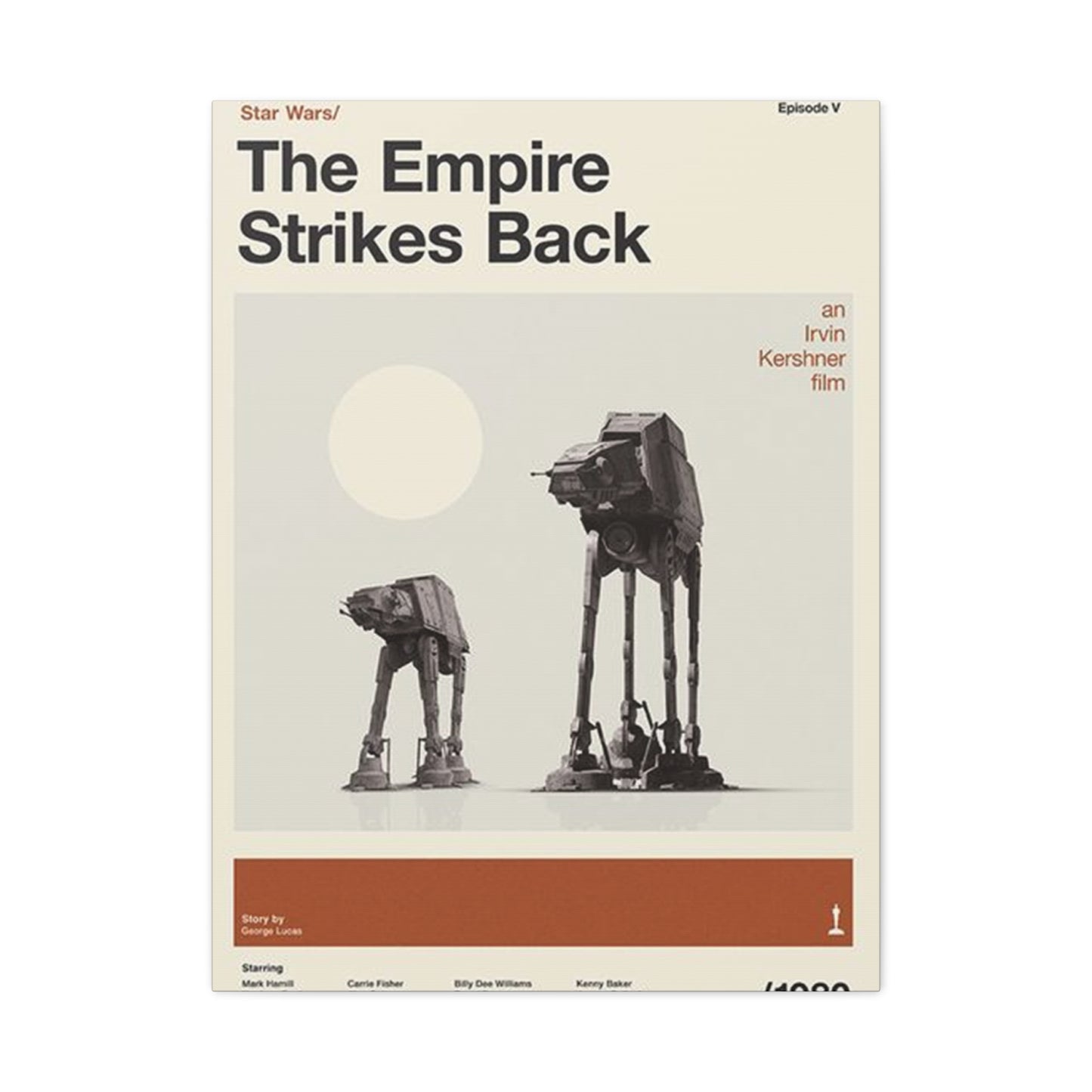
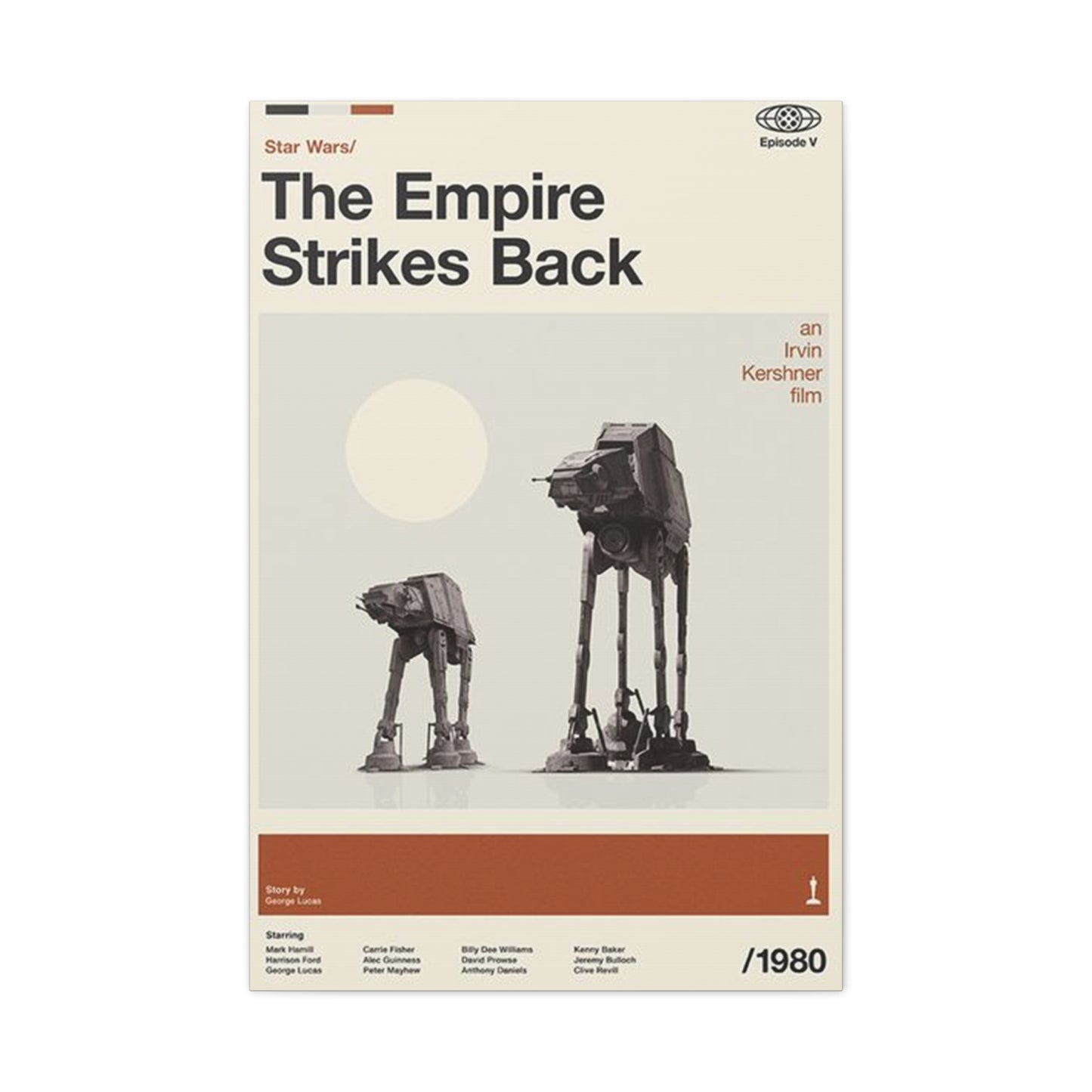
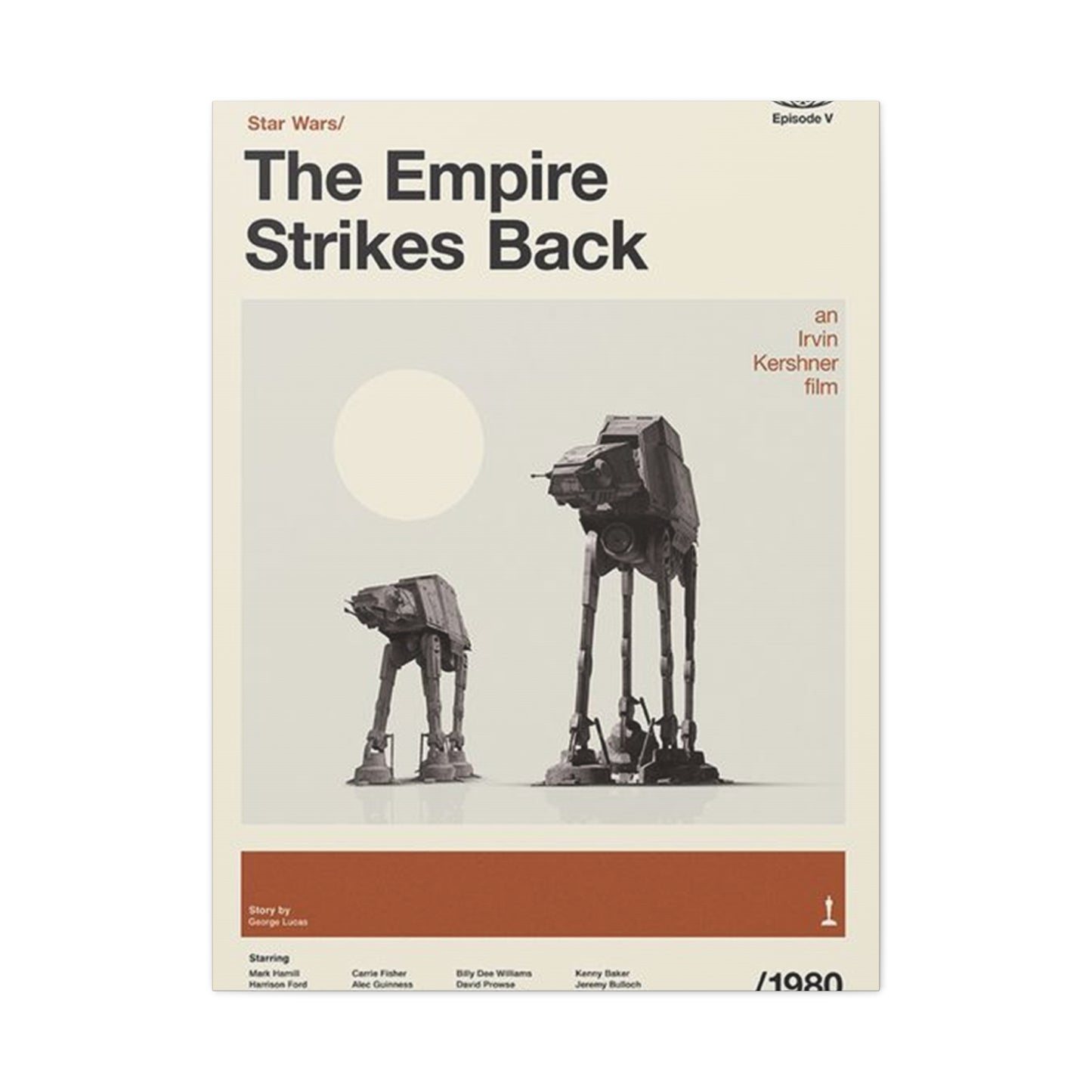
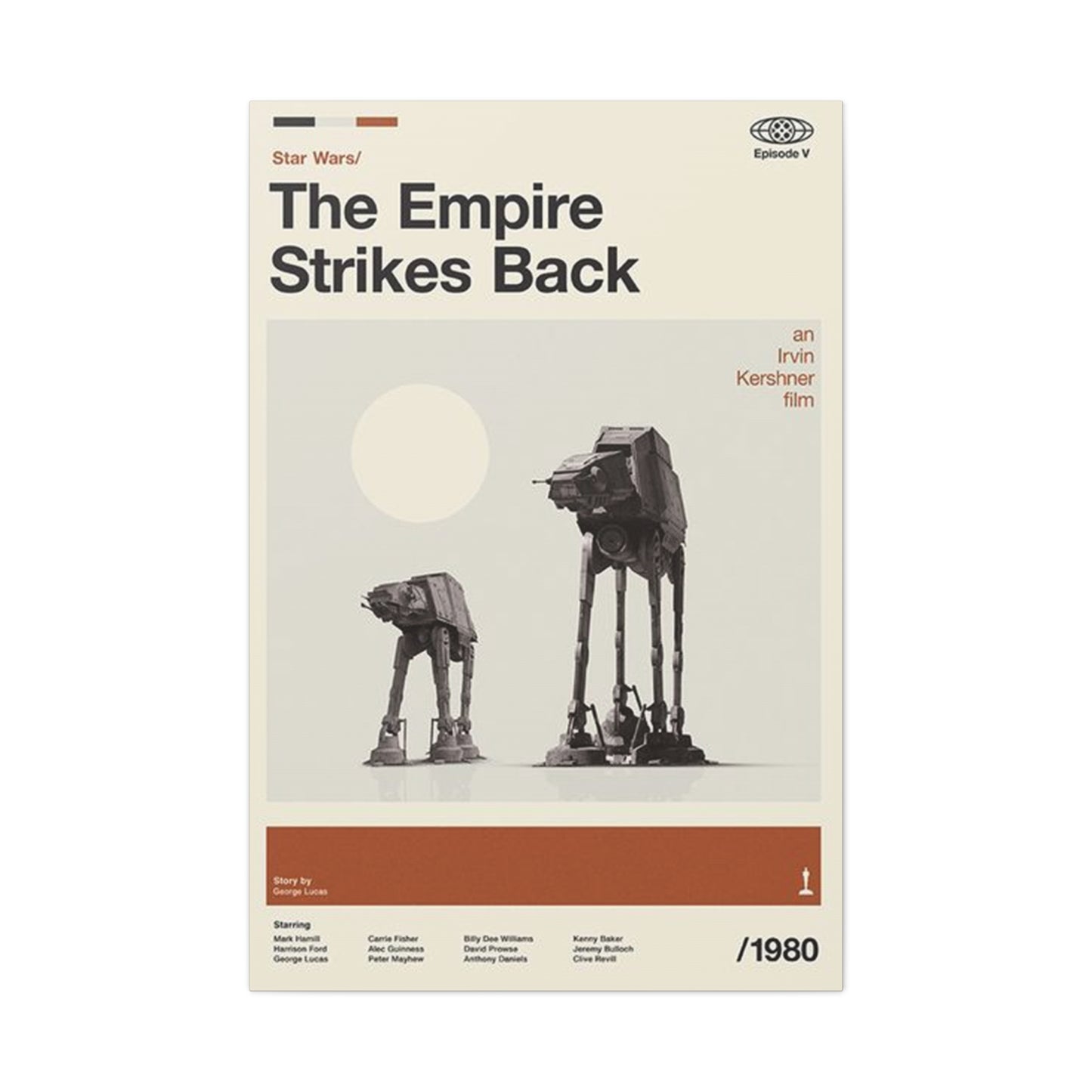
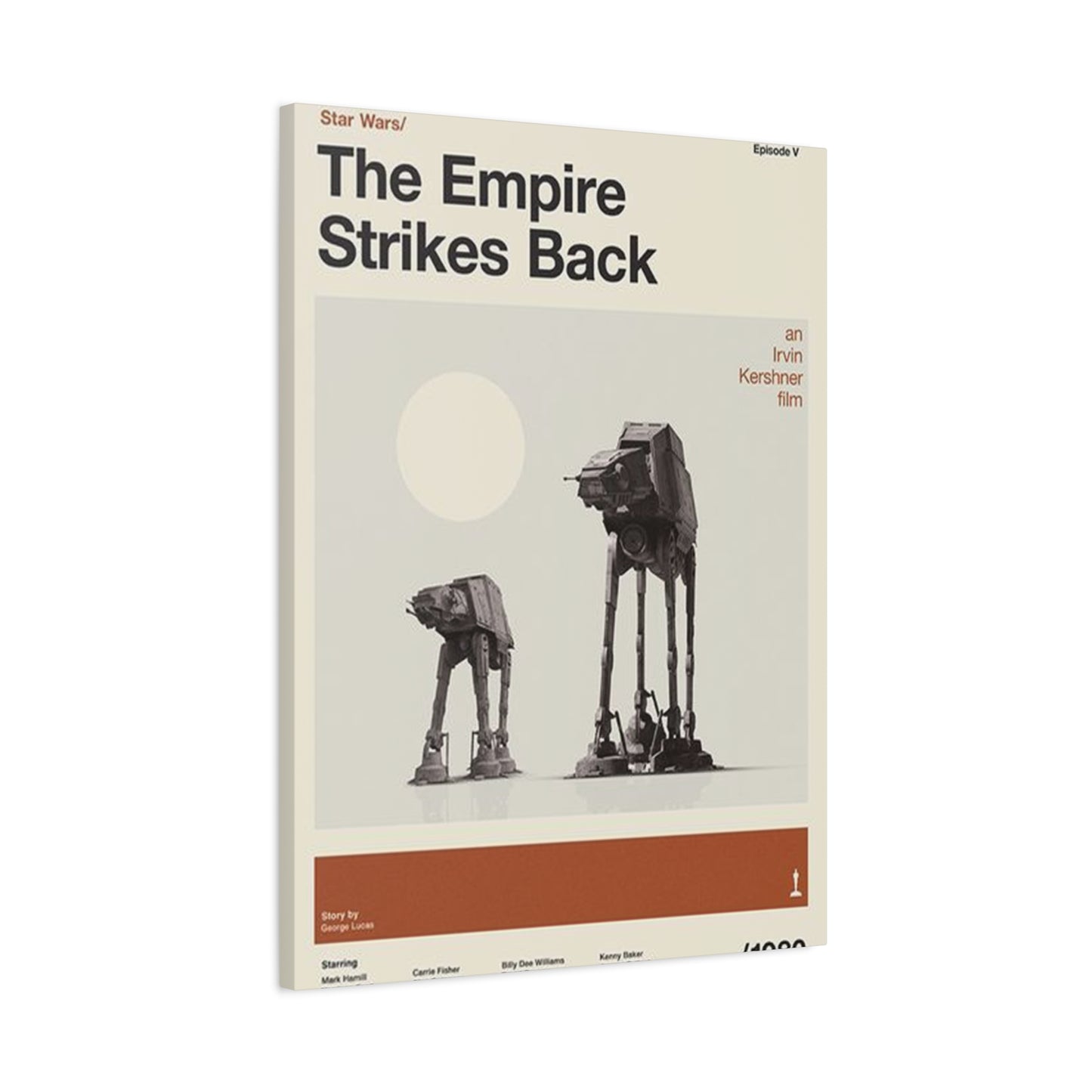
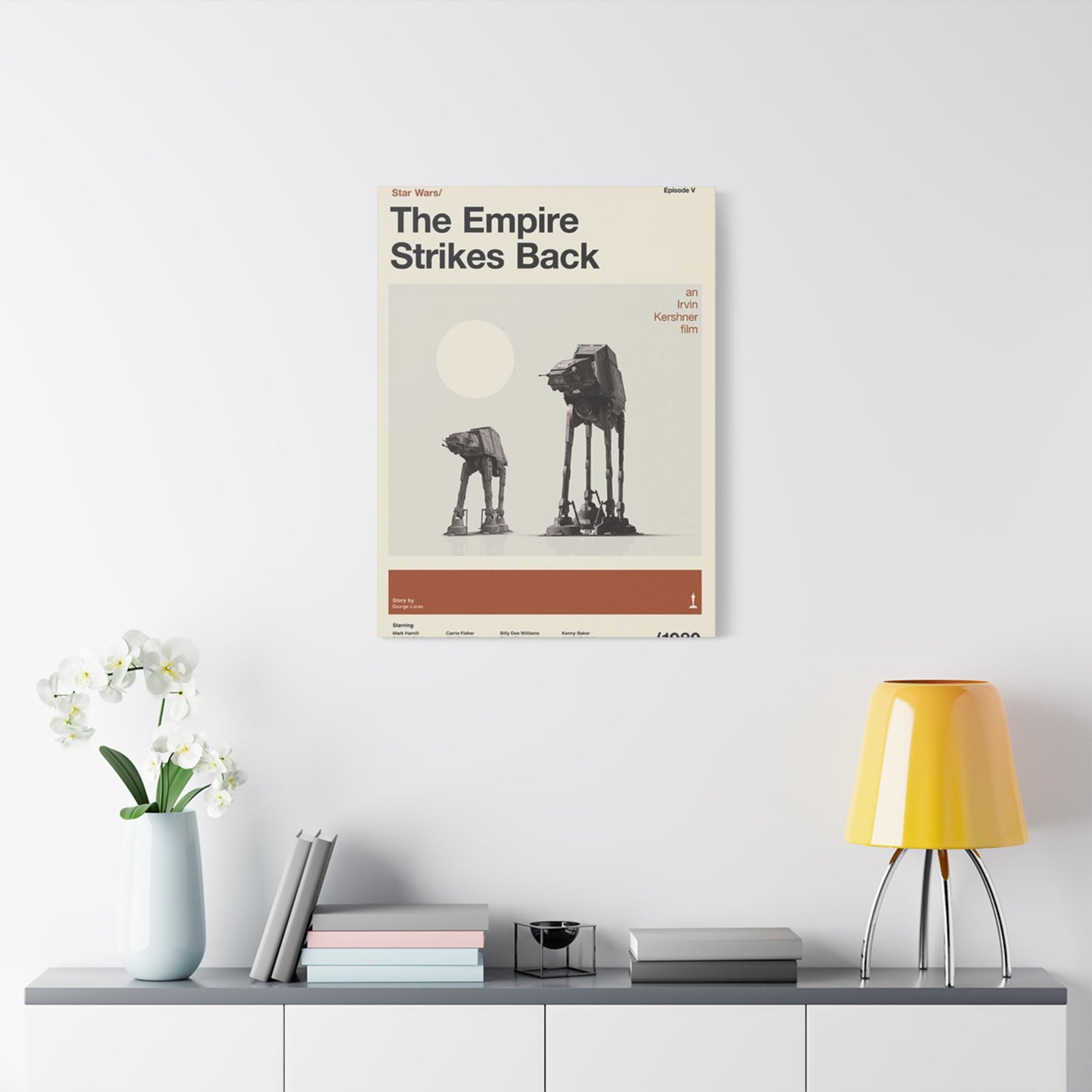
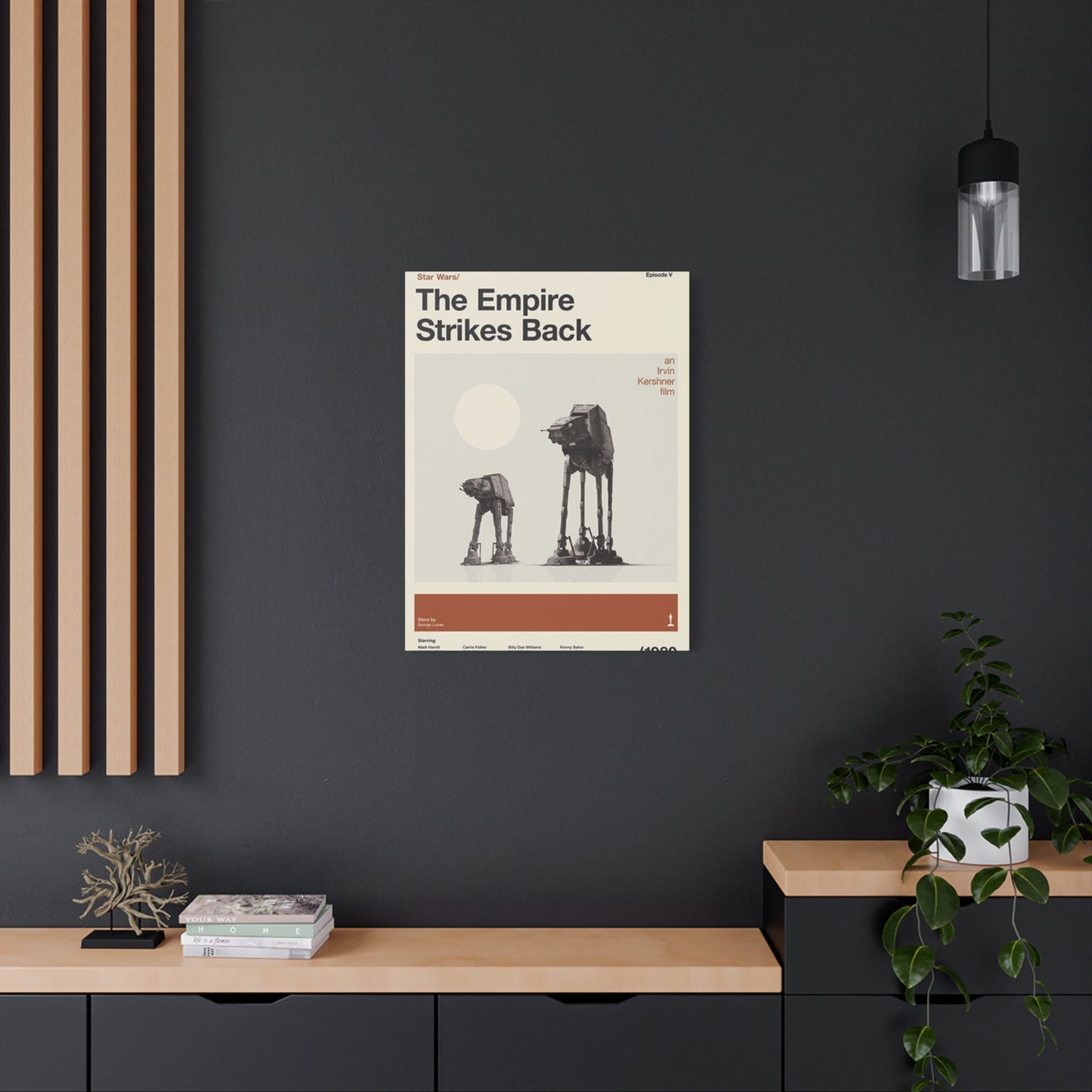
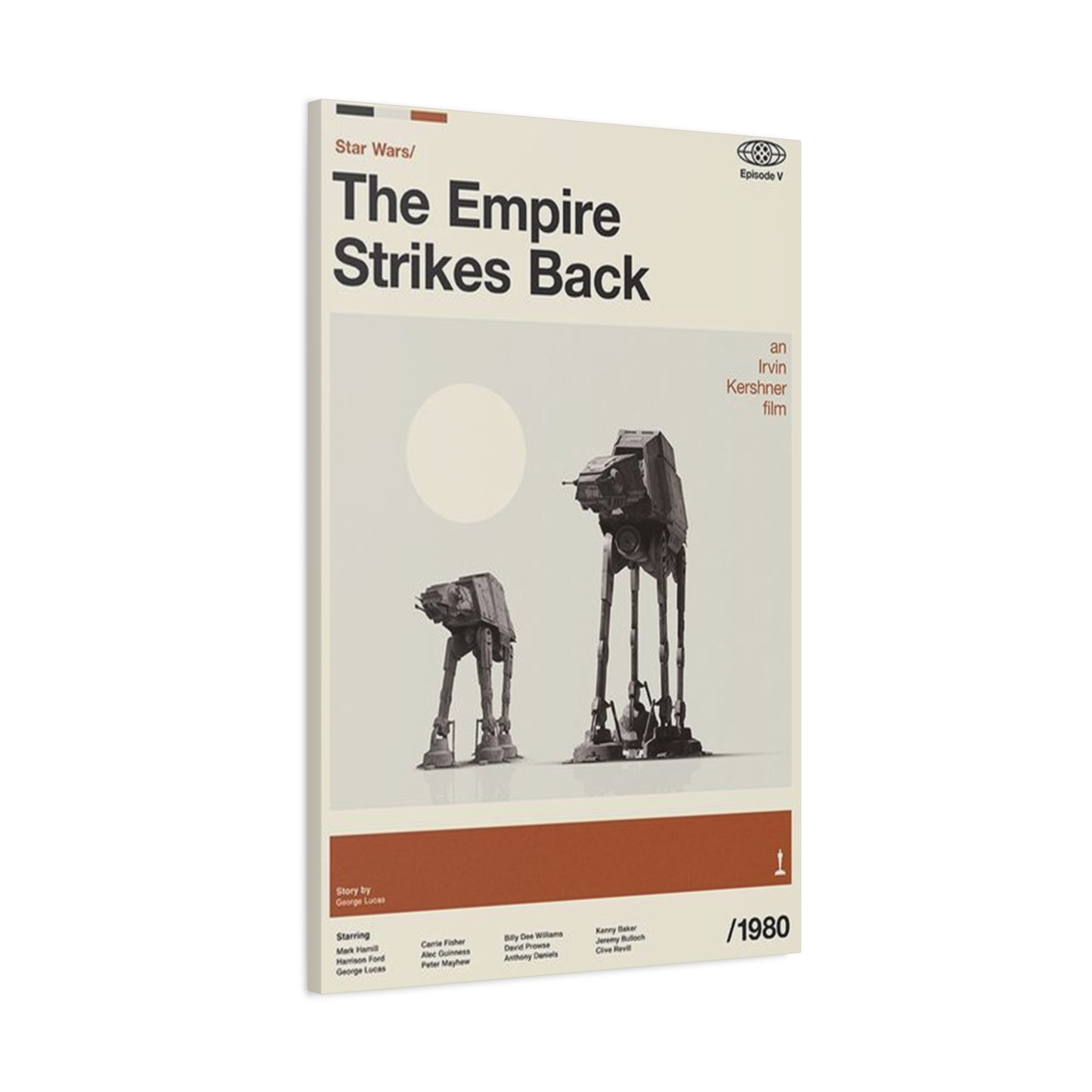
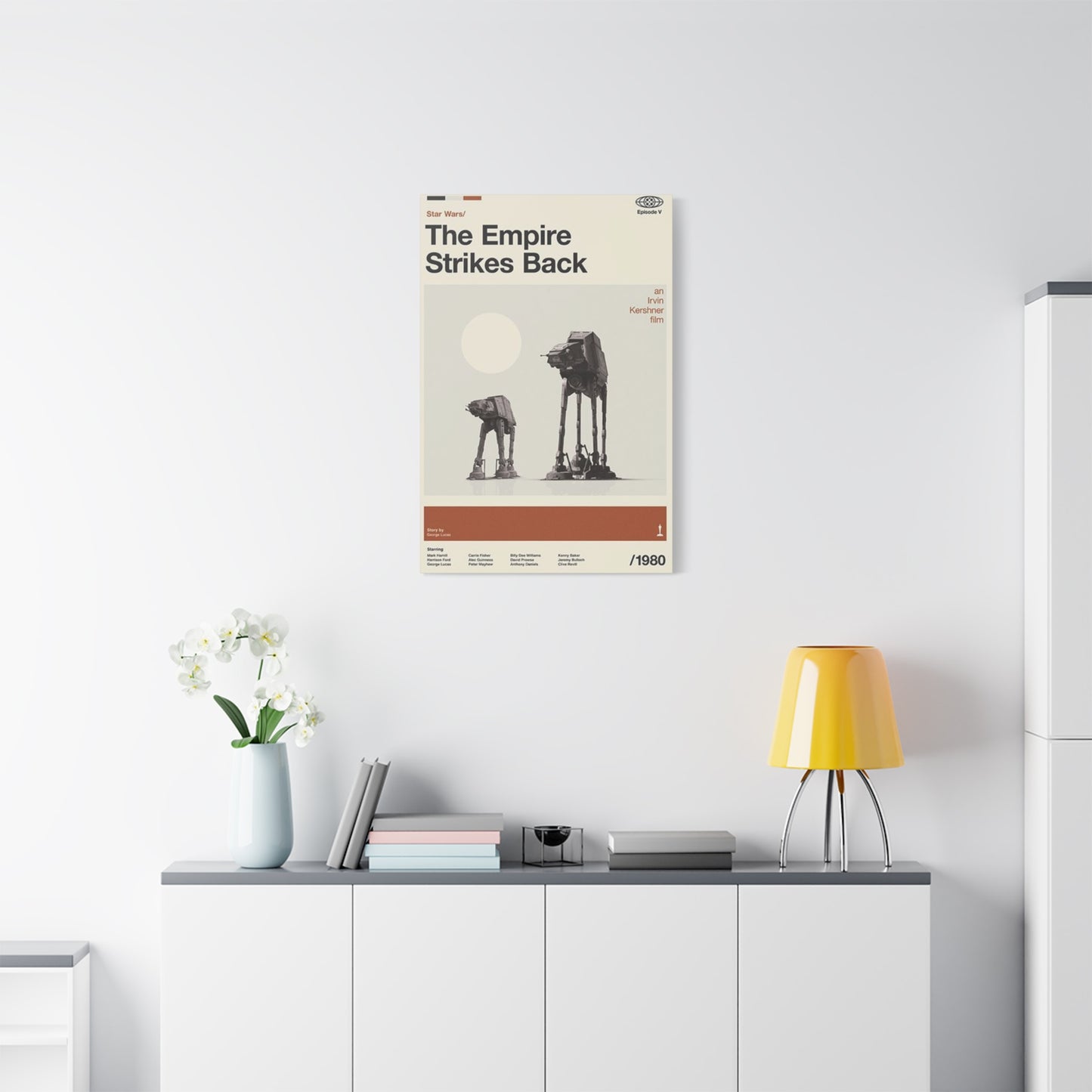
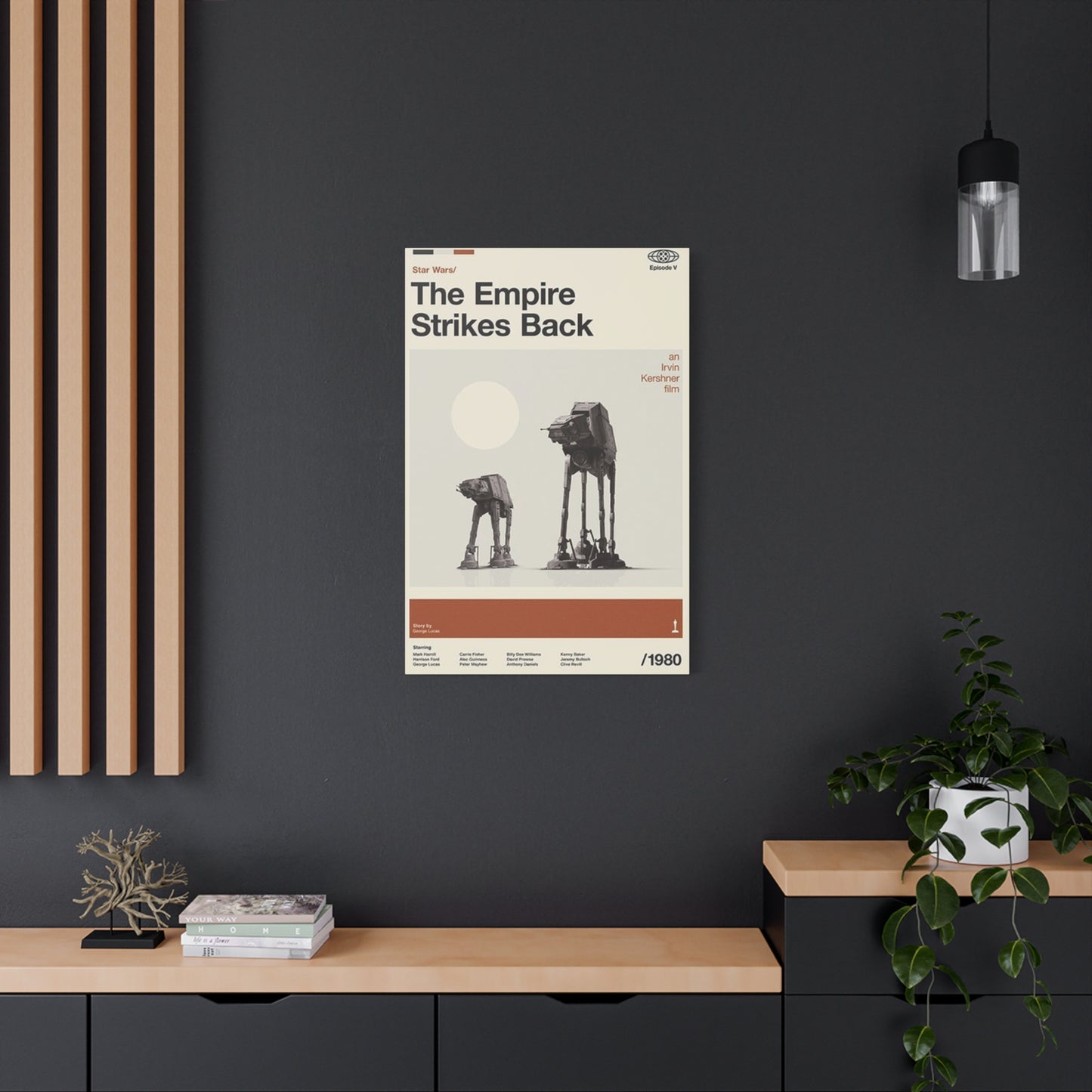
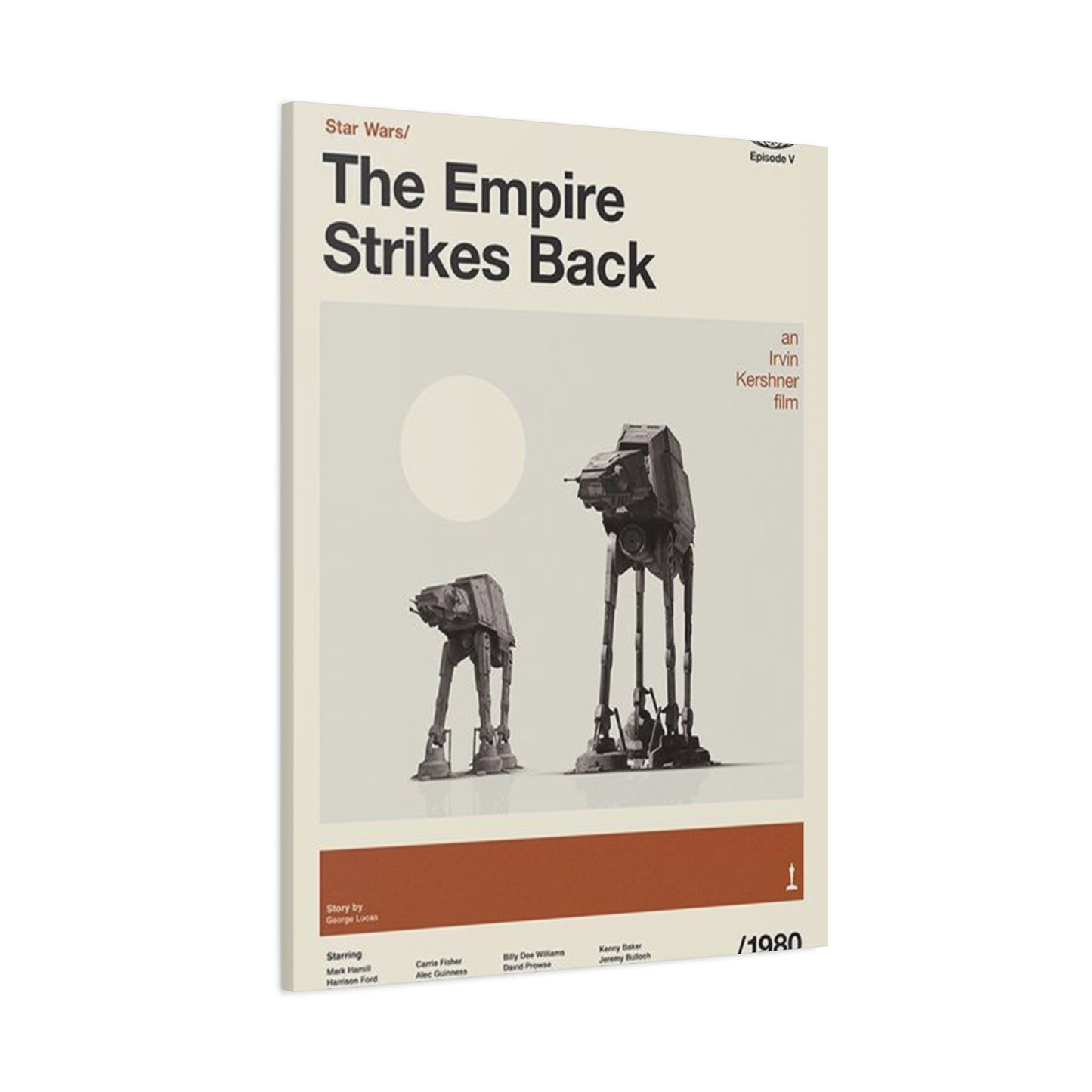
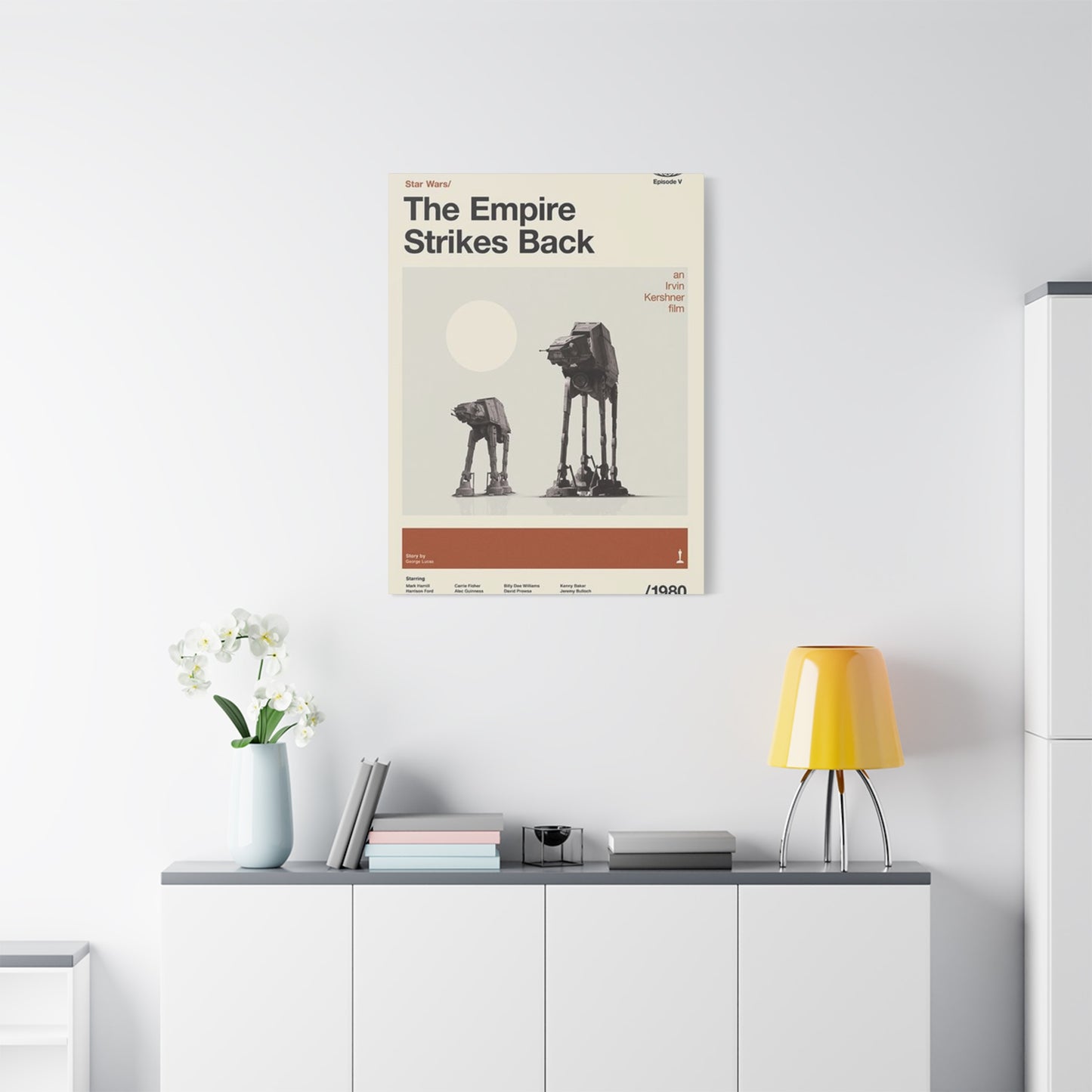
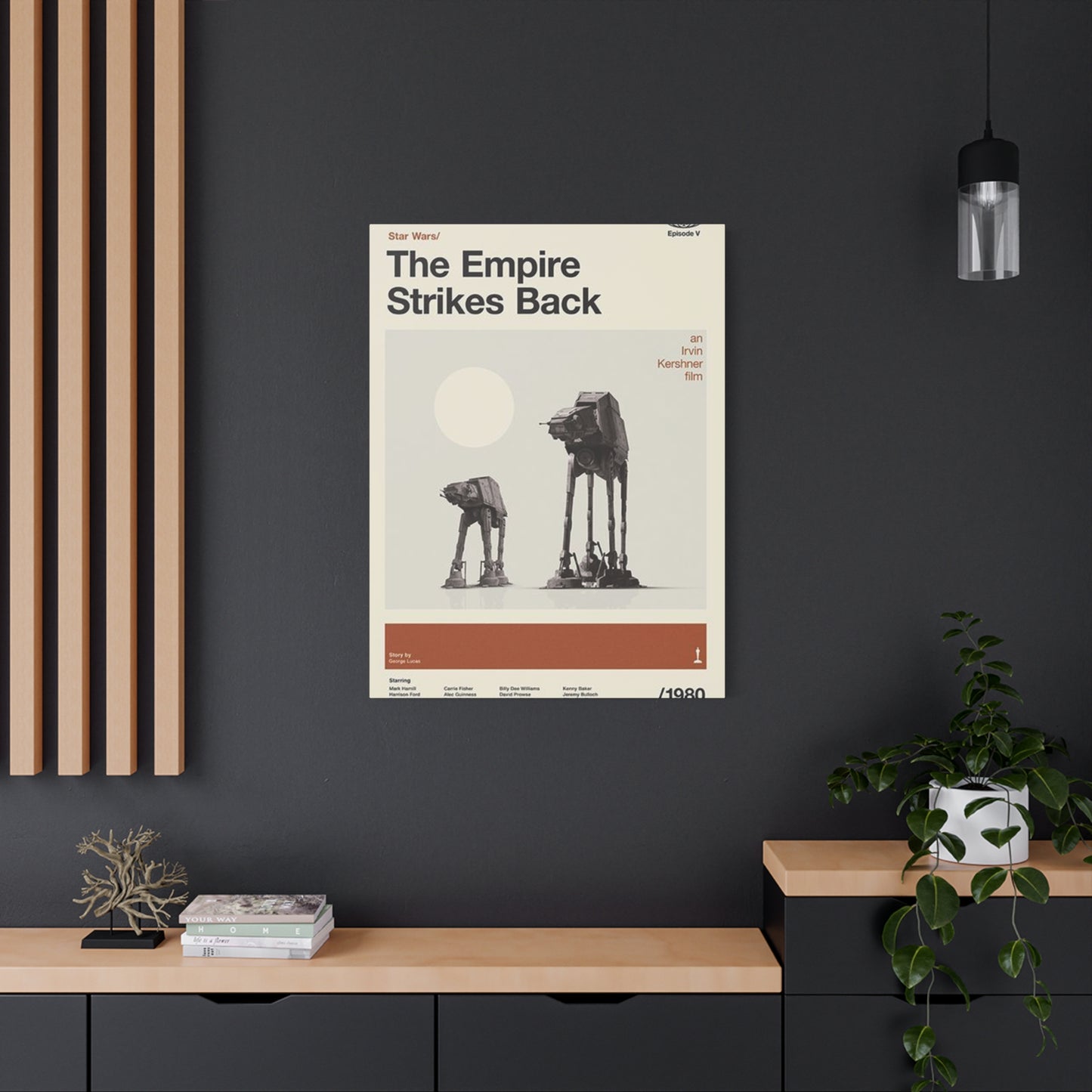
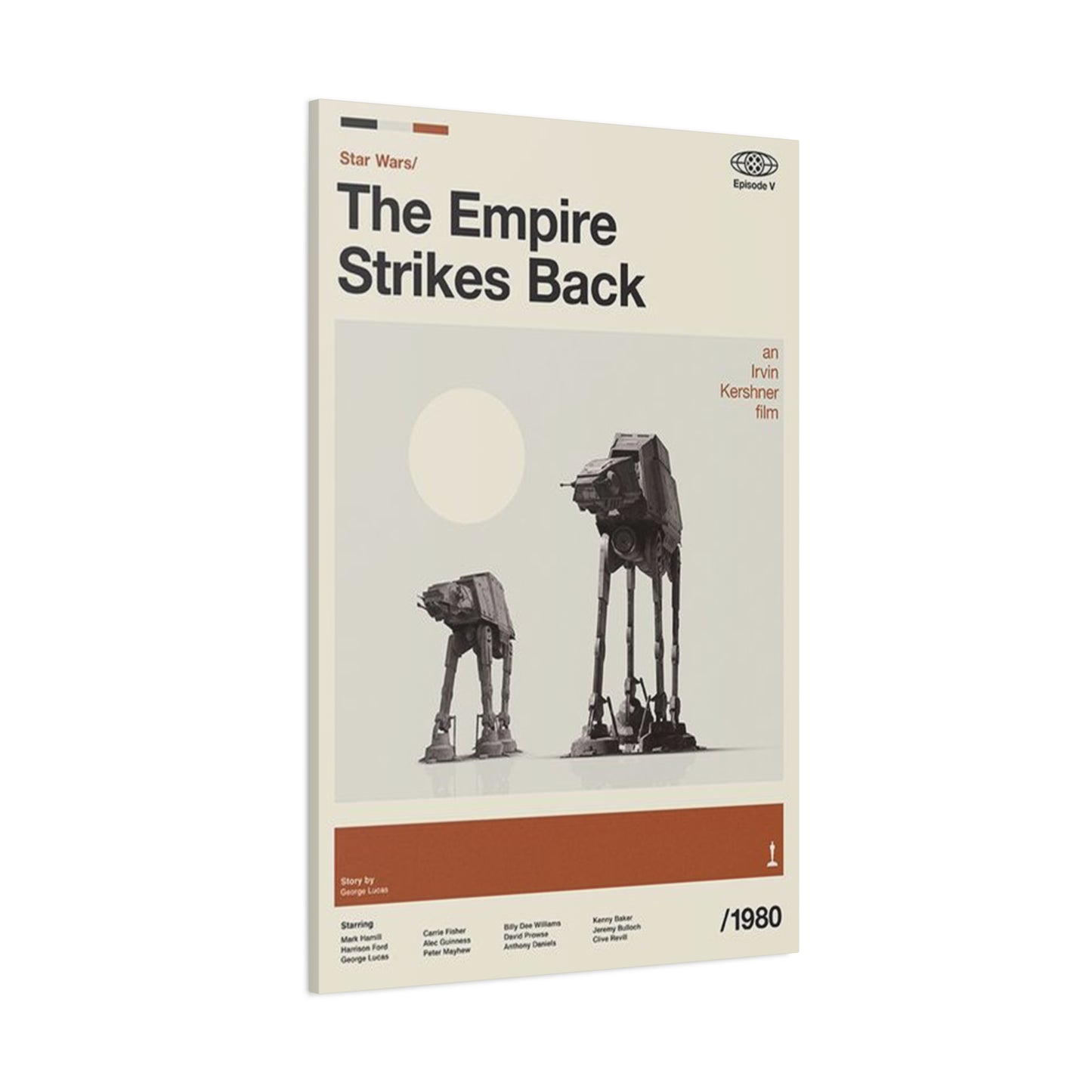
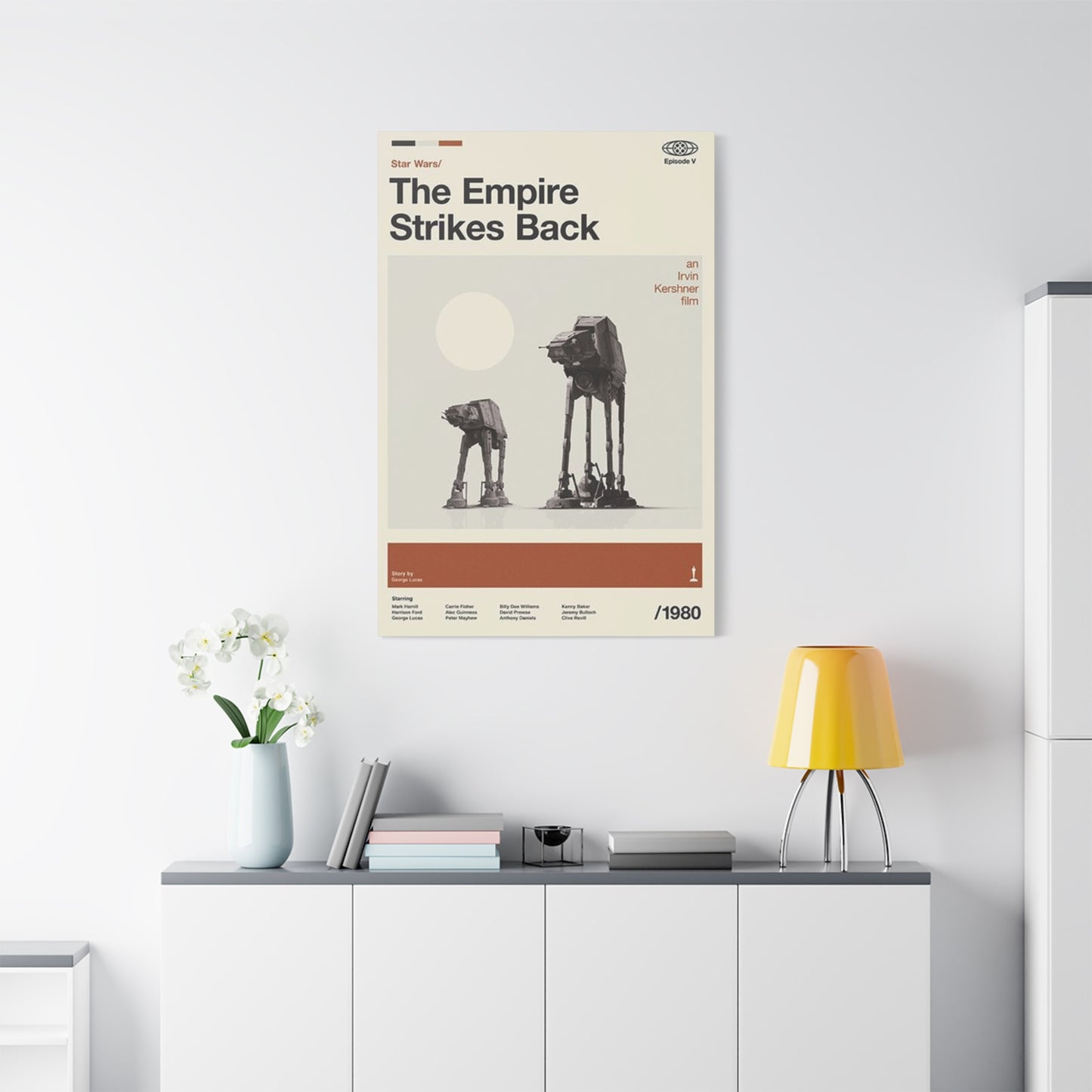
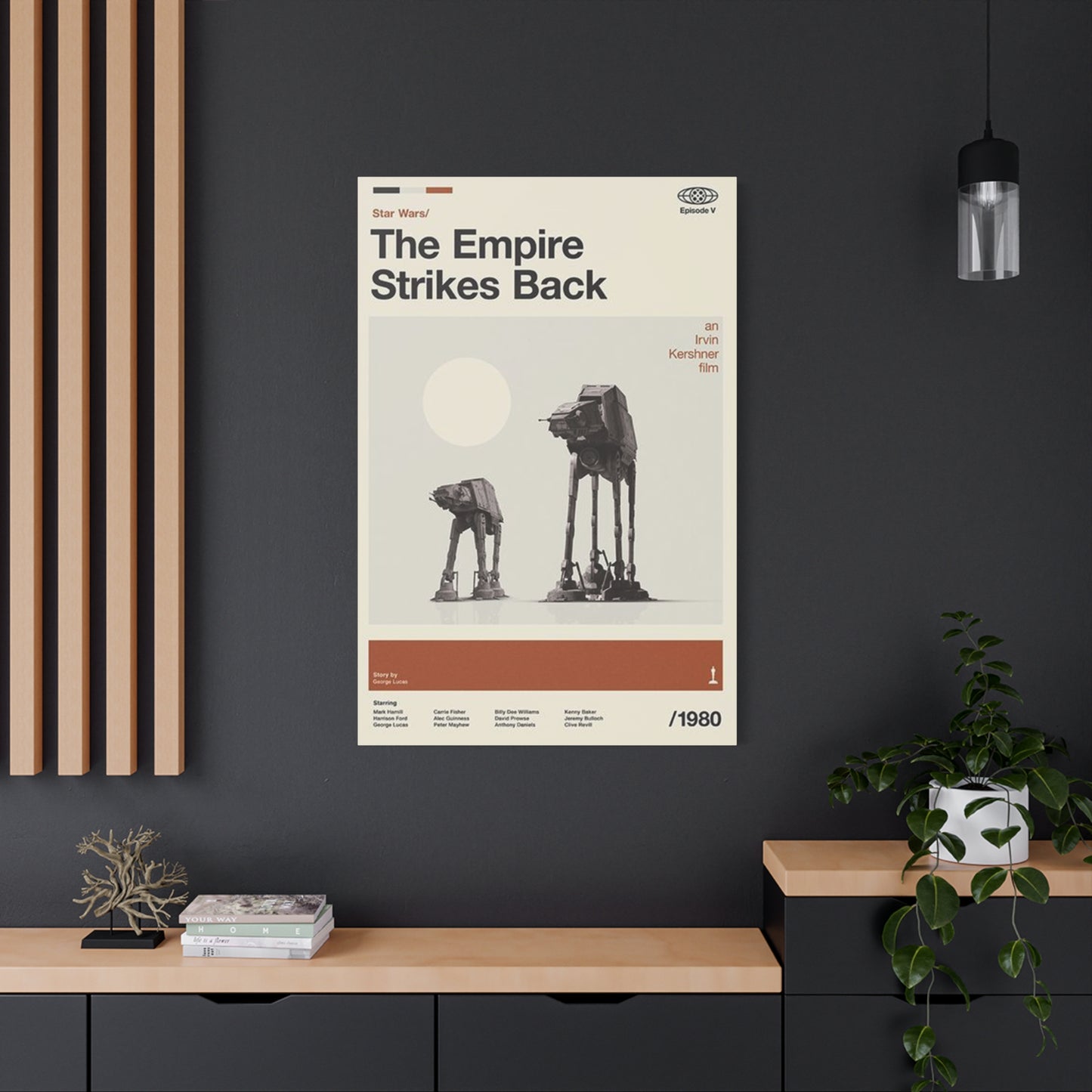
Not all Star Wars fans want a giant, photorealistic battle scene on their wall. For those with a more modern or subtle aesthetic, the world of minimalist Empire Strikes Back wall art offers a sophisticated way to showcase their fandom. This style is about boiling down a character, ship, or scene to its most essential elements. A minimalist piece might consist of three simple horizontal stripes—orange, white, and blue—instantly recognizable as the color palette of a Rebel pilot's flight suit and helmet. A simple, black T-shape silhouette on a white background is immediately identifiable as a Star Destroyer, while a grey shape with four simple legs becomes an AT-AT. Character-based minimalism is also popular.
A simple black cape and the outline of a helmet represent Darth Vader. Two brown circles for buns and a white dress silhouette represent Leia. A few green lines for ears and a brown robe evoke Yoda. Minimalist art also extends to locations. A few jagged brown lines and swirling green mists can represent Dagobah, while a series of clean circles and a sunset gradient can represent Cloud City. This type of Empire Strikes Back wall art is clever, stylish, and blends seamlessly with contemporary interior design. It’s an "if you know, you know" piece of decor. It doesn't scream its fandom; it whispers it, rewarding the observant viewer and allowing the owner to enjoy a piece of the Star Wars universe in a more abstract and artistic way.
Vintage and Retro Poster Styles
The Empire Strikes Back was released in 1980, and art that leans into the aesthetic of that era has a unique charm. Vintage and retro-style Empire Strikes Back wall art is a thriving market, celebrating the graphic design trends of the late 1970s and early 1980s. This can include high-quality reproductions of the original theatrical release posters. The famous "Gone with the Wind" style poster by Roger Kastel, featuring Han and Leia in a dramatic embrace while Vader looms behind them, is a timeless classic. It’s a piece of movie history that adds a touch of authenticity and nostalgia to any room. Beyond official reproductions, many modern artists create new art in a retro style. This might involve using a limited color palette, distressed textures to simulate age, and bold, blocky typography that was common at the time.
These "travel poster" style prints are very popular, advertising "Visit beautiful Cloud City" or "Brave the icy wastes of Hoth" in a cheerful, mid-century modern style that creates a fun, ironic contrast with the actual danger of those locations. This type of Empire Strikes Back wall art is perfect for someone who loves the film but also appreciates the history of graphic design. It’s warm, nostalgic, and has a tangible sense of history, real or imagined. It connects the film not just to its own universe, but to the specific moment in our own cultural history when it was first released, creating a powerful feeling of nostalgia.
Choosing the Right Piece: Material and Placement
Once you've decided on a subject or style for your Empire Strikes Back wall art, the practical considerations of material and placement are paramount. The material of the print can drastically change its look and feel. A canvas print offers a classic, painterly texture. The art is stretched over a wooden frame, giving it depth and a gallery-like presence. A large Hoth battle scene or a portrait of Yoda looks substantial and timeless on canvas. Framed art prints offer a more traditional and formal look. A high-quality paper print behind glass, especially with a mat, can elevate the artwork. A minimalist design or a typographic quote often looks best in a simple, modern black or white frame. Metal prints, where the image is infused directly onto a sheet of aluminum, are a modern, high-tech option.
This material is perfect for Empire Strikes Back wall art. The reflective, glossy surface makes colors pop and is ideal for scenes with high contrast, like the lightsaber duel or images of space. Wood prints offer a rustic, warm alternative, where the grain of the wood shows through the image, which can be a beautiful and unique effect for a Dagobah swamp scene. As for placement, it’s all about matching the art's mood to the room's function. The epic, action-packed Battle of Hoth or the Millennium Falcon in the asteroid field are perfect for a home theater or game room. The inspirational, typographic "Do or do not" art is ideal for a home office or gym. The dark, moody art of the Vader-Luke duel or the carbon-freezing chamber can be a dramatic centerpiece in a living room. The romantic "I love you. I know" art is a natural fit for a bedroom. The key is to let your Empire Strikes Back wall art not only represent your fandom but also enhance the atmosphere you want to create in your personal space.
Final thoughts:
To conclude, the sheer volume and variety of Empire Strikes Back wall art available today is a profound testament to the film's singular place in our culture. This is not a movie that has faded into nostalgic memory; it remains a vital, breathing entity, continuously re-interpreted by new generations of artists and fans. Its power as a source for home decor comes from its unparalleled visual and emotional richness. The film is a journey through starkly contrasted, unforgettable worlds. The cold, bright despair of Hoth, the mystical, living murk of Dagobah, and the ethereal, treacherous beauty of Cloud City provide a complete spectrum of color palettes and moods. No matter your personal aesthetic, there is a piece of Empire Strikes Back wall art that will fit. If you prize action and epic scale, the Battle of Hoth offers it in spades. If you seek contemplation and inspiration, the wisdom of Yoda provides it. If you are drawn to dark romance and tragedy, the story of Han and Leia in the carbon-freezing chamber is timeless. And if you are captivated by the epic struggle between light and dark, the duel between Luke and Vader is its ultimate expression.
Choosing to hang Empire Strikes Back wall art is more than just decorating. It is an act of curating your own personal space with a story that matters. It’s about surrounding yourself with the themes that resonate with you: resilience in the face of impossible odds, the difficulty of training and self-discovery, the pain of sacrifice, and the hope that lingers even in the darkest of times. The film's unresolved, somber ending is perhaps its greatest strength. It’s a story about the "middle," the difficult part of the journey, not the easy beginning or the triumphant end. This is a profoundly relatable human experience. When you hang a print of Luke's X-Wing half-sunk in the swamp, you are displaying a symbol of being "stuck" but also of being on the verge of a great lesson. When you choose a minimalist silhouette of an AT-AT, you are acknowledging the massive, seemingly unstoppable challenges we all face.
From hyper-realistic canvases to subtle minimalist designs, from retro posters to modern metal prints, the art of The Empire Strikes Back serves as a daily touchstone to a galaxy that has taught us so much about our own. It is a shared visual language that connects fans across decades. It allows us to bring a piece of that epic, emotional, and visually stunning story into our homes, making our own world just a little bit more cinematic. The legacy of The Empire Strikes Back is not just in its script or its special effects; it is in the indelible images it created, images that have proven to be as enduring, as powerful, and as worthy of being on our walls as any classic art.


