


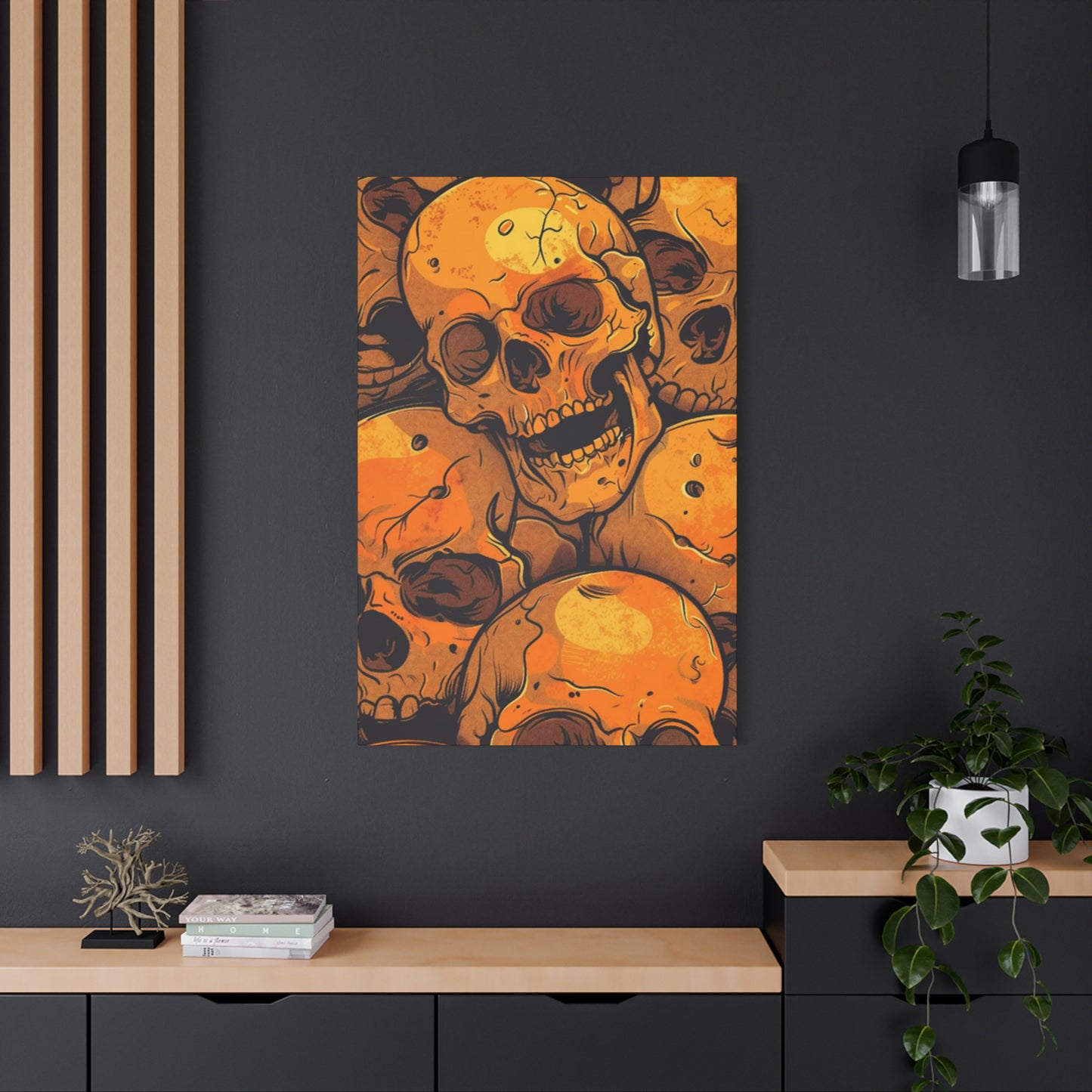
Yellow Skull Wall Art: Energizing Spaces with Daring Design Elements
The world of interior design constantly evolves, bringing fresh interpretations to traditional motifs. Among the most captivating trends emerging in contemporary home decor is the incorporation of yellow skull artwork into living spaces. This striking combination merges the timeless symbolism of skull imagery with the invigorating vitality of yellow hues, creating a visual experience that challenges conventional design boundaries while maintaining sophisticated aesthetic appeal.
The fascination with skull imagery spans centuries across multiple cultures, representing everything from mortality and wisdom to rebellion and transformation. When artists introduce vibrant yellow tones into this classic iconography, they create something entirely unexpected. The resulting pieces challenge viewers to reconsider their preconceptions about both the somber associations of skull art and the cheerful connotations of yellow coloring. This juxtaposition forms the foundation of a design movement that speaks to individuals seeking to express both depth and optimism in their personal spaces.
Yellow skull artwork represents more than simple decoration. These pieces serve as conversation starters, personality reflections, and artistic statements that bridge multiple aesthetic traditions. They appeal to those who appreciate the darker elements of gothic and alternative art while simultaneously embracing the energizing qualities of bright, saturated colors. This duality makes yellow skull pieces particularly versatile, fitting seamlessly into various design schemes from industrial lofts to eclectic bohemian retreats.
The psychological impact of incorporating yellow into traditionally dark imagery cannot be overstated. Yellow naturally draws the eye, stimulates mental activity, and generates feelings of happiness and energy. When applied to skull motifs, it transforms potentially morbid imagery into something approachable and even celebratory. This transformation aligns with contemporary attitudes toward mortality and symbolism, where darker themes are increasingly embraced as part of a complete artistic palette rather than avoided or feared.
Interior designers and art enthusiasts have embraced yellow skull artwork for its ability to anchor a room while maintaining visual interest. Unlike purely decorative pieces that fade into the background, these artworks command attention and establish focal points within spaces. They work particularly well in environments that benefit from bold statements, such as creative studios, modern apartments, entertainment areas, and commercial spaces targeting younger, trend-conscious clientele.
The versatility of yellow skull art extends beyond its visual impact. These pieces complement a surprising range of color schemes and design styles. Against neutral backgrounds, they provide dramatic punctuation. In rooms already featuring bold colors, they contribute to an eclectic, curated aesthetic. The warmth of yellow allows skull imagery to integrate into spaces that might otherwise feel too cold or stark, while the edginess of the skull motif prevents overly bright rooms from becoming saccharine or juvenile.
Striking Visual Contrast in Contemporary Design
The power of yellow skull artwork lies fundamentally in its mastery of contrast. Traditional skull imagery typically appears in black, white, gray, or other subdued tones, reinforcing associations with shadows, mystery, and the macabre. Introducing vibrant yellow into this context creates immediate visual tension that captures attention and stimulates cognitive engagement. This contrast operates on multiple levels simultaneously, affecting color perception, emotional response, and cultural interpretation.
From a purely visual standpoint, yellow represents one of the most luminous colors in the spectrum. Its high visibility and reflective qualities make it naturally eye-catching. When applied to the distinctive form of a skull, with its recognizable features and symbolic weight, the bright hue amplifies the impact of both elements. The skull form gains new dimension and accessibility, while the yellow color acquires depth and intrigue it might lack in simpler applications.
The emotional contrast proves equally significant. Yellow carries associations with sunshine, joy, optimism, and vitality across most cultures. Skulls, conversely, connect to mortality, rebellion, danger, and the unknown. Combining these opposing symbolic frameworks creates artwork that operates in conceptual tension, inviting viewers to reconcile seemingly contradictory messages. This intellectual engagement transforms passive viewing into active interpretation, making the art more memorable and personally meaningful.
Cultural contrast adds another dimension to yellow skull artwork. Western artistic traditions often separate "light" and "dark" imagery into distinct categories with little overlap. Gothic and alternative aesthetics typically embrace shadows, blacks, and deep colors, while pop art and contemporary bright design favor saturated, cheerful hues. Yellow skull art deliberately crosses these categorical boundaries, creating hybrid pieces that belong simultaneously to multiple artistic traditions. This boundary-crossing appeals particularly to contemporary audiences comfortable with genre-blending and cultural fusion.
The technical execution of contrast in yellow skull artwork varies widely among artists and styles. Some creators use pure, saturated yellows reminiscent of street art and graphic design, producing pieces with bold, unambiguous impact. Others incorporate yellow in more nuanced ways, using various shades from pale lemon to deep golden tones, sometimes combining multiple yellows within a single composition. These tonal variations create different moods and suit different spaces, offering buyers options that range from aggressive statement pieces to more subtle artistic expressions.
Background treatment significantly affects how contrast operates in yellow skull artwork. Pieces featuring yellow skulls against black or dark backgrounds maximize dramatic impact, creating compositions that practically glow with intensity. White or light backgrounds produce a different effect, making the yellow appear warmer and more integrated while maintaining visibility. Colorful backgrounds introduce additional complexity, with complementary colors like purple creating vibrant tension, while analogous colors like orange create harmonious transitions.
Texture and finish also contribute to the contrast effect. Matte yellow produces a different visual experience than glossy or metallic finishes. Some artists incorporate mixed media, using textured surfaces, layered applications, or contrasting smooth and rough areas within the same piece. These textural variations add physical dimension to the visual contrast, creating artwork that rewards close examination while maintaining impact from a distance.
The size and scale of yellow skull artwork influence how effectively contrast operates within a space. Large-scale pieces make bold architectural statements, transforming walls into dramatic focal points. Medium-sized works offer flexibility in placement and pairing with other decorative elements. Smaller pieces allow for gallery wall arrangements where multiple yellow skull artworks can create cumulative impact or where they can interact with complementary imagery.
Lighting considerations prove crucial for maximizing the contrast potential of yellow skull artwork. Natural light brings out the warmth and luminosity of yellow tones, making pieces appear to radiate energy. Artificial lighting allows for dramatic effects, with spotlighting creating theater-like presentation and ambient lighting producing more subtle integration. The reflective qualities of yellow mean these pieces can actually contribute to room lighting, brightening spaces through their color rather than merely decorating them.
Contemporary Interpretation of Traditional Symbols
Yellow skull artwork represents a fundamental reimagining of one of humanity's oldest and most universal symbols. Skulls have appeared in art across virtually every culture and time period, serving purposes ranging from religious iconography to memento mori reminders to subcultural identity markers. The introduction of vibrant yellow into this tradition represents not a rejection of historical meaning but rather an evolution that makes ancient symbolism relevant to contemporary sensibilities.
Throughout history, skull imagery in art served primarily serious, often somber purposes. Medieval and Renaissance artists incorporated skulls into compositions to remind viewers of mortality and the transient nature of earthly pleasures. This tradition, known as memento mori, encouraged spiritual reflection and ethical living by keeping death's inevitability present in consciousness. While powerful, these historical applications rarely invited joy or celebration into their interpretation.
The twentieth century saw skull imagery adopted by various countercultures, from biker communities to punk movements, where it symbolized rebellion, danger, and rejection of mainstream values. Black and white skull imagery became shorthand for alternative identity, appearing on everything from leather jackets to album covers. This usage maintained the darker associations of skull symbolism while adding layers of cultural defiance and individualism.
Contemporary yellow skull art builds upon these historical foundations while introducing fundamentally new perspectives. By applying cheerful, energetic yellow to skull forms, artists create pieces that acknowledge mortality while refusing to treat it as purely negative. This approach aligns with emerging cultural attitudes that view death as a natural part of existence rather than something to fear or avoid discussing. The yellow suggests vitality, continuation, and even celebration of life's complete cycle.
Mexican Dia de los Muertos traditions provide important cultural precedent for colorful skull imagery, though yellow skull art in contemporary contexts draws from multiple influences rather than directly replicating these cultural practices. The Day of the Dead celebrates deceased loved ones through vibrant colors, flowers, music, and festivity, treating death as an occasion for joyful remembrance rather than mourning. While culturally specific, this approach has influenced global artistic perspectives on mortality, demonstrating that skulls can represent celebration and connection as easily as fear or endings.
Pop art movements of the mid-twentieth century established precedent for taking serious imagery and rendering it in bright, accessible colors. Artists working in this tradition demonstrated that cultural symbols could be recontextualized through color and presentation, making their meanings more flexible and open to interpretation. Yellow skull artwork continues this tradition, applying pop sensibilities to gothic imagery in ways that honor both aesthetic lineages.
Contemporary spirituality and philosophy increasingly embrace paradox and complexity rather than simple dualities. Yellow skull art reflects this shift, presenting imagery that simultaneously acknowledges darkness and light, mortality and vitality, seriousness and playfulness. These pieces invite viewers to hold multiple perspectives simultaneously, cultivating psychological flexibility and comfort with ambiguity. This intellectual dimension elevates yellow skull art beyond simple decoration into the realm of meaningful personal expression.
The democratization of art through digital creation and reproduction has also influenced yellow skull artwork's development. Independent artists can now create and distribute their interpretations of skull imagery without institutional gatekeeping, leading to explosion of styles, approaches, and color applications. This diversity means yellow skull art encompasses everything from street-art-inspired graffiti styles to elegant minimalist renderings to hyperrealistic paintings, offering options for every aesthetic preference.
Environmental considerations play an increasingly important role in contemporary art interpretation. Some viewers perceive yellow skull imagery as commentary on environmental crisis, with the bright color representing warning or urgency while the skull acknowledges potential consequences of ecological destruction. Whether or not artists intend this interpretation, the openness of yellow skull symbolism allows for these meaningful readings, making the artwork relevant to contemporary concerns beyond pure aesthetics.
Energizing Dark Aesthetic Traditions
The emergence of yellow skull artwork represents a significant evolution in alternative and gothic aesthetic traditions. For decades, dark art maintained relatively consistent visual characteristics: deep colors, dramatic shadows, mysterious atmospheres, and imagery drawn from horror, fantasy, and macabre themes. While this aesthetic proved enduringly popular, it also created certain limitations in terms of versatility and accessibility. Yellow skull art addresses these limitations while preserving the core appeal of darker imagery.
Traditional gothic and alternative art excels at creating mood and atmosphere, particularly feelings of mystery, melancholy, and romantic darkness. These qualities attract devoted audiences who find beauty in shadows and depth in somber themes. However, the visual weight of predominantly dark artwork can overwhelm spaces, making rooms feel smaller, darker, and potentially oppressive, especially in homes with limited natural light or smaller square footage. Yellow skull art provides a solution by maintaining gothic imagery while introducing brightness that opens up spaces.
The psychology of dark versus light environments affects daily mood and energy levels in measurable ways. Spaces dominated by dark colors can feel intimate and cozy but may also contribute to feelings of lethargy or low mood, particularly during seasons with limited daylight. Introducing bright elements like yellow skull artwork allows enthusiasts of darker aesthetics to enjoy their preferred imagery while maintaining environmental brightness that supports positive mental states and active energy.
Yellow skull pieces function as bridge elements that connect dark aesthetic preferences with practical interior design considerations. Someone might love gothic art and alternative culture but need to create a home environment suitable for productivity, social gatherings, or simply daily functioning. Yellow skull artwork allows them to express their aesthetic identity while maintaining spaces that feel open, energized, and welcoming. This balancing act makes these pieces particularly valuable for people navigating between personal style and practical needs.
The introduction of bright colors into dark art traditions also signals generational and cultural shifts within alternative communities. Younger participants in gothic, punk, and alternative scenes increasingly resist rigid aesthetic rules, preferring to mix influences from multiple sources. Yellow skull art exemplifies this mixing, demonstrating that appreciation for darker themes doesn't require adherence to a narrow color palette. This flexibility attracts new audiences while offering established enthusiasts fresh ways to engage with familiar imagery.
Commercial spaces catering to alternative audiences particularly benefit from yellow skull artwork. Tattoo shops, music venues, boutiques, cafes, and similar businesses often want to signal their connection to alternative culture while maintaining approachable, Instagram-worthy environments that attract diverse clientele. Yellow skull pieces communicate edge and authenticity while creating bright, photogenic backgrounds that encourage social media sharing and positive associations.
The seasonal versatility of yellow skull artwork distinguishes it from purely dark pieces. Traditional gothic art fits naturally into autumn and winter aesthetics, complementing the darker, cozier atmospheres appropriate to those seasons. However, it can feel mismatched during spring and summer when natural light increases and brighter moods prevail. Yellow skull art transitions seamlessly across seasons, maintaining its impact year-round by balancing darker imagery with cheerful coloring suitable for any time of year.
Fashion parallels illuminate the evolution yellow skull art represents. Alternative fashion has increasingly incorporated bright colors, pastels, and mixed aesthetics alongside traditional blacks and dark tones. Pastel goth, kawaii goth, and similar micro-aesthetics demonstrate that alternative style can embrace color without sacrificing identity. Yellow skull art represents the interior design equivalent of these fashion trends, applying the same principle of expanded color palettes to wall decor and artwork.
The technical quality of contemporary yellow skull art also elevates dark aesthetic traditions. Digital tools, improved printing technologies, and greater artistic training allow creators to produce pieces with exceptional detail, color accuracy, and professional finish. This technical excellence makes yellow skull art suitable for sophisticated design schemes where craftsmanship and quality matter as much as subject matter. The days of alternative art being relegated to posters and cheaply produced prints have given way to an era of gallery-quality pieces that command respect in any setting.
Vibrant Color Psychology in Home Environments
Color psychology plays a fundamental role in how yellow skull artwork affects living spaces. Yellow occupies a unique position in the psychological spectrum of colors, producing strong emotional and physiological responses that designers and artists have long exploited. Understanding these effects helps explain why yellow skull art creates such distinctive impact and why it resonates with particular audiences seeking specific environmental experiences.
Yellow is universally recognized as the brightest color in the visible spectrum. The human eye processes yellow before other colors, making it naturally attention-grabbing and difficult to ignore. This visibility explains yellow's use in warning signs, traffic signals, and situations requiring immediate attention. In artwork, this same quality ensures that yellow skull pieces command focus within any room, serving as natural focal points that organize visual space and guide viewer attention.
The psychological associations with yellow encompass a complex range of responses. In positive contexts, yellow suggests sunshine, warmth, happiness, optimism, enlightenment, and mental clarity. These associations make it popular in spaces designed to encourage creativity, social interaction, or positive mood. However, yellow can also trigger feelings of anxiety, agitation, or warning when used too intensely or in the wrong contexts. The skull imagery in yellow skull art creates an interesting counterbalance, grounding the brightness with weight and symbolism that prevents the color from becoming overwhelming.
Physiologically, yellow stimulates mental activity and generates muscle energy. Exposure to yellow can increase metabolism, enhance concentration, and create feelings of being energized and alert. These effects make yellow skull artwork particularly suitable for workspaces, creative studios, or any environment where mental sharpness and active engagement are desirable. The combination of yellow's stimulating properties with skull imagery's thought-provoking symbolism creates artwork that engages viewers on both physical and intellectual levels.
Different shades of yellow produce varying psychological effects. Pale, soft yellows evoke gentleness, freshness, and optimism without the intensity of brighter shades. These lighter tones work well in spaces designed for relaxation or contemplation, where yellow skull art can maintain visual interest without overstimulation. Bright, saturated yellows create drama and energy, perfect for entertainment areas, entryways, or spaces designed to impress. Deep golden yellows suggest wealth, sophistication, and warmth, offering a more refined alternative to brighter shades.
The interaction between yellow and other colors in a space significantly affects psychological impact. Yellow skull art against neutral backgrounds allows the color to dominate, maximizing its energizing effects. When placed in rooms with complementary colors like purple or blue, the yellow becomes even more vibrant through color contrast, creating dynamic visual experiences. In spaces already featuring warm colors like orange or red, yellow skull art contributes to an overall warm, energetic atmosphere that can feel either exciting or overwhelming depending on the balance.
Cultural variations in yellow perception add complexity to its psychological effects. Western cultures often associate yellow with happiness and caution, while some Eastern traditions connect it with spirituality, royalty, or mourning. These varied associations mean yellow skull artwork can carry different connotations for different viewers, adding layers of potential interpretation. This cultural richness makes the art more interesting and personally meaningful as individuals project their own cultural understanding onto the pieces.
The size and intensity of yellow in artwork affects its psychological impact. Large expanses of bright yellow can overwhelm visual systems and create fatigue over time, while smaller applications or more muted tones allow for prolonged comfortable viewing. Artists creating yellow skull pieces must balance the desire for impact with considerations of long-term livability, ensuring their work remains engaging rather than exhausting. The skull form itself helps moderate yellow's intensity by breaking up solid color areas with recognizable features and tonal variations.
Lighting conditions dramatically alter how yellow functions psychologically in spaces. Natural light enhances yellow's warmth and vibrancy, making yellow skull artwork appear particularly alive and dynamic during daylight hours. Artificial lighting can shift yellow's appearance, with warm bulbs enhancing golden tones and cool lighting making yellows appear more lemon-like or even slightly green. These variations mean yellow skull art can present different faces depending on time of day and lighting choices, creating dynamic rather than static decoration.
The combination of yellow's psychological properties with skull symbolism creates unique cognitive experiences. Skulls prompt contemplation of mortality, meaning, and existence, encouraging inward reflection and philosophical thinking. Yellow simultaneously pushes outward, demanding attention and stimulating active engagement with the external world. This push-pull dynamic keeps viewers mentally engaged, creating artwork that rewards repeated viewing and continues generating interest over time rather than fading into background decoration.
Modern Aesthetic Rebellion Through Color Choice
Yellow skull artwork represents a form of aesthetic rebellion perfectly suited to contemporary sensibilities. While previous generations expressed nonconformity through purely dark imagery and counterculture symbols, modern rebellion increasingly manifests through unexpected combinations and boundary-crossing rather than adherence to established alternative codes. Yellow skull art embodies this evolution, challenging expectations from both mainstream and alternative perspectives simultaneously.
Traditional rebellion in art and design involved clear rejection of mainstream aesthetics. If mainstream culture embraced bright, cheerful imagery, countercultures adopted darkness, aggression, and uncomfortable symbols. This oppositional stance created strong identities but also limited creative possibilities by defining aesthetics primarily through what they rejected rather than what they embraced. Yellow skull art moves beyond this reactive positioning, creating something that exists on its own terms rather than in opposition to something else.
The boldness of combining yellow with skull imagery lies partly in its refusal to choose sides. It's not traditionally dark enough for gothic purists nor cheerful enough for mainstream home decor. This in-between position makes the art genuinely subversive by rejecting the need for clear categorization. In an era of increasing aesthetic tribalism, where design choices often signal group membership and identity, yellow skull art offers an alternative that resists easy classification and demands individual interpretation.
Contemporary rebellion also manifests through authenticity and personal expression rather than group conformity. Previous countercultures often established their own rigid rules about acceptable appearance, music, and artistic preferences. Modern alternative aesthetics increasingly prioritize individual authenticity over adherence to subcultural codes. Yellow skull art supports this shift by offering imagery that allows personal interpretation rather than carrying fixed subcultural meanings. Each viewer can project their own understanding onto the work, making it personally meaningful rather than symbolically prescribed.
The playfulness inherent in yellow skull art represents another form of contemporary rebellion. Taking something traditionally serious like mortality symbolism and rendering it in bright, cheerful colors demonstrates confidence and irreverence that resonates with audiences comfortable questioning authority and tradition. This playfulness shouldn't be confused with lack of depth; rather, it represents a sophisticated approach that refuses to treat any subject with unexamined solemnity, maintaining critical thinking while embracing joy and color.
Social media culture influences how yellow skull art functions as rebellious expression. In an environment saturated with imagery competing for attention, truly distinctive aesthetic choices carry more weight than ever. Yellow skull artwork photographs exceptionally well, creating striking images that perform successfully on visual platforms while maintaining enough edge to distinguish owners as having interesting taste. This combination of photogenic appeal and countercultural signaling makes these pieces valuable in both physical and digital social contexts.
The accessibility of yellow skull art represents democratic rebellion against art world elitism. High-end galleries have historically controlled which aesthetics receive serious consideration, often dismissing popular or commercial art as lesser. Yellow skull pieces, whether created by fine artists or emerging creators, democratize access to meaningful artwork by existing outside traditional hierarchies. They appeal directly to viewers based on visual impact and personal resonance rather than institutional validation or investment value.
Economic rebellion also plays a role in yellow skull art's appeal. As original art becomes increasingly expensive and inaccessible to average buyers, high-quality prints and digital art allow more people to decorate with meaningful imagery. Yellow skull artwork exists across all price points, from affordable prints to investment-worthy originals, but maintains consistent aesthetic impact regardless of cost. This democratization challenges the notion that meaningful home environments require wealth, offering powerful design solutions at accessible prices.
The environmental considerations of contemporary life add another dimension to the rebellion yellow skull art represents. Choosing distinctive, meaningful artwork that brings lasting satisfaction rather than participating in endless cycles of disposable decor represents a form of sustainable rebellion. Yellow skull pieces have timeless appeal that transcends temporary trends, allowing owners to build lasting relationships with their art rather than constantly replacing pieces to match fleeting fashion.
Generational attitudes toward mortality and meaning influence how yellow skull art functions rebelliously. Younger generations facing climate crisis, economic instability, and pandemic realities often develop different relationships with mortality than previous generations, treating it as ever-present reality rather than distant abstraction. Yellow skull art acknowledges this awareness while refusing to adopt pessimism or despair, instead embracing vibrant living alongside mortality consciousness. This balanced perspective represents philosophical rebellion against both toxic positivity and nihilistic darkness.
Versatile Integration Across Design Styles
One of yellow skull artwork's most remarkable characteristics is its ability to integrate successfully across widely varying design styles. While some artwork succeeds only within narrow aesthetic parameters, yellow skull pieces demonstrate surprising versatility, enhancing environments from industrial lofts to mid-century modern homes to eclectic bohemian spaces. Understanding this versatility helps explain the art form's growing popularity among diverse audiences with different design preferences.
Industrial design aesthetics emphasize raw materials, exposed structures, and urban edge. Yellow skull artwork complements these environments beautifully, adding color and personality to spaces that might otherwise feel cold or overly masculine. Against brick, concrete, or metal backgrounds, yellow skulls provide warmth and visual interest while maintaining the edginess appropriate to industrial styling. The contrast between refined artwork and rough architectural elements creates sophisticated tension that elevates both components.
Mid-century modern design prioritizes clean lines, organic forms, and bold but considered color applications. Yellow naturally fits mid-century palettes, which often featured mustard, gold, and sunny yellow tones alongside natural woods and neutral foundations. Skull imagery introduces an unexpected element that prevents mid-century spaces from feeling too precious or dated, adding contemporary edge while respecting the period's commitment to distinctive statement pieces. The graphic quality of many yellow skull artworks echoes mid-century poster design and print culture.
Minimalist interiors benefit from yellow skull artwork's ability to serve as singular focal points within spare environments. Minimalism requires that each element justify its presence through exceptional quality or meaning. Yellow skull pieces meet this standard by combining strong visual impact with symbolic depth, creating interest without clutter. The simplicity of a well-executed skull form aligns with minimalist principles while the bright color ensures the piece commands appropriate attention within the restrained context.
Scandinavian design's emphasis on light, functionality, and understated beauty creates an interesting context for yellow skull art. While seemingly contrary to Scandinavian restraint, yellow skull pieces can actually enhance these spaces by providing the personality and warmth Scandinavian design sometimes lacks. The brightness of yellow aligns with Scandinavian priorities around maximizing light, while the skull imagery adds the hint of darkness and mystery that prevents these spaces from feeling sterile or overly wholesome.
Bohemian and eclectic interiors naturally accommodate yellow skull artwork within their commitment to personal expression and mixing diverse influences. These spaces thrive on unexpected combinations and meaningful objects with personal significance. Yellow skull art fits seamlessly alongside textiles, plants, vintage finds, and global artifacts that characterize bohemian style. The pieces contribute to the layered, collected-over-time feeling that makes bohemian spaces feel authentic and lived-in rather than decorated according to formula.
Contemporary maximalist design, which embraces abundance, pattern, and bold color, provides fertile ground for yellow skull artwork. In spaces featuring multiple colors, patterns, and decorative elements, yellow skulls contribute to the overall visual richness without competing unsuccessfully for attention. The distinctive form of skull imagery ensures these pieces maintain identity even within busy contexts, while the yellow coloring helps them integrate into colorful environments rather than creating jarring contrast.
Traditional design schemes present more challenging contexts for yellow skull artwork, but creative integration remains possible. In transitional spaces that blend traditional and contemporary elements, yellow skull pieces can serve as contemporary counterpoints that update and energize classic furnishings. Paired with traditional woods, moldings, or architectural details, the unexpected nature of yellow skull art creates productive tension that makes both elements more interesting than they would be in pure contexts.
Art gallery walls and curated display arrangements benefit from yellow skull artwork's distinctive appearance. When creating groupings of multiple artworks, yellow skull pieces provide natural focal points around which other pieces can be arranged. Their color ensures they anchor arrangements without disappearing, while their symbolic interest creates conceptual depth that elevates entire displays. Yellow skull art works particularly well alongside photography, abstract pieces, and other imagery that shares its contemporary sensibility.
Commercial and retail environments utilize yellow skull artwork to establish identity and create memorable customer experiences. Coffee shops, boutiques, studios, and similar spaces use distinctive art to communicate their brand personality and values. Yellow skull pieces signal creativity, edge, and contemporary awareness while maintaining accessibility that avoids alienating customers unfamiliar with alternative aesthetics. The photogenic quality of these pieces encourages social media sharing, extending marketing reach beyond physical spaces.
Statement Pieces for Confident Spaces
Yellow skull artwork functions most effectively when treated as intentional statement pieces rather than background decoration. These are not artworks that fade quietly into their surroundings or serve purely functional roles in filling wall space. Instead, they demand attention, provoke response, and establish the character of the spaces they occupy. Understanding how to leverage this statement-making power helps homeowners and designers maximize the impact of yellow skull art.
The concept of statement art revolves around creating focal points that organize visual space and establish aesthetic hierarchies. In any room, the eye naturally seeks dominant features around which to organize other elements. Statement pieces provide these visual anchors, giving viewers clear starting points for understanding a space's design logic. Yellow skull artwork excels in this role because its combination of distinctive form and bright color creates immediate focus that draws and holds attention.
Effective statement pieces communicate personality and values beyond pure aesthetics. The art someone chooses to feature prominently reveals aspects of their identity, interests, and worldview. Yellow skull artwork signals certain characteristics about its owners: confidence, willingness to embrace unconventional choices, appreciation for both darkness and light, intellectual engagement with symbolism, and comfort with standing out rather than blending in. These are valuable communications in both private homes and public-facing commercial spaces.
Scale considerations prove crucial when using yellow skull art as statement pieces. Artwork must be appropriately sized for its intended space to achieve maximum impact. Undersized pieces disappear regardless of their inherent qualities, while oversized work can overwhelm rooms and create visual chaos. Yellow skull artwork works most effectively when sized to command attention without dominating every sight line. This typically means selecting pieces that occupy significant portions of wall space without crowding adjacent elements or architectural features.
Placement strategy affects how successfully yellow skull artwork functions as statement pieces. Prime locations include wall spaces immediately visible from room entrances, areas above significant furniture pieces like sofas or beds, and walls opposite main seating areas. These positions ensure maximum visibility and allow the artwork to establish room character from the moment someone enters the space. Secondary placements can work but require more strategic design to ensure the art receives appropriate attention.
Supporting elements should enhance rather than compete with statement pieces. When featuring yellow skull artwork prominently, other decorative elements should generally defer to it in visual hierarchy. This doesn't require eliminating other interesting objects, but rather arranging them to create cohesive stories that flow from the statement piece. Color echoes, thematic connections, or stylistic consistency help create unified environments where the yellow skull art leads without existing in isolation.
Lighting design becomes particularly important for statement pieces. Proper illumination ensures artwork receives attention and displays optimally. Yellow skull pieces benefit from lighting that enhances their vibrant color without creating glare or washing out details. Track lighting, picture lights, or strategically placed accent lamps can dramatize the art and ensure it maintains impact during evening hours when natural light fades. The reflective qualities of yellow mean these pieces can actually contribute to ambient lighting when properly illuminated.
The confidence required to feature yellow skull artwork as statement pieces shouldn't be underestimated. These are not safe, conventional choices that everyone will immediately understand or appreciate. They require owners comfortable making bold decisions and standing behind unconventional aesthetic preferences. This confidence proves attractive in both personal and commercial contexts, signaling authentic self-knowledge and resistance to bland conformity. Spaces featuring confident art choices feel more interesting and memorable than those playing it safe.
Conversation generation represents another valuable function of statement pieces. Yellow skull artwork naturally provokes response and discussion, giving hosts and business owners opportunities to share their aesthetic philosophies and engage visitors in meaningful dialogue. These interactions transform art from passive decoration into active social catalyst, creating memorable experiences and deeper connections. The most successful statement pieces become talking points that guests reference and remember long after visiting.
Investment considerations elevate yellow skull artwork beyond disposable decoration. Statement pieces worthy of prominent placement should be selected with care and expected to remain relevant for years. Quality yellow skull art by talented artists maintains value and interest over time, avoiding the rapid obsolescence that plagues trendy items. This longevity makes statement pieces economically wise despite potentially higher initial costs, as they provide lasting satisfaction rather than requiring frequent replacement.
Balancing Brightness with Dark Imagery
The fundamental appeal of yellow skull artwork lies in its masterful balancing of opposing forces: brightness and darkness, cheerfulness and mortality, pop sensibility and gothic tradition. Understanding how artists and designers achieve this balance provides insight into why these pieces resonate so strongly with contemporary audiences seeking complexity and nuance rather than simple, one-dimensional aesthetics.
Color saturation represents the most obvious tool for controlling balance in yellow skull art. Highly saturated, vivid yellows push pieces toward brightness and energy, creating work that reads as fundamentally optimistic despite the mortality symbolism. Desaturated, muted yellows create more somber tones that honor the darkness traditionally associated with skull imagery while still providing the benefits of lighter coloring. Artists choose saturation levels based on intended emotional impact and target audiences.
Tonal variation within individual pieces allows for sophisticated balancing. Rather than applying flat, uniform yellow, many artists incorporate shadows, highlights, and tonal shifts that create depth and dimension. These variations allow single artworks to express multiple moods simultaneously, acknowledging both darkness and light within cohesive compositions. Viewers respond to this complexity, finding pieces that reward sustained viewing and resist simple categorization.
Background treatment significantly affects the brightness-darkness balance. Yellow skulls against black backgrounds maximize dramatic contrast, creating pieces that lean toward gothic tradition while utilizing bright focal elements. White or light backgrounds produce airier compositions where brightness dominates but skull symbolism maintains thematic weight. Mid-tone backgrounds create more ambiguous pieces where neither brightness nor darkness clearly dominates, appealing to viewers seeking maximum complexity and interpretive openness.
Detail level and artistic style influence perceived balance. Hyperrealistic skull renderings maintain connection to actual human remains, emphasizing mortality and physical reality regardless of color choice. Simplified, graphic skull representations lean toward symbol and abstraction, allowing bright colors to shift interpretation more dramatically away from literal death toward symbolic meanings. Artists choose rendering approaches based on how much emphasis they want viewers to place on mortality versus celebration, warning versus joy.
Additional imagery and symbolic elements within compositions affect balance. Flowers, particularly roses or poppies, add beauty and life cycle symbolism that complements both yellow coloring and skull forms. Geometric patterns create structure and contemporary feel. Text elements can directly state intended messages, guiding interpretation. These additional components allow artists to fine-tune the balance they create, ensuring viewers understand intended meanings rather than projecting interpretations that conflict with artistic vision.
Surface treatment and medium affect emotional tone. Smooth, polished finishes create clean, contemporary presentations that feel more accessible and optimistic. Rough, textured surfaces suggest age, weight, and physical reality that ground pieces in darker territory. Mixed media incorporating actual objects, three-dimensional elements, or unusual materials create tangible presence that affects how viewers relate to the work emotionally and intellectually.
Series and collection arrangements allow for balancing across multiple pieces rather than within single artworks. Some artists create yellow skull series where individual pieces lean toward different points on the brightness-darkness spectrum, allowing collectors to choose pieces matching their specific preferences or to display multiple works that collectively express fuller ranges of meaning. This approach provides flexibility while maintaining cohesive aesthetic identity across related works.
Cultural and subcultural references embedded in artwork affect balance. Pieces incorporating Day of the Dead aesthetic elements lean toward celebration and cultural richness. Works drawing from punk or metal iconography maintain edgier, more confrontational tones. Pop art influences create playful, accessible pieces. Artists consciously or unconsciously incorporate these references, creating work that speaks to specific cultural contexts and communities while remaining accessible to broader audiences.
The viewing context affects perceived balance in ways artists cannot fully control. Yellow skull art displayed in bright, cheerful environments shifts toward playful interpretation, while the same piece in darker, more serious contexts emphasizes mortality themes. This contextual sensitivity means the same artwork can communicate quite differently depending on where and how it's displayed, giving owners some control over how pieces function within their specific environments.
Temporal and seasonal factors influence balance perception. During bright summer months with long days and abundant natural light, yellow skull artwork might feel perfectly balanced between brightness and darkness. During winter's shorter days and dimmer conditions, the same pieces might appear more dominantly bright, providing welcome energy during darker seasons. This seasonal responsiveness makes yellow skull art dynamically engaging rather than statically decorative.
Pop Culture Influence on Skull Art Evolution
Contemporary yellow skull artwork emerges from complex intersections between fine art traditions, street art movements, and diverse pop culture influences. Understanding these influences illuminates why skull imagery has evolved so dramatically from its historical applications and why bright colors like yellow now feel natural rather than jarring when applied to traditionally dark motifs. Pop culture's democratizing effect on art continues reshaping what's possible and acceptable in both artistic creation and home decoration.
Street art and graffiti culture fundamentally transformed how skulls appear in contemporary art. Urban artists embraced skull imagery early, using it to mark territory, create memorable tags, and communicate subcultural belonging. Unlike gallery artists, street creators faced no institutional constraints on color choice or symbolic application. They freely mixed bright colors, including yellows, with skull forms, creating precedents for the contemporary yellow skull aesthetic. This street art influence brings authenticity and edge that elevates yellow skull art beyond simple decoration.
Music culture, particularly rock, punk, metal, and hip-hop, has long utilized skull imagery in album art, concert posters, and merchandise. As these musical genres have evolved and cross-pollinated, their visual identities have similarly mixed and evolved. Contemporary bands increasingly embrace color and visual complexity rather than adhering to the stark black-and-white aesthetics of early punk and metal. This evolution in music culture visual language directly influences fine art and home decor, making bright skull imagery feel culturally relevant rather than bizarre.
Fashion industry trends toward mixing gothic and alternative elements with high fashion legitimacy have parallel effects on art. When major fashion houses incorporate skull motifs into luxury goods and runway collections, they signal that this imagery belongs in sophisticated contexts. The fashion industry's comfort with applying bright colors, metallics, and unexpected treatments to skull imagery creates cultural permission for similar approaches in other visual mediums, including wall art and home decoration.
Final Thoughts:
In conclusion, Yellow Skull Wall Art stands as a striking example of how daring design elements can transform a space. With its vivid color, dramatic symbolism, and unconventional subject matter, this style of artwork creates a bold statement that challenges traditional decor norms and invites conversation. The juxtaposition of a vibrant, eye-catching yellow hue with the raw, often macabre imagery of a skull produces an electrifying visual impact that energizes any room, creating an atmosphere that is both dynamic and thought-provoking.
What makes yellow skull wall art particularly compelling is its ability to fuse elements of danger, vitality, and introspection into a single piece. The color yellow, often associated with energy, optimism, and creativity, contrasts powerfully with the skull’s traditional symbolism of death, mortality, and transience. This contrast creates a tension that adds depth and intrigue, provoking viewers to explore the relationship between life and death, vitality and decay. Yellow, in all its brightness, infuses the work with a sense of urgency and aliveness, challenging the viewer to consider how fleeting yet powerful life can be. The skull, a symbol of mortality, reminds us of our impermanence, yet the yellow energy that surrounds it invites us to embrace life with vigor and passion.
Incorporating yellow skull art into a room creates a sense of rebellion and non-conformity. It disrupts the typical visual landscape, often found in more traditional or neutral spaces, by bringing in an element of the unexpected. This type of artwork can serve as a focal point in a room, drawing attention and sparking conversations. Whether placed above a sofa, in a bedroom, or even in a hallway, the striking color and unconventional subject matter demand attention, making it impossible to ignore. It can energize a space that feels flat or too conventional, creating a dynamic visual environment where bold design choices are celebrated.
This type of artwork is particularly effective in settings where creativity and individuality are valued. For example, in a home office, a yellow skull piece can inspire a sense of boldness and determination, encouraging the viewer to break through mental barriers and embrace new, innovative ideas. In living rooms or entertainment spaces, it can add an edgy, youthful vibe, appealing to those who are unafraid to express their personality through their decor. In more minimalistic or industrial interiors, a yellow skull painting provides a sharp contrast to sleek, clean lines, adding a sense of rebellion and excitement to an otherwise restrained space.
Beyond its visual impact, yellow skull wall art often carries a symbolic weight that resonates with many viewers. The skull has long been a symbol of mortality, but in the context of contemporary art, it can take on new meanings. It can represent the cycle of life, the inevitability of change, or even the fragility of existence. By pairing the skull with yellow—a color associated with brightness, renewal, and intelligence—the piece invites viewers to engage with the idea that even in the face of mortality, there is beauty, vibrancy, and potential. The skull, far from being a somber reminder of death, becomes a canvas for life itself, filled with energy, color, and possibility.
For artists and designers, yellow skull art allows for a playful, subversive take on traditional art forms. Its willingness to blend two contrasting ideas—life and death, vibrancy and decay—speaks to a new wave of art that refuses to be categorized or confined by past conventions. It’s a symbol of the current artistic era, where boundaries are pushed, and experimentation is celebrated. This style of art also speaks to a broader cultural moment where themes of mortality and existence are explored in new and innovative ways, through mediums that blend the traditional with the contemporary.
Another intriguing aspect of yellow skull art is its versatility. While the imagery may seem bold and intimidating at first glance, the wide range of styles and approaches to rendering skulls ensures that these works can fit within diverse design schemes. From ultra-modern, abstract interpretations to more detailed, realistic representations, there’s no limit to how yellow skull art can be customized to fit a particular aesthetic. Some artists opt for a graffiti-style approach, infusing the skull with street art elements and bold brushstrokes, while others might use fine lines and intricate detailing to give the piece a more classical or gothic feel. This adaptability allows yellow skull art to suit a variety of tastes, making it an excellent choice for anyone looking to add a layer of depth, edginess, and personality to their home or workspace.


