
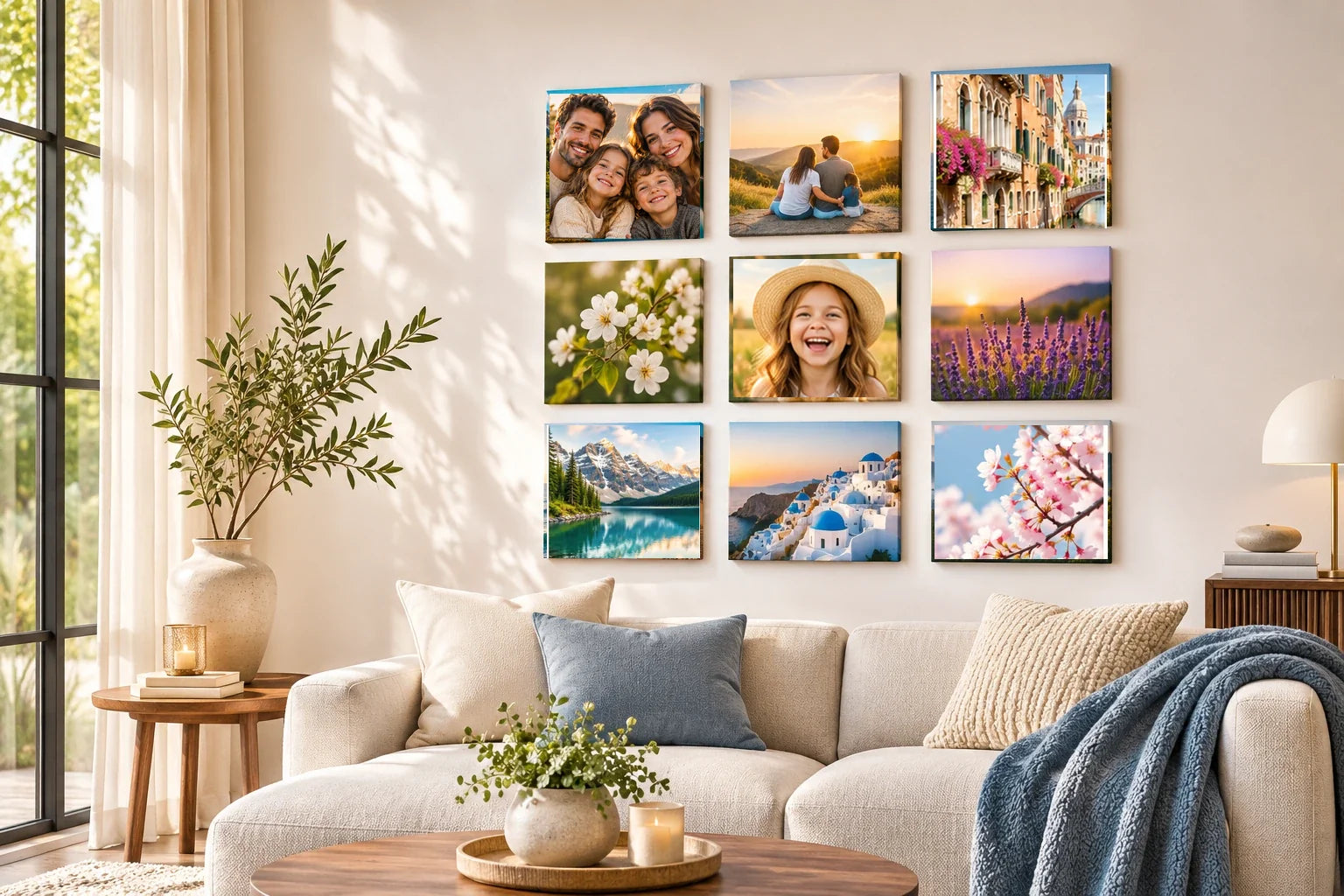
A family gallery may contain studio portraits made by different photographers across decades. Lighting, backdrop, posing, paper texture and retouching practices can vary markedly, even when the subjects are related. The gallery can honor those differences rather than imposing one filter that makes every image appear to come from the same studio. Choose portraits with genuine recognition and a meaningful family connection, and keep each source's photographer, date and reproduction rights separate from the decorative image-selection process.
An older formal portrait may include a painted backdrop and a later one a clean digital studio background. The contrast can reveal photographic history as well as changing generations. A good square crop preserves features that identify the person and, where meaningful, the setting or photographer's treatment. Avoid erasing natural wrinkles, reconstructing facial details or fabricating a background merely to create visual consistency. The family's story provides coherence without requiring a uniform portrait template.
Identify each portrait's source and intended style
Record the studio or photographer when known, along with the original form of the image and approximate date. A signature, stamp or album inscription may help establish provenance, but should not be mistaken for complete licensing permission. Different portrait treatments can reflect their eras or the photographer's artistic choices. Preserve the full source before making square derivatives so important marks and context remain available in the family archive.
Look at what the photograph communicates about the person. A formal seated pose can be meaningful without requiring a candid expression, while a modern studio portrait may show a natural smile. Do not rank one style as inherently more authentic. Choose on family recognition and narrative role. If the photographer or sitter is uncertain, keep that information qualified rather than inventing a professional attribution.
Preserve genuine lighting, backgrounds and textures
A historical studio image may have soft lighting, visible grain and a textured background, while a newer portrait is sharp and evenly lit. These differences can enrich the gallery. Heavy contrast correction or smoothing can erase the source's character, particularly around hair, clothing and facial features. Compare a restrained derivative with the original before approving changes. A modern appearance is not automatically a better representation of an older person.
Consider whether a studio backdrop has historical value. A painted landscape or recognizable prop may help identify the portrait's period or context. Cropping everything away to create identical headshots can remove that character. Keep meaningful edges when possible and avoid replacing backgrounds with synthetic scenery that the photographer never used. The gallery need not hide that the people were photographed under different artistic conventions.
Print scans can also contain dust, scratches or paper borders. Technical cleanup may be useful when it improves legibility, but it should remain reversible. Do not reconstruct unseen eyes or fabric details and call the result an authentic recovery. Preserve an archival master that documents what the original object contained. A working square can emphasize the person without altering the factual record of the photograph.
Choose crops that respect each person's identity
Studio portraits may be upright, square or wide. A forced common crop can cut through a hat, folded hands or a distinctive garment. Test boundaries around the meaningful posture and expression rather than imposing identical headroom. A person seated beside a prop may need more context than a simple head-and-shoulders image. A gallery can accommodate variation in subject scale when each portrait remains recognizable.
Compare the chosen square derivatives at equal represented size. One high-contrast modern portrait may dominate a soft historical image; a different crop or order can improve balance without recoloring people. Do not stretch faces or use generative enhancement to force the older source to look contemporary. Authentic identity and family meaning should remain more important than exact visual uniformity.
Review photographer rights for every source separately
Different studio portraits may have different contracts, copyright owners and permitted uses. Purchasing a physical print does not necessarily transfer reproduction rights. The U.S. Copyright Office explains that original photographs can be protected from the moment of creation, while transfers and other rules depend on the circumstances. Verify each source as appropriate and avoid assuming that the oldest-looking portrait is automatically free to reproduce.
Keep a source index listing the photographer, file or print provenance, known agreement and unresolved questions. A later scan of an older portrait does not by itself establish permission for further copying. If a studio no longer operates or records are incomplete, mark the rights question for qualified review rather than fabricating clearance. The image selection can remain open while those permissions are clarified.
Build a coherent family history without disguising photographic eras
Place the portraits in a sequence that follows known family relationships or generations where supported, rather than forcing them to match by color. A grandparent's formal image can sit conceptually beside a later portrait of their descendants. Their different lighting and pose may make the passage of time more vivid. Avoid identifying relationships solely by facial resemblance and keep uncertain names or dates qualified.
Not every generation needs one perfectly comparable studio image. Some relatives may have only casual snapshots or no surviving portraits at all. A thoughtful collection uses what genuinely exists and does not manufacture missing images to achieve an artificial balance. Repeated studio poses can become monotonous; choose portraits that contribute distinct people and contexts. Where a candid adds family interaction, it can complement formal sources without devaluing either style.
Background privacy may also matter. Modern studio files can include names or proof marks, while historical prints carry inscriptions. Decide which details belong in the displayed crop and which should remain privately archived. Photographer credits and license records should be preserved appropriately without turning the gallery into a collection of cropped paperwork.
Approve varied portraits with source integrity
Ask relatives whether the proposed images preserve recognizable faces, natural features and meaningful historical details. If one portrait looks unnaturally processed, compare it with the original and reduce the treatment. Verify permissions and intended audience independently of composition. Keep all archival masters and approved derivatives traceable so later corrections do not overwrite the photographs' true history.
A cross-studio portrait gallery becomes coherent through family relationships and authentic people, not one artificial photographic style. Respect each photographer's composition, preserve source-era texture and keep separate rights records. The content can be planned as an editable gallery while the selected print provider products, physical print options and mounting properties remain unverified until supported by official evidence.