
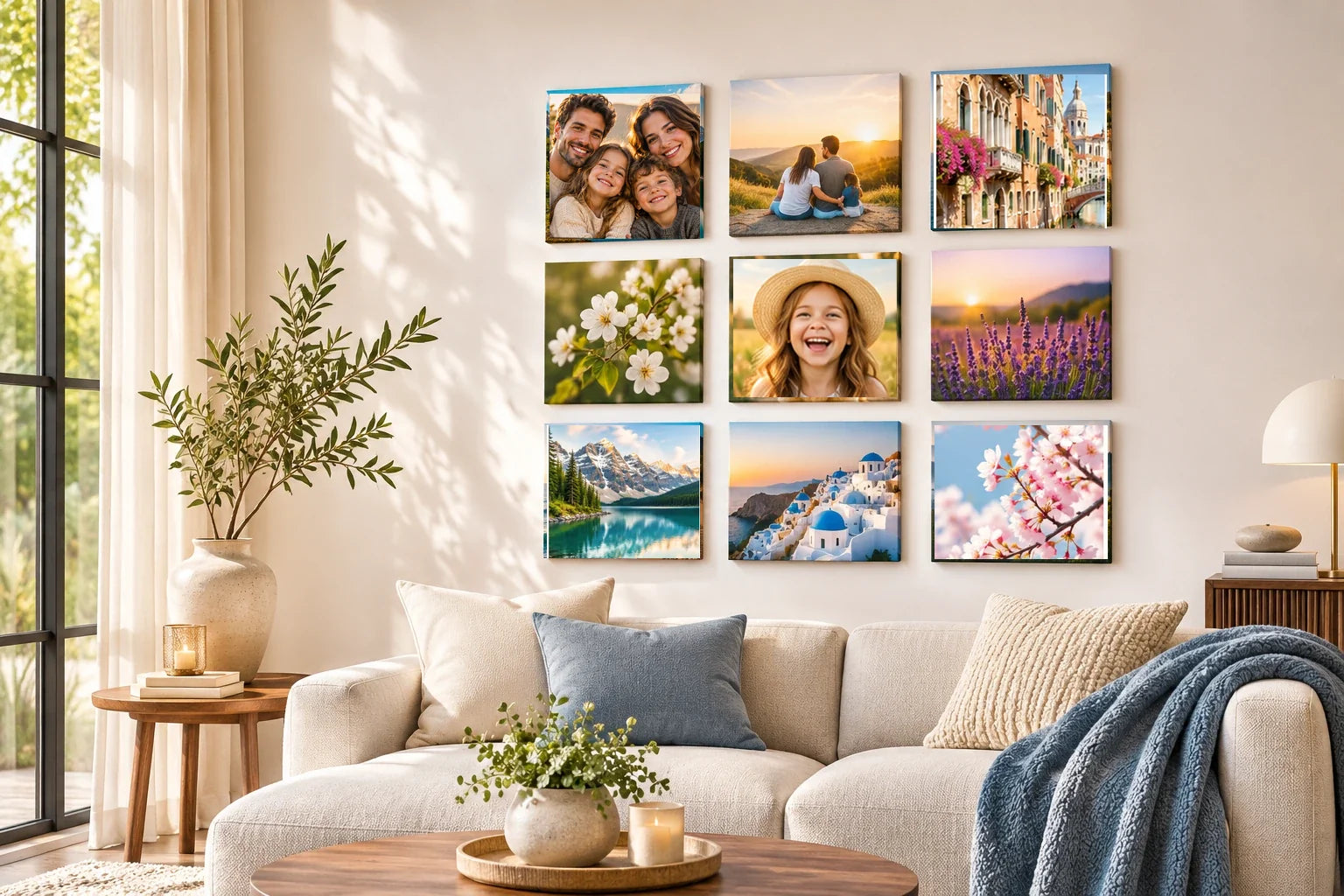
A bedroom that includes a desk may serve two very different purposes. The resident might work or study during the day and use the same room for rest and personal routines later. Family photographs can make this environment feel lived-in, but a digital room image may inadvertently reveal employer information, confidential documents, schedules, or identifying details in the workspace. The practical task is to select meaningful personal sources and review their context without turning the bedroom into an office-themed display.
Imagine a photo group proposed near a small desk covered with books, a laptop, and documents. A warm family portrait may be suitable in the room, yet the mockup's background could contain sensitive information unrelated to the photographs. A source image may itself show a work badge or screen. A privacy-conscious design should separate the story told by the photographs from everything incidentally visible in the working environment. It should not assume any particular wall attachment or technical print option is available.
Identify the desk's role without turning it into the gallery's theme
Ask how the desk is used. One resident might spend hours on remote work, another may occasionally study, and someone else uses it primarily for crafts. These routines can affect where people notice photographs, but they do not require sources depicting laptops or professional achievements. A genuine family portrait may be the most meaningful choice because it recalls life outside work. The design should follow the resident's actual memories rather than make productivity the room's defining identity.
If the desk is shared, consider whose personal photographs are appropriate to display nearby. One person may prefer a private friend portrait, while another would rather see a landscape from a real family trip. Invite relevant users to review the conceptual selection. Do not assign a visual hierarchy based on employment status or who spends the most time at the desk. The bedroom remains a personal space even when work temporarily occupies one corner.
Review the complete room reference for confidential material
A digital mockup often begins with a photograph of the actual room. Before sharing it, inspect computer screens, whiteboards, documents, badges, calendars, packages, and visible addresses. A source photo can be accurate while still exposing information unrelated to the design. Consider making a clean room reference without confidential items or using abstract placeholders for those areas. Keep the original unmodified file separate and restrict it appropriately rather than circulating a work document as decorative context.
Do not claim that a detail is safe merely because it looks small on the first preview. A recipient may zoom into the image, and actual screen resolution can vary. If an identifying employer logo or customer name is visible, remove that information from the shared planning context by using a non-sensitive reference or another photograph. This is a practical editorial boundary, not a promise about security technology or privacy policies.
Select personal photographs whose own backgrounds are appropriate
A family picture made during a home-office video call may reveal computer screens, meeting notes, or private names behind the subjects. Another authentic portrait from the same period may communicate the relationship with fewer risks. Review the photo itself as carefully as the desk shown in the room mockup. A candid of someone working can be meaningful when the event is real and appropriate to display, but the image should not depend on exposing confidential professional information.
Keep the distinction between a genuine personal memory and an occupational claim. A picture of someone sitting at a desk does not prove their title, employer, or professional accomplishments. Avoid adding invented credentials in captions or framing the gallery as a résumé. The resident may simply want a reminder of family or a place they love while using the desk. That is enough reason to consider a source.
Create a simple camera-view check before selecting the bedroom desk's neighboring photographs. A work screen might be blank in a room photograph but contain confidential information during an actual call; printed notes can move between meetings. Choose sources that remain suitable regardless of which document happens to sit on the desk. A family portrait whose background includes an address or employee badge may create a second, independent privacy problem. Keep desktop context, photo content and permitted audiences as separate review questions rather than assuming one carefully cropped room photograph resolves all three.
Compare viewpoints without implying a safe mounting plan
Create a conceptual board showing the photo group from the desk chair and another from a typical bedroom entrance. A photograph that seems personal at close range may be visible to occasional visitors, while another may become obscured by a shelf or monitor. Use these views to decide which people and moments deserve attention. Do not convert the sketch into exact installation distances, equipment clearances, or product recommendations.
Devices, cables, lamps, and furniture introduce physical conditions that cannot be evaluated from a digital overlay. The mockup does not certify safe surface attachment, electrical clearance, or suitability near a workstation. Any future installation would require reliable information about the actual wall, products, and equipment. The editorial choice can still proceed: which true family photographs complement a resident's daily life without making the workplace the subject of the entire wall?
Protect colleagues and other people pictured
A photograph taken at a team event may include colleagues who did not agree to be displayed in a private bedroom. A professional headshot may have been made under licensing terms different from a family snapshot. Ask about intended use and preserve photographer attribution. A person can value memories of work friendships without publicly claiming those coworkers live with them or regularly visit. The bedroom's private audience does not automatically resolve those social or reproduction questions.
Similarly, a school study group may contain minors, locations, or identifying details. Review the complete source and select an alternative when permission is unclear. Do not fabricate a substitute group scene to fill a conceptual wall. A photograph from a genuine shared outing might represent the friendship more appropriately. Personal meaning is best preserved through sources that are accurate and suitably cleared for the intended audience.
Save a personal gallery with clean editorial boundaries
Document the chosen photographs, their actual source occasions, privacy checks, and unresolved permissions. Keep room-reference files free of confidential work details when shared for review. A digital concept does not itself authorize printing or establish Wallpics-specific product properties. Leave exact dimensions, surface behavior, mounting, and output claims outside the manuscript until evidence is available.
A desk can coexist with a bedroom family gallery without making professional identity or confidential information the visual focus. The strongest sources remind the resident of people, places, and experiences that matter to them. By separating a personal image story from incidental workplace details, the design remains authentic and useful while respecting the privacy of both the household and others whose information may be present.