
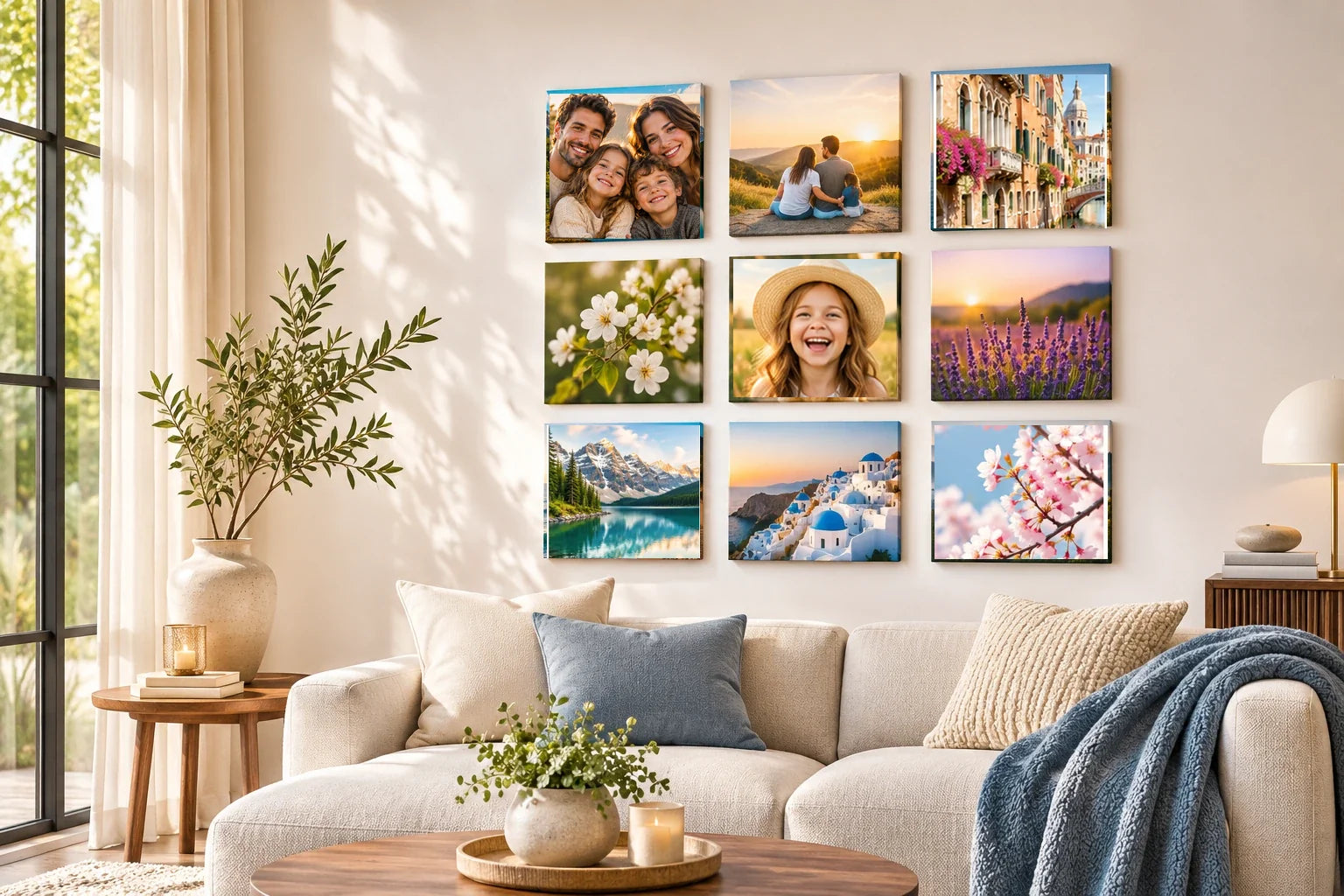
A major household change can alter how familiar photographs feel. A family may move into a new home, welcome another resident, experience a separation, or begin sharing the living room with people whose histories differ. Photographs that once felt comforting may become difficult to see every day, while overlooked memories may gain new importance. A digital layout review can help people reconsider the story without claiming that an installed photo tile can be removed, reused, or repositioned. Emotional appropriateness and physical product capabilities are separate questions.
Imagine a household moving to a smaller home after years in a larger family house. A gallery of old rooms and celebrations may evoke affection, but it may also dominate a new living space with reminders of what changed. The answer need not be to erase those memories. A conceptual review can explore a quieter group, a different selection, or an entirely separate private archive. Nothing in the mockup establishes a safe or available physical installation method.
Recognize that the meaning of photographs can change
An image's factual content may remain the same while the household's relationship to it evolves. A portrait taken during a once-happy gathering might feel different after a move, separation, or loss. Avoid assigning a universal emotional response. One resident may welcome the image; another may prefer to keep it private for a time. Invite people to describe what they actually feel comfortable seeing in the shared room rather than assuming the old arrangement must remain emotionally appropriate.
Do not treat reconsideration as rejection of family history. A photograph can be treasured and still no longer belong in a prominent living-room position. Preserve the original in the private archive and separate the decision to display it from any judgment about its importance. If a family member requests omission, record the choice respectfully without inventing explanations for other people. Editorial flexibility can protect relationships when circumstances are changing.
Review who uses the living room now
A new resident may bring different experiences, privacy expectations, or photographs. Someone who moved away may remain important to the home's story, but the current users may wish to represent their everyday life more directly. Ask about the room's present function before selecting images. A space now used for studying or quiet conversation may invite a different selection from the gallery that suited frequent large gatherings. This does not require a new physical product claim.
Be careful not to make the arrangement a measure of who belongs. An absent relative should not be erased solely because they no longer reside in the home, and a newcomer should not appear as a token photograph at the edge. Choose images whose presence reflects real relationships and people's wishes. A new shared activity photograph can provide a truthful connection, but do not fabricate a composite or claim that everyone attended an event they did not.
Create separate digital alternatives without swap promises
Save one conceptual version that preserves the older gallery's story and another that gives more prominence to the household's current experiences. A third may keep a small remembrance chapter while leaving the wider room visually quieter. Compare these as digital options. Do not use language such as 'simply peel and move the tiles' unless a current verified product specification and appropriate surface evidence support it. The editorial exercise can proceed without that assumption.
Keep the same source file references and identify which images are included or omitted in each version. A family may choose one concept for future production or decide to retain all options privately. The mockup does not authorize physical changes to existing displays, and it does not establish how walls, adhesives, or finishes would respond. The value lies in helping people choose what feels appropriate before technical implementation is considered.
Protect emotionally sensitive source context
Photographs connected to illness, bereavement, family conflict, or private circumstances may need a more limited audience after a transition. The living room is often visited by people unfamiliar with those histories. Review the proposed images for personal details and ask the subjects or appropriate family representatives about comfort with display. Avoid forcing an intimate story into a public-facing gallery because a picture happens to fit the room's color scheme.
After a household change, one resident may want to keep a treasured group photograph while another prefers it in a private album. Build two separate digital options with the same verified source history rather than assuming that the physical display can be changed repeatedly. One option may foreground new shared activities; another may keep an earlier memory in a quieter role. Invite the people affected to discuss comfort and context without treating a revised arrangement as a judgment about the past.
Rights to reproduce photographs remain distinct from emotional approval. A person may prefer a particular studio portrait but still need permission from the photographer or rights holder before producing a new copy. Keep the source record and unresolved claims explicit. The family should not have to settle rights, technical, and emotional questions simultaneously. A private conceptual board can record preferences while those separate reviews remain open.
Choose an arrangement that acknowledges rather than dramatizes change
A photo sequence does not need to show a clean 'before' and 'after.' Household transitions rarely follow a simple emotional plot. A new family meal might be meaningful without proving that everyone has adjusted; an old portrait might remain welcome without implying the family wishes to return to the past. Avoid arranging photographs to manufacture progress or closure. Let each source describe the occasion it actually records and the relationship people wish to remember.
Try a small group that combines one established family connection with a few authentic current moments. Ask whether it feels respectful to those associated with both periods. If the arrangement becomes too emotionally demanding, consider a simpler selection or a more private location for particular images. The goal is comfort and accuracy for the household, not a dramatic transformation narrative designed for visitors.
Keep future decisions open without making product assumptions
Save the preferred digital proof, other alternatives, and a short note on why the household's current preferences differ from the earlier selection. Mark any unresolved copyright, consent, or technical questions and preserve archival originals. Do not instruct the household to move, remove, or reinstall actual tiles based on the mockup. Physical feasibility must be addressed separately using verified information specific to the product and wall conditions.
A living-room photo story can adapt in the family's planning long before any physical display changes. That flexibility comes from reconsidering images, privacy, and emotional meaning—not from assuming a particular tile can be reused. A thoughtful editorial review respects treasured history while allowing current relationships to have a place. The strongest conceptual arrangement feels honest and comfortable for the people who live with it today.