
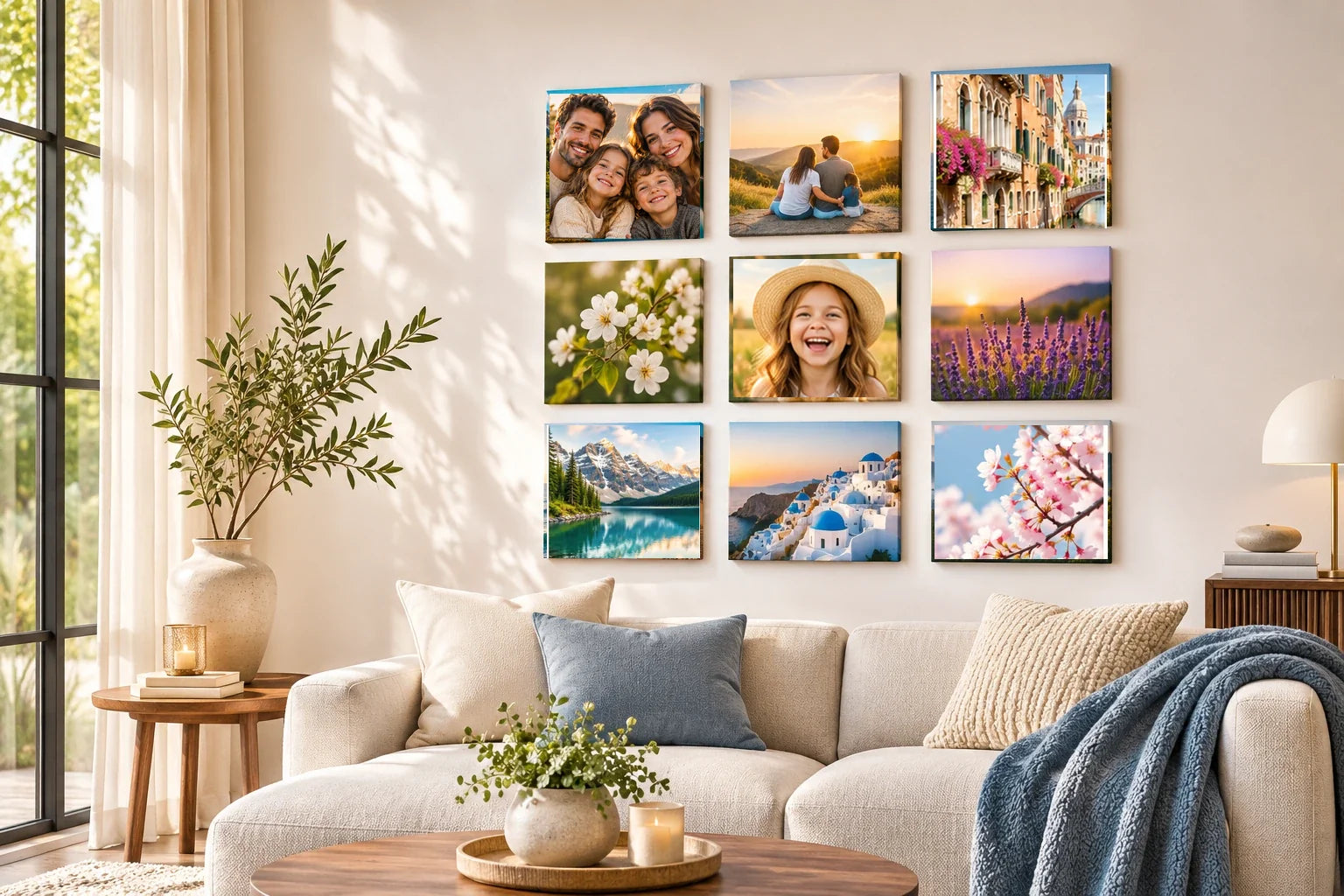
A family gallery usually benefits from distinct photographs, but one source can sometimes earn two roles: a complete scene that shows the occasion and a close crop that reveals a meaningful gesture or object. The choice should be deliberate, not an accidental duplicate filling two squares. A wide reunion photograph may establish the people gathered, while a careful detail of a grandparent's hand holding a child's can draw attention to a relationship that is hard to notice at full scale. Both must remain traceable to the same original source.
This form of reuse differs from copying the same face twice at slightly different sizes. The full image and detail should answer different questions, and the detail must contain genuine captured information. Check whether the source has enough sharpness to support the crop before committing. A photograph that becomes blurry when enlarged may not gain value from a second version. Preserve the original and clearly label both derivatives so future reviewers understand that they represent one event, not two independent captures.
Define two genuinely different purposes for one source
Ask what the full scene reveals that the detail cannot. It might show a rare family gathering, a familiar room or several generations participating together. Then identify what the crop adds: a meaningful inscription, hand gesture or quiet exchange hidden within the larger composition. If the detail simply repeats the same central face, it may be redundant. Use a second square only when it rewards attention with new, authentic information.
Consider the intended audience. A family member might immediately recognize an object in the background that visitors overlook. A careful crop can make that clue legible without requiring a long caption. But do not force a secondary detail into prominence if its historical significance is uncertain. A truthful selection can preserve the full image alone when there is no useful second view.
Check the original file before enlarging a detail
A large photograph can contain many pixels overall while a small object or face occupies very few. Cropping and enlarging do not create genuine detail that the camera failed to capture. Inspect the proposed region at moderate magnification, checking focus, compression and meaningful features. If an heirloom inscription becomes illegible or a face loses recognizable texture, the crop may be unsuitable for a second displayed image.
Try a less aggressive crop that retains more context or use an independently captured close-up when one exists. Do not reconstruct handwritten words, eyes or fabric patterns with AI and claim they are recovered from the source. Significant synthetic enhancement can alter the family record. Keep the archival original untouched and document any gentle cleanup or color correction on separate derivatives.
Consider whether the crop is emotionally understandable when isolated. A hand near the edge of a group scene might appear anonymous without the arm or companion that explains it. Include enough surrounding people and objects for the relationship to remain legible. The detail should illuminate the full scene rather than become a mysterious fragment requiring an invented explanation.
Make the relationship between full scene and detail clear
Place the proposed squares together conceptually and ask whether a viewer can identify where the detail came from. A distinctive patterned tablecloth, garment or architectural element may provide a link. The two images need not be adjacent on a real wall, and no physical layout claim follows from the digital plan. A contact sheet is enough to test whether the detail enriches rather than merely duplicates the original.
One source may show a grandmother helping a child sew, while a closer crop reveals their hands guiding the needle. The two versions have different purposes only if the detail remains genuinely visible and adds an observation the wide scene cannot. Compare the enlarged crop with the unedited file before treating it as a second gallery image. If the needle and fingers dissolve into invented sharpening texture, retain the full photograph and choose a separate authentic detail instead.
Be honest about the shared source. Do not present the cropped region as a different photograph from another moment. Use stable internal identifiers that point both derivatives to the same camera original. If a caption implies independent capture, revise it. The gallery can openly use a full view and detail as two editorial interpretations of one genuine scene without misleading viewers about the number of events photographed.
Balance repetition with the other gallery photographs
One source used twice can attract disproportionate attention, especially if the detail is much brighter or larger than surrounding portraits. Compare all candidate squares at equal represented size and decide whether that emphasis serves the family story. A wide scene plus detail may be justified when the event is central, but several duplicate pairs can make the gallery feel repetitive. Choose purposeful reuse rather than a standard template for every image.
Consider whose stories remain visible. A tightly cropped detail focusing on one person could unintentionally overshadow relatives who share the full scene. A companion photograph of another genuine interaction may add more variety. Review the gallery's complete participant and occasion coverage before approving the duplicate. Preserve the full image's collective meaning rather than turning it into background for a single favored subject.
Keep privacy and rights linked to the original
A crop can expose a detail that was hardly noticeable in the full photograph, including a private letter, house number or person's face. Review the derivative independently for sensitivity. A detail chosen for sentiment might reveal more than the source was intended to share. Keep the complete archive private and use only approved working versions. Cropping does not automatically remove embedded file metadata or photographer rights.
The original photograph may carry licensing terms that apply to all derived reproductions. Creating a second crop does not establish new ownership or bypass permission requirements. Record the photographer and source history once, linking both selected versions to the same rights status. If a professional studio made the source, qualified review may be needed before printing either version. Visual approval is not legal clearance.
Approve reuse only when it teaches the viewer something new
Ask family members what they learn from the detail that they could not easily see in the whole photograph. If they identify a meaningful gesture or heirloom, the second version may be justified. If it only repeats a large familiar face, choose another genuine source. Check both crops for real detail and comfortable composition at the planned conceptual scale. Keep their source relationship explicit.
Full-scene and detail reuse can deepen a family gallery when the crop reveals authentic information while the complete image preserves context. Use it selectively, retain one trustworthy original and avoid AI reconstruction or false claims of separate events.