


Self Portrait with Death Playing the Fiddle: A Haunting Masterpiece for Your Wall Art Collection
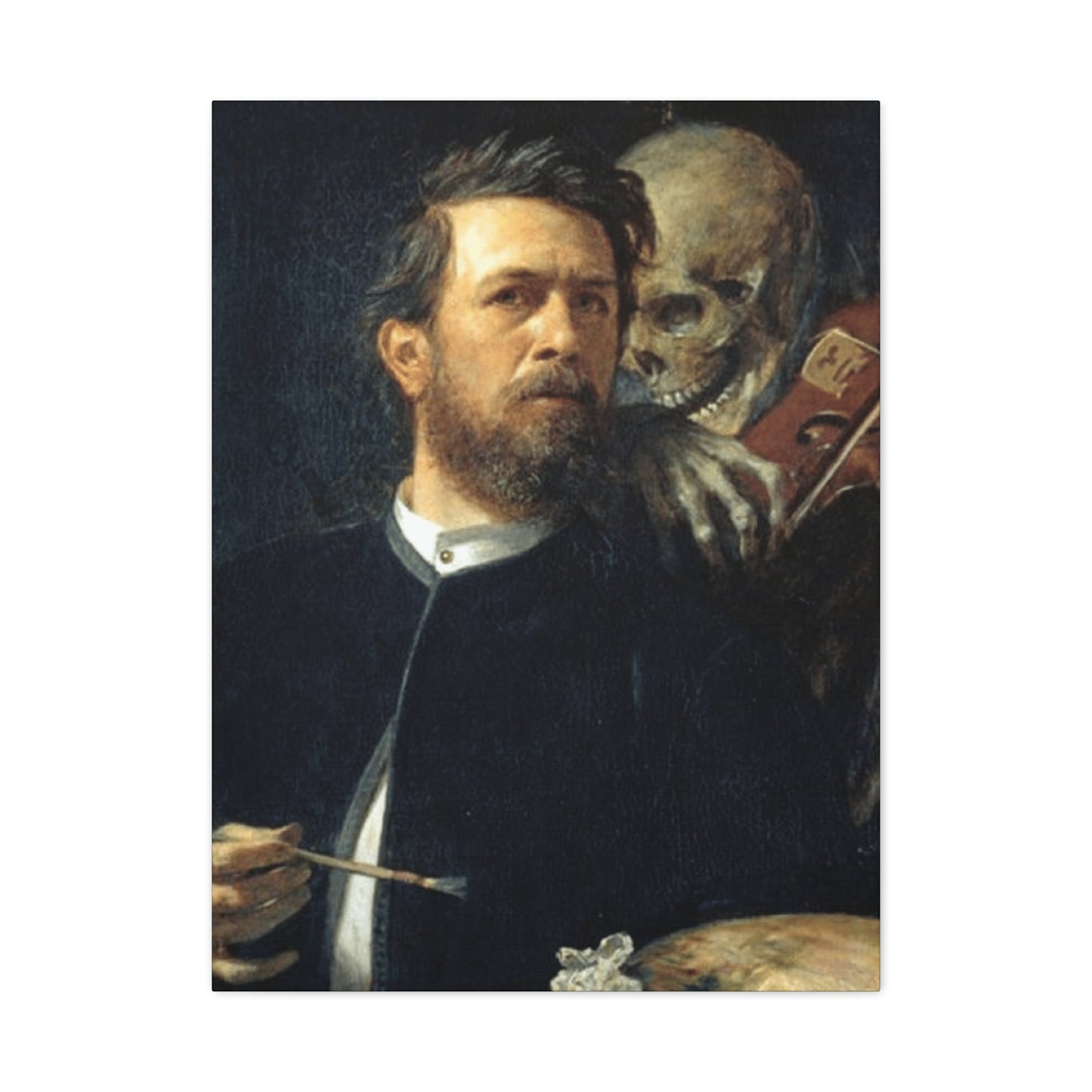
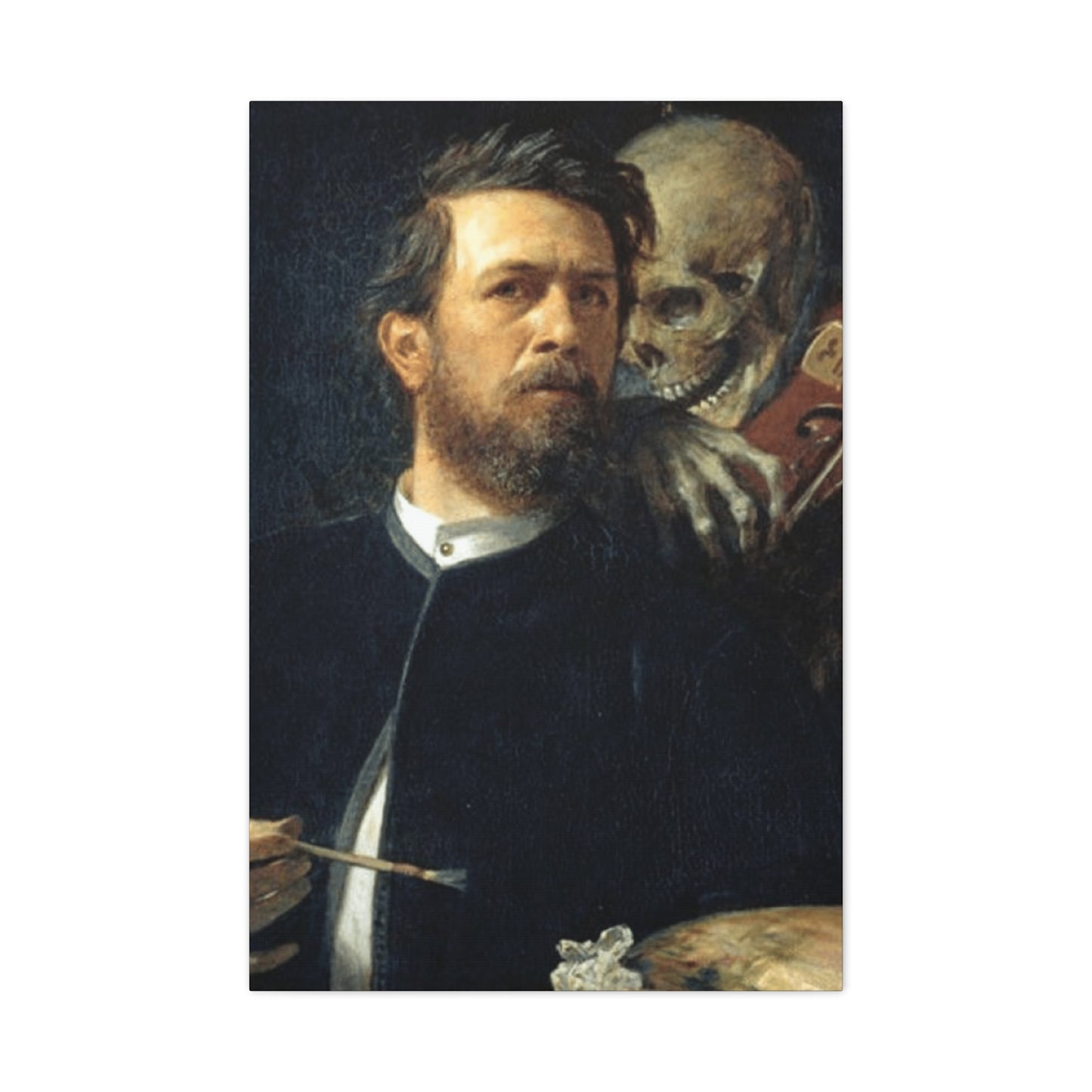
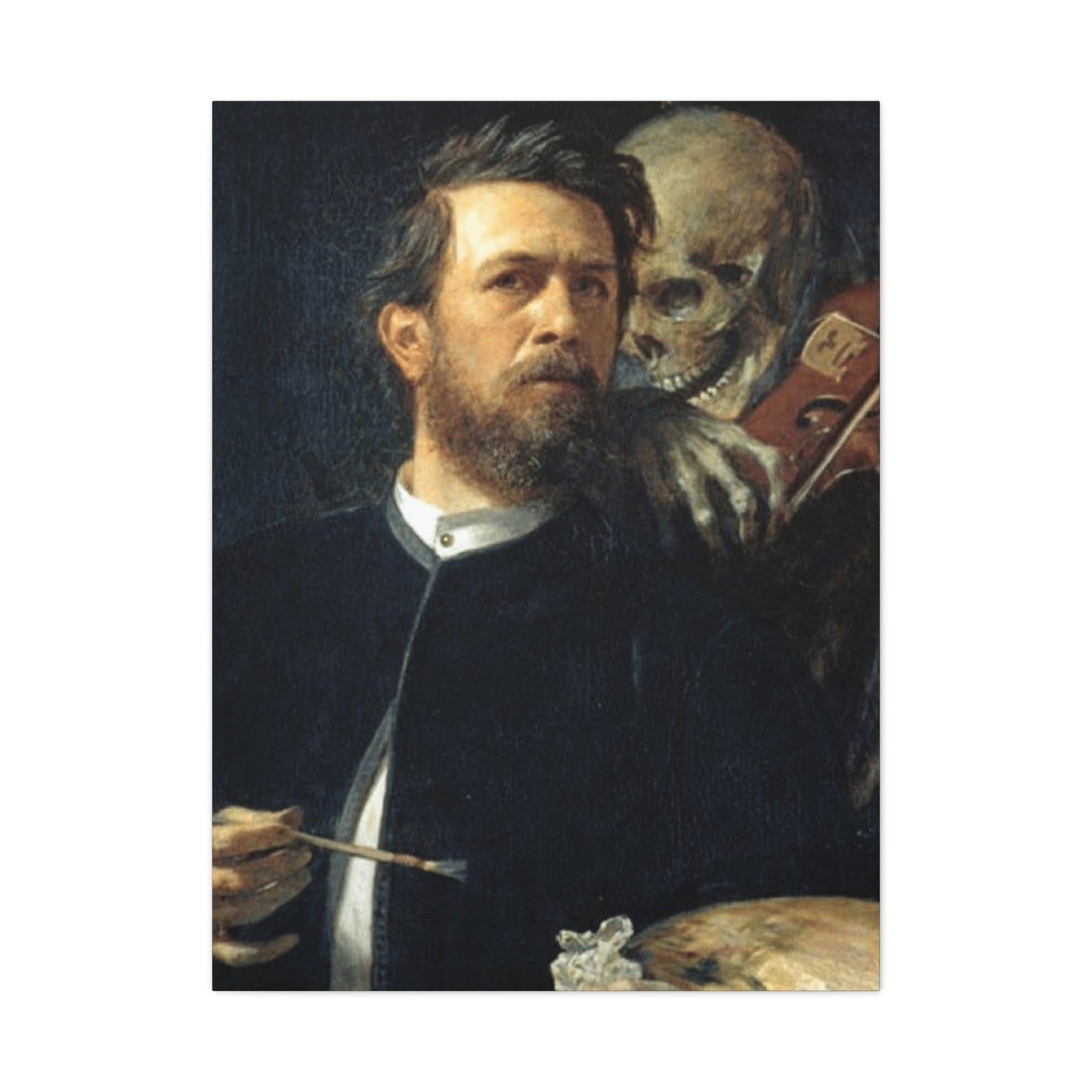
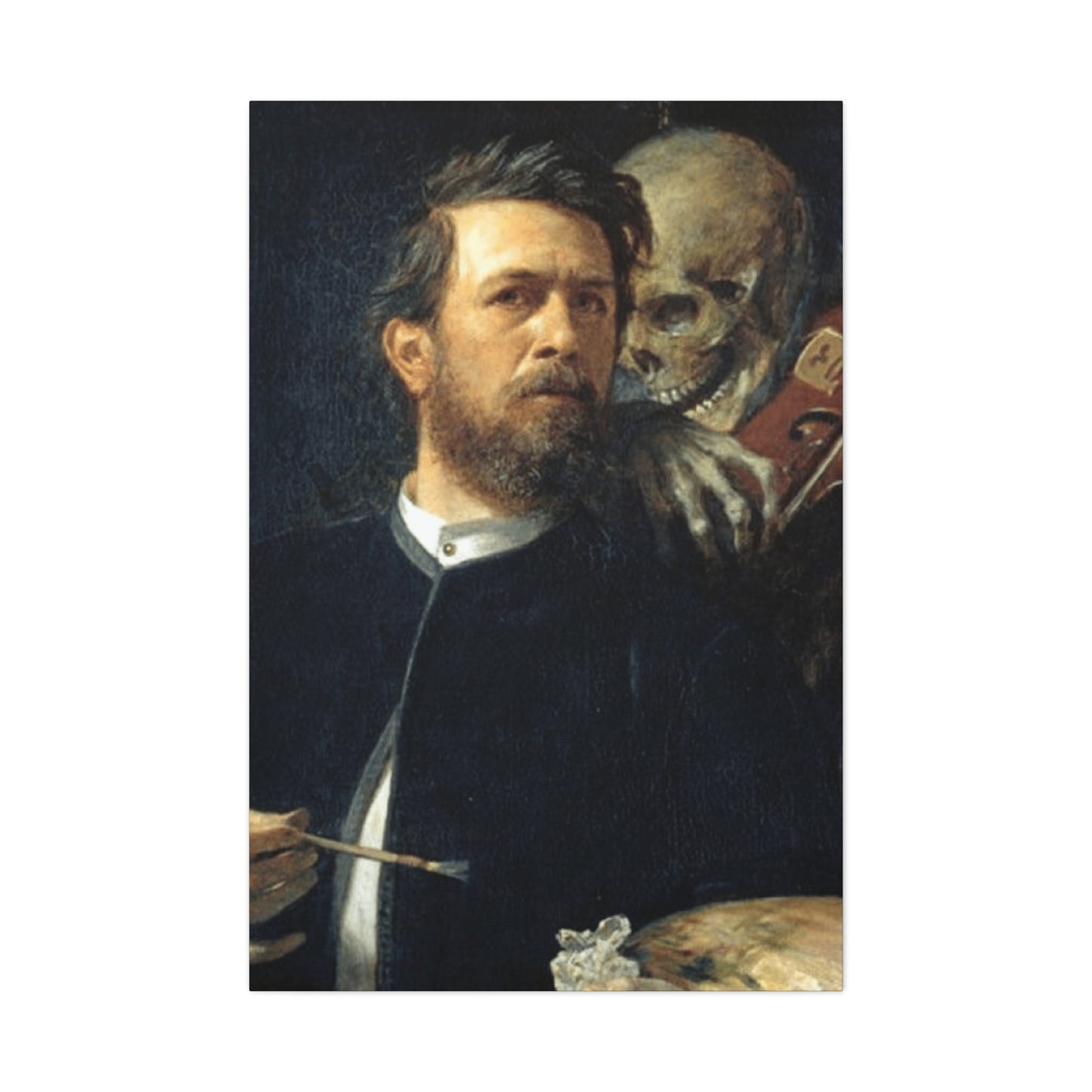
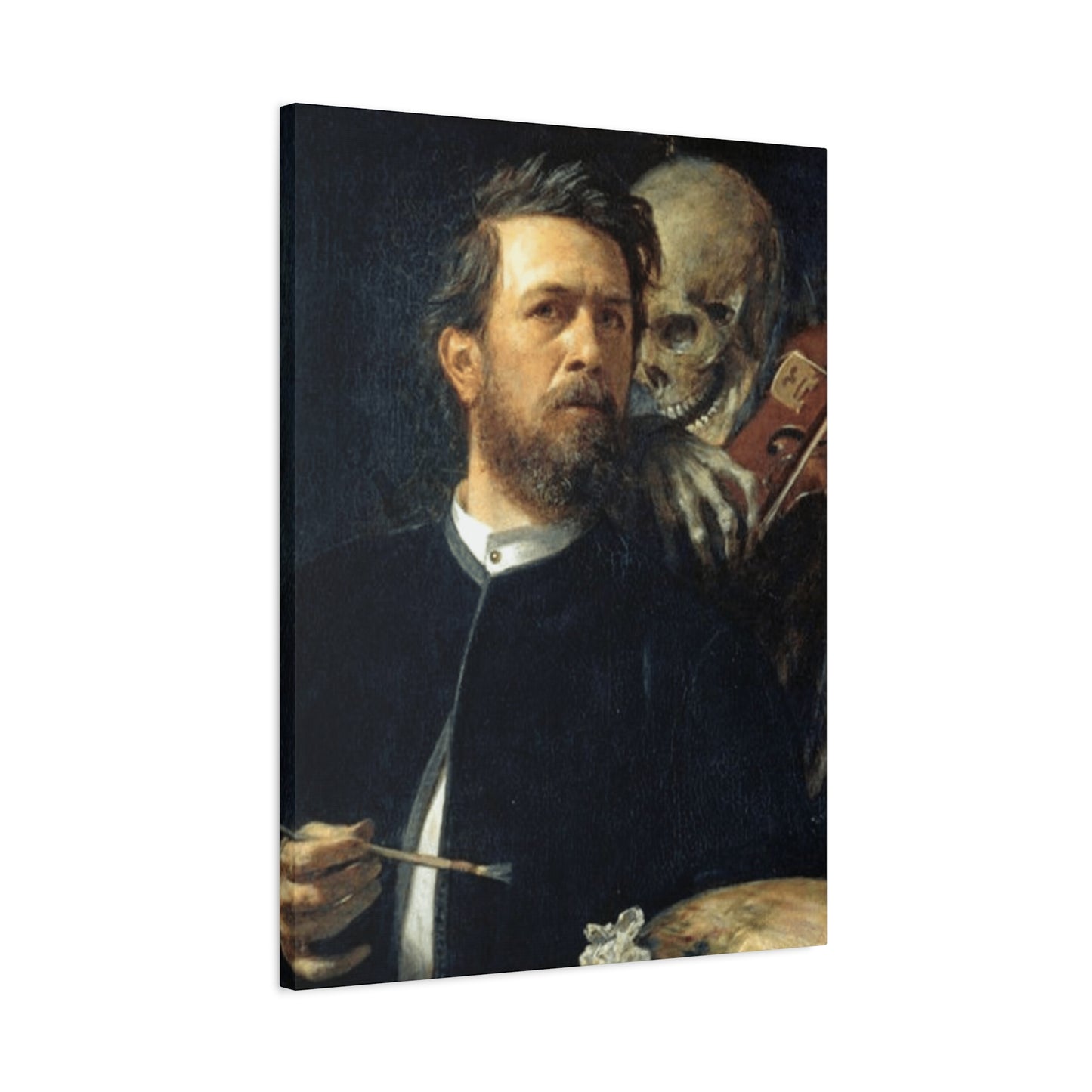
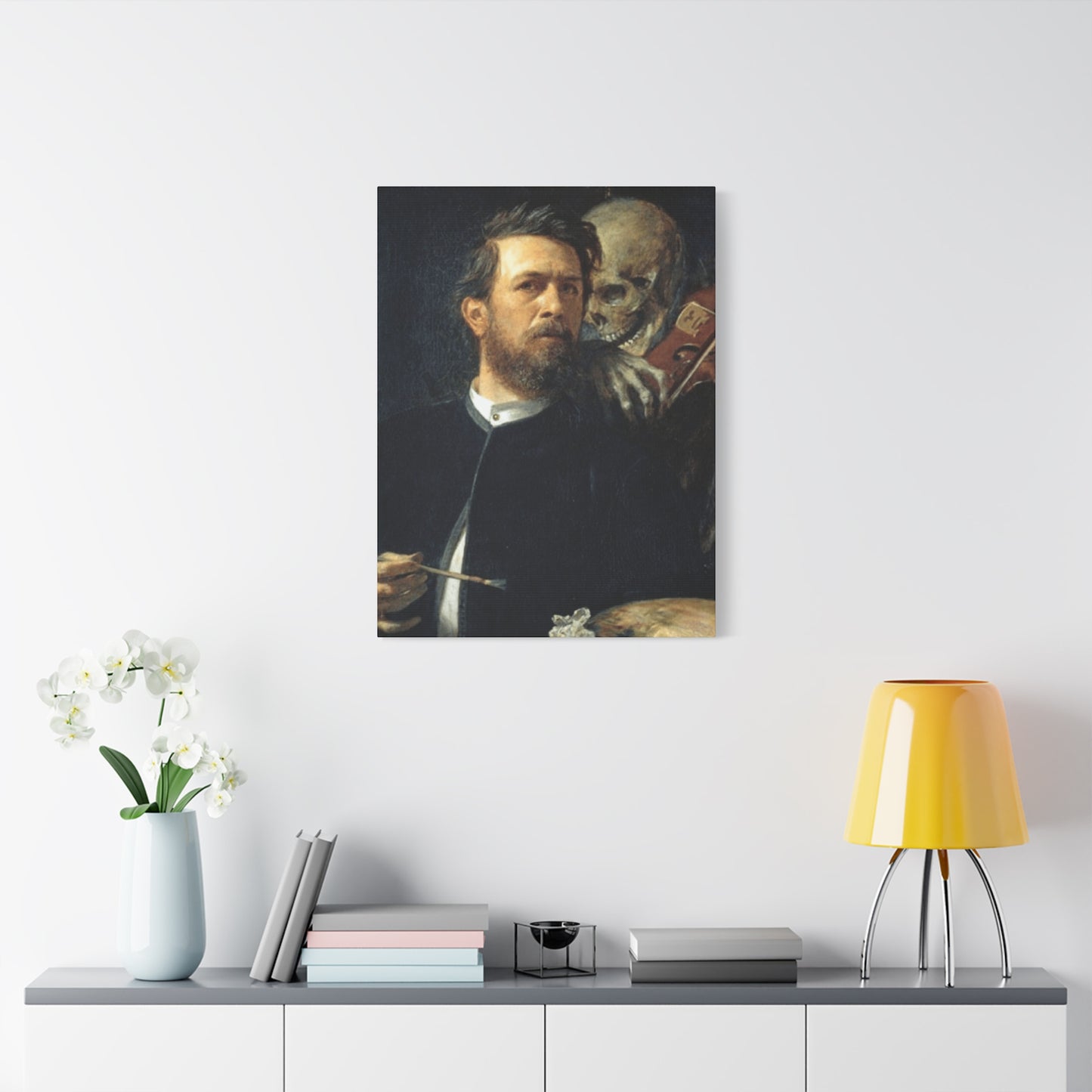
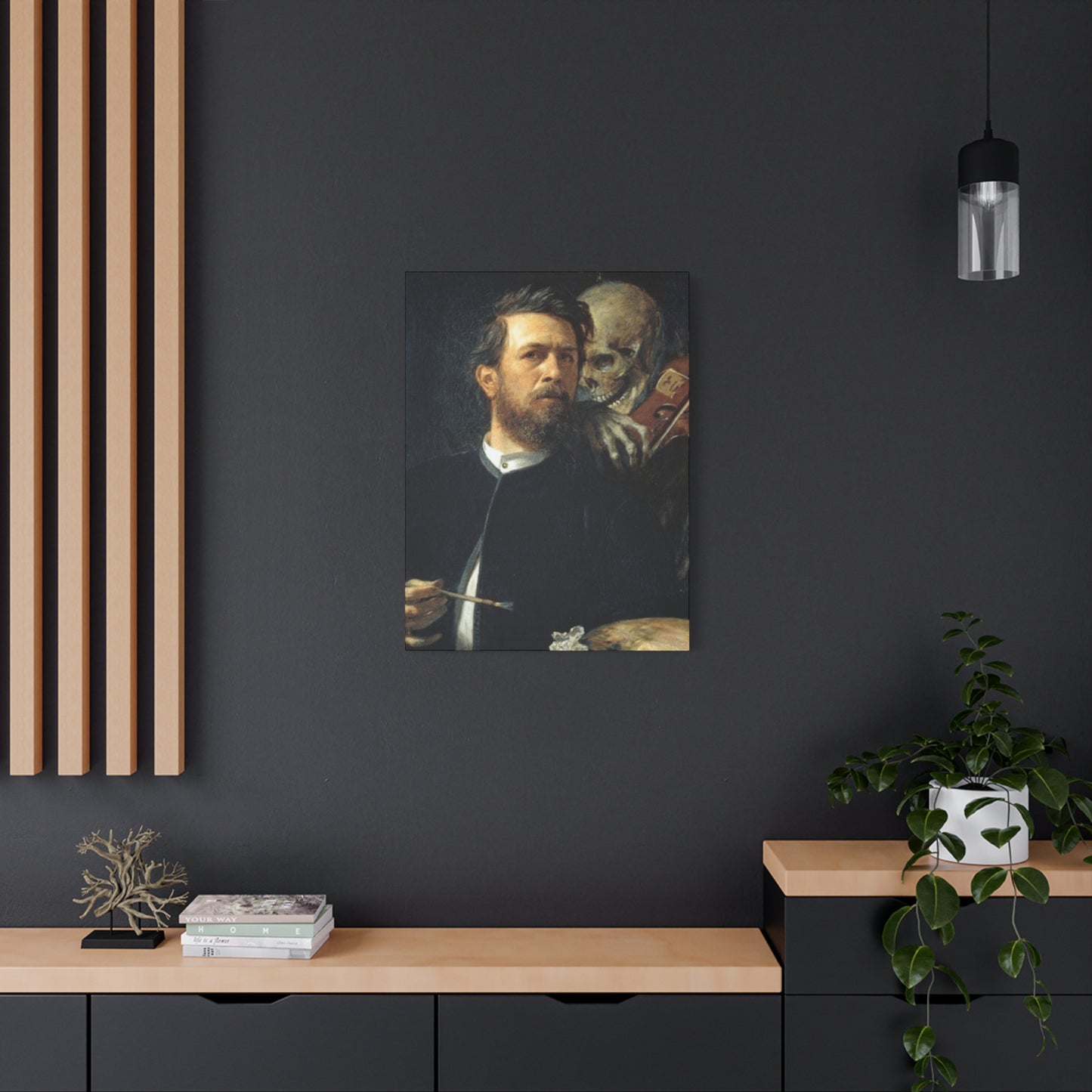
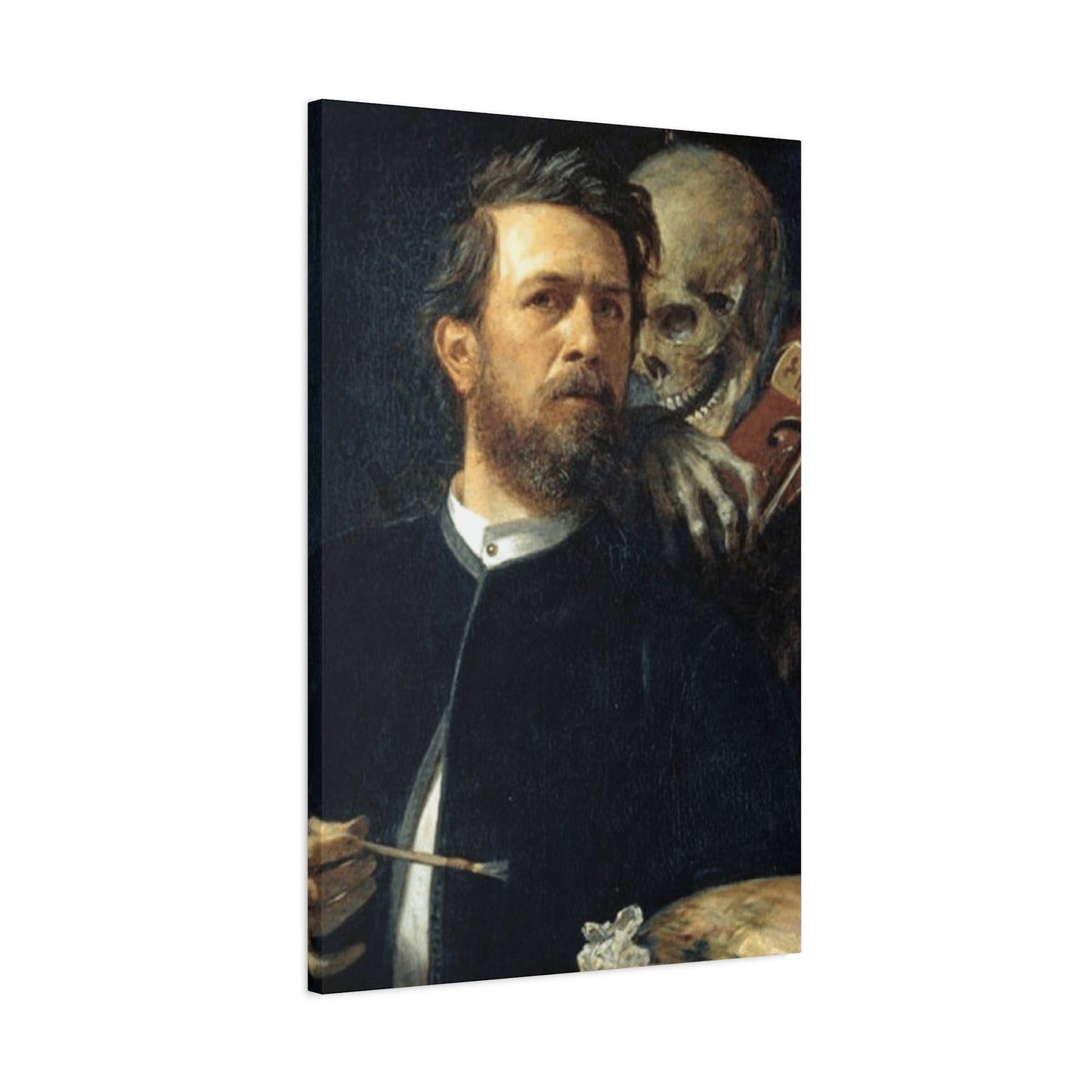
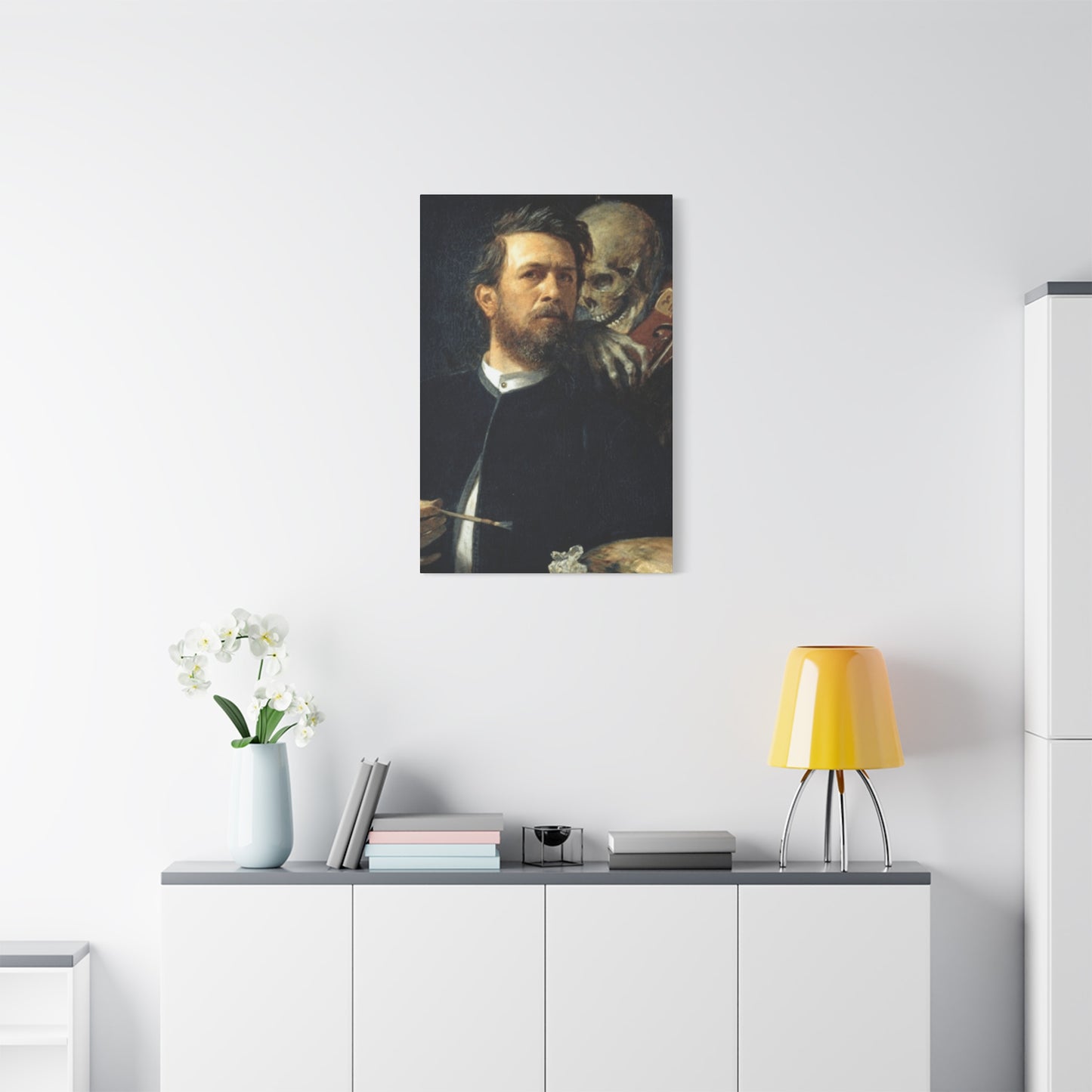
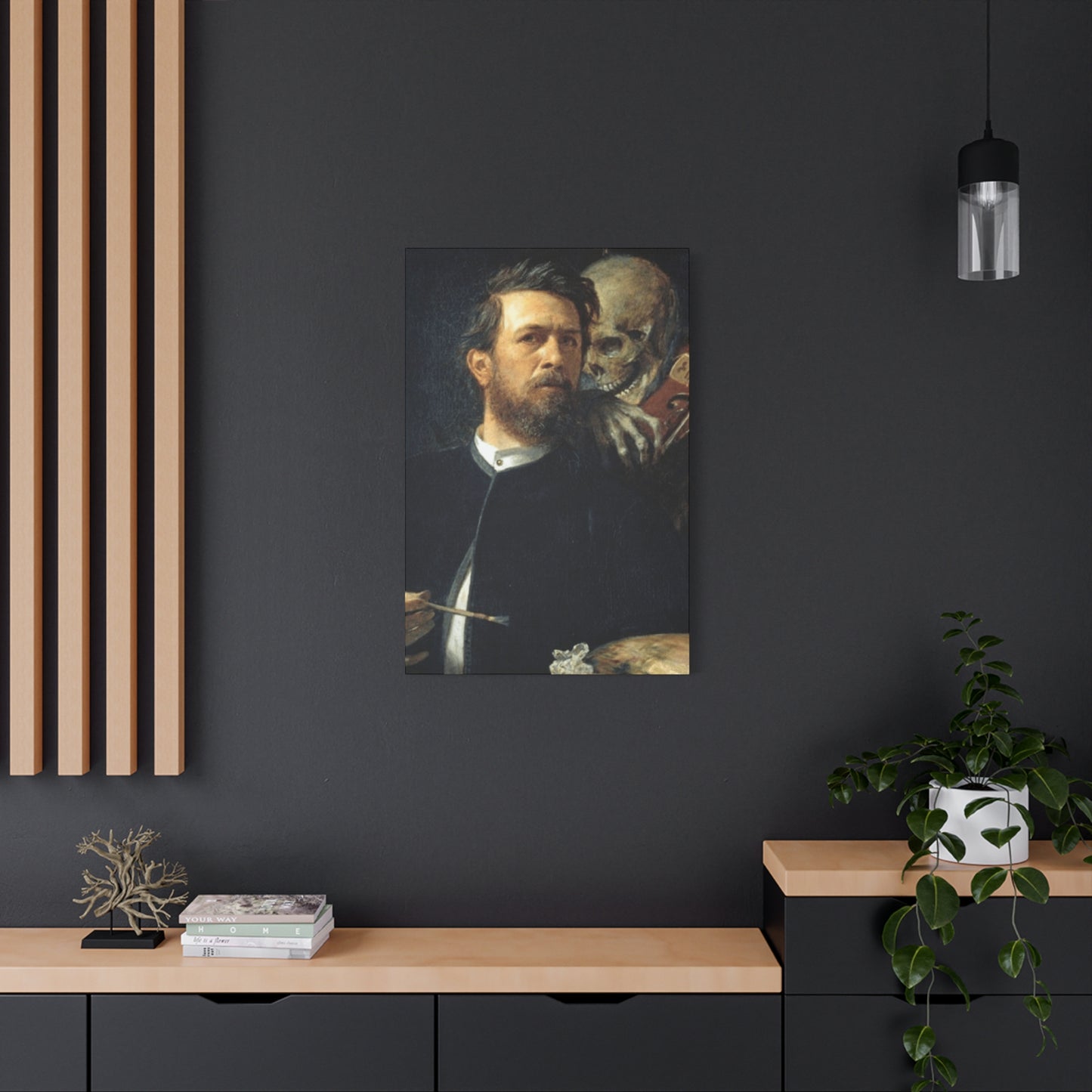
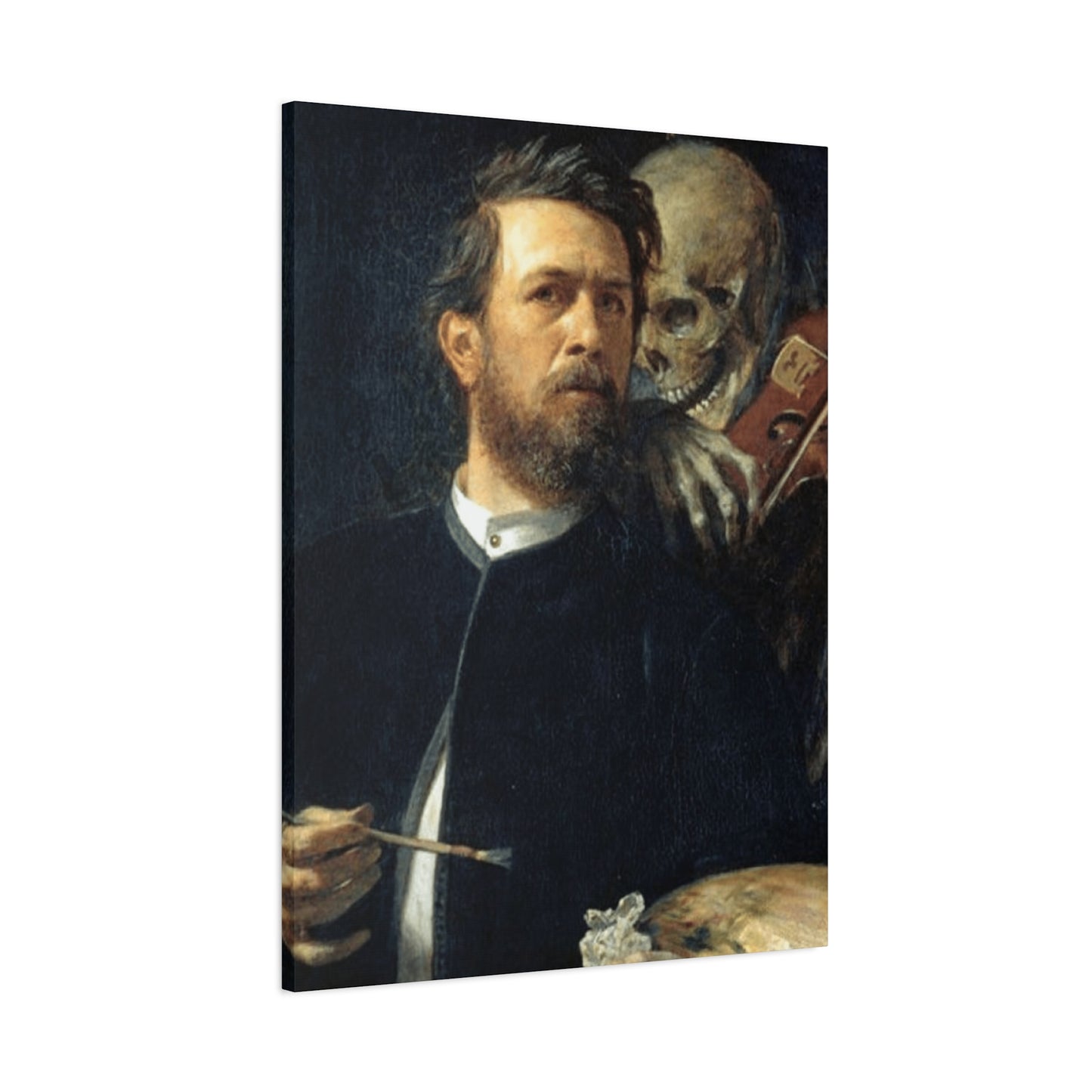
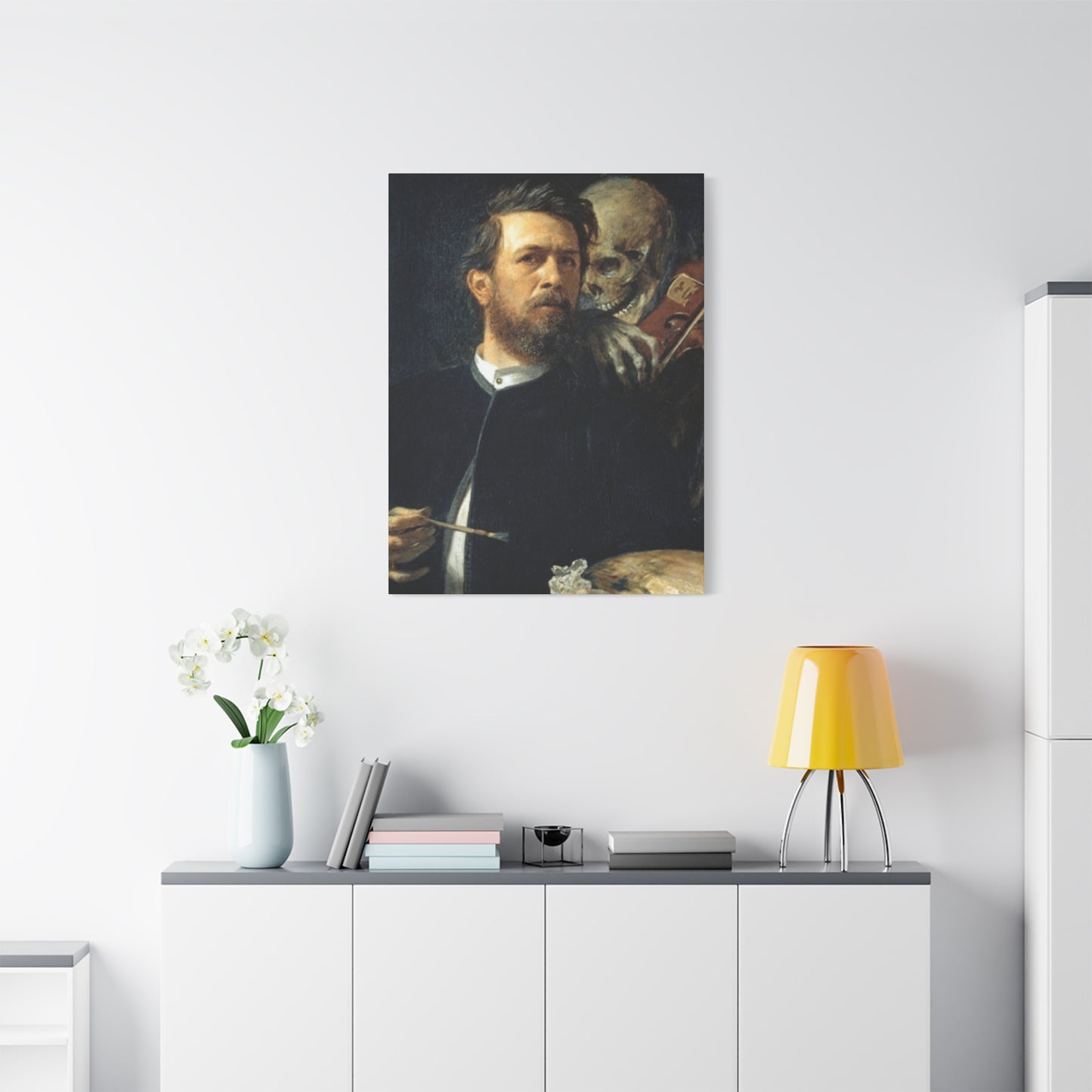
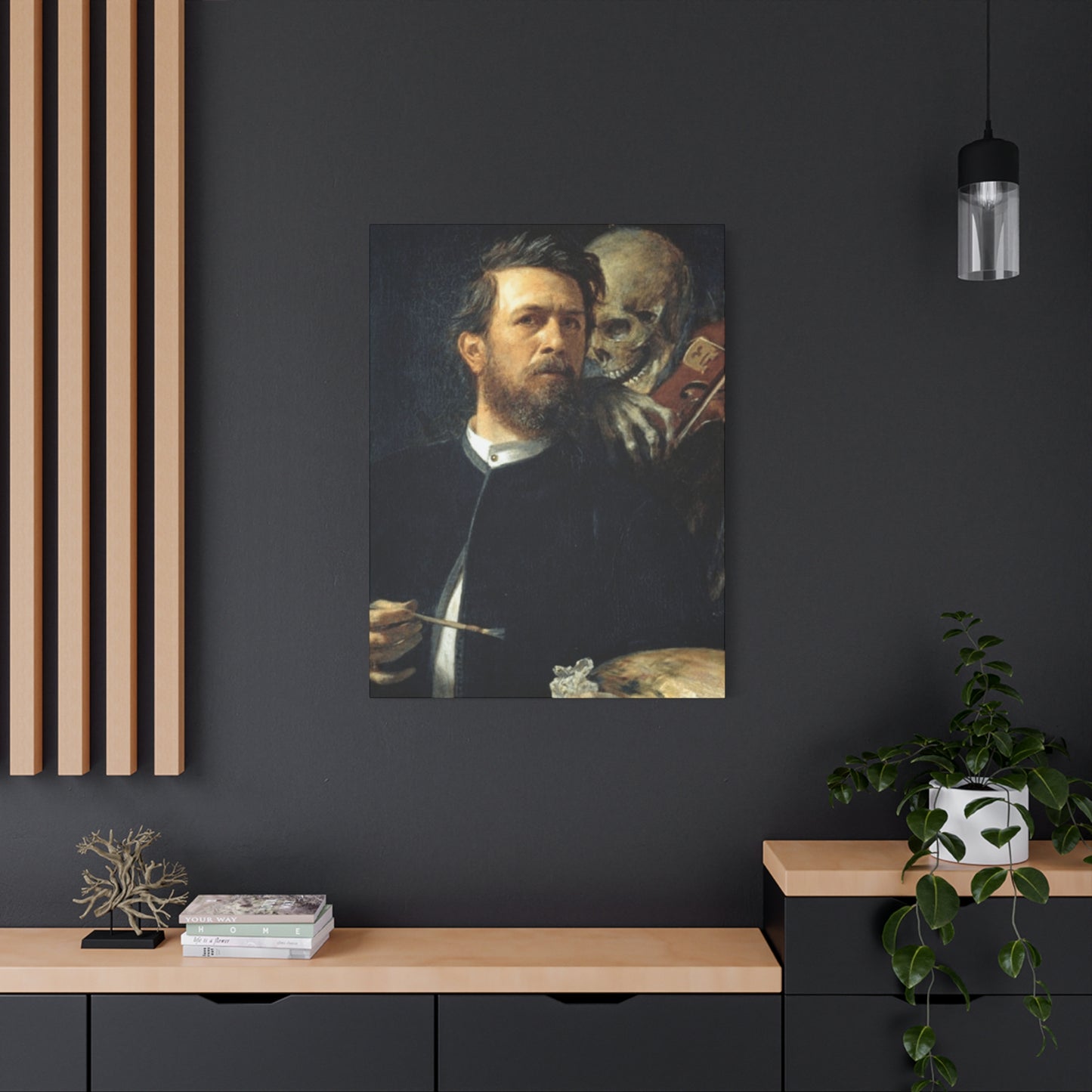
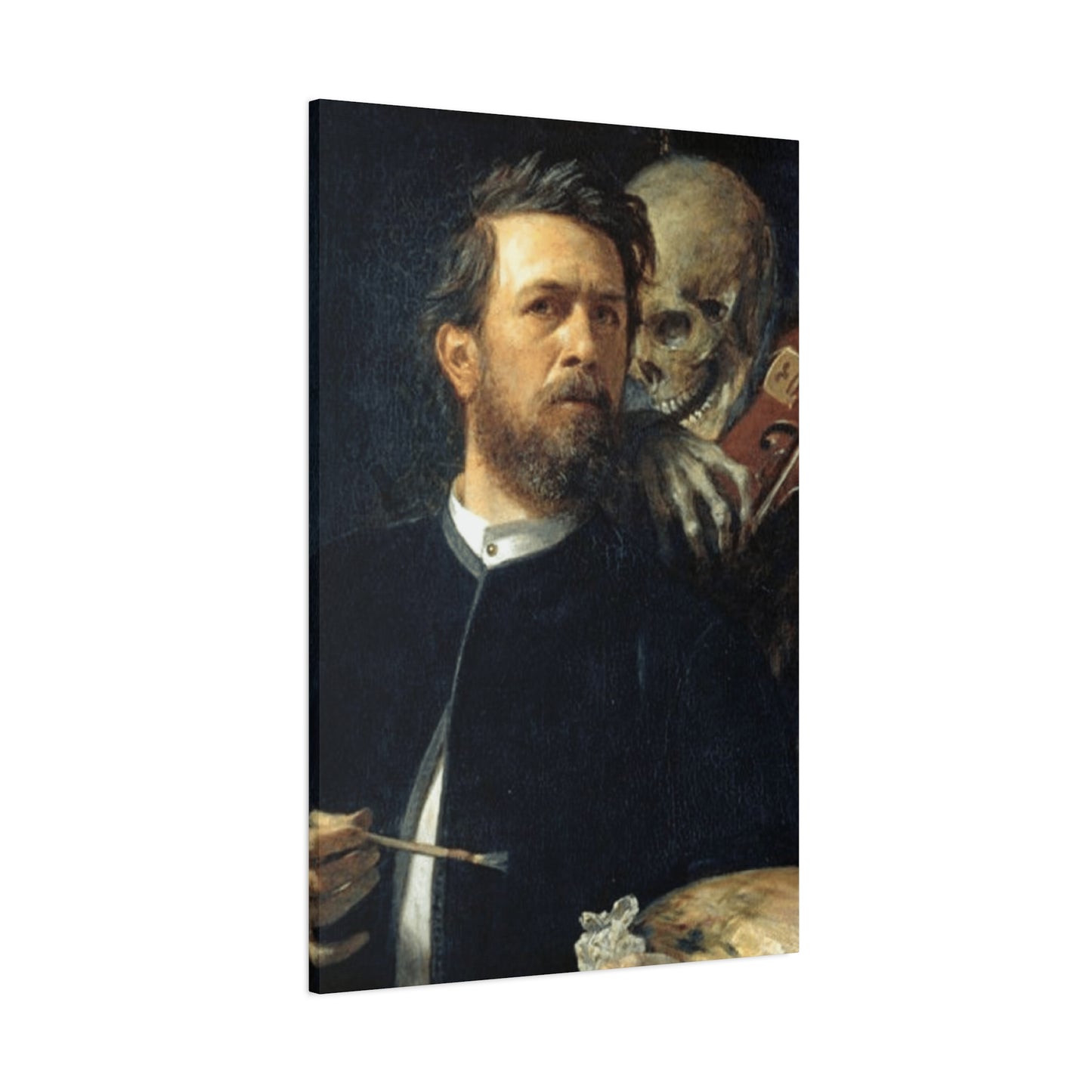
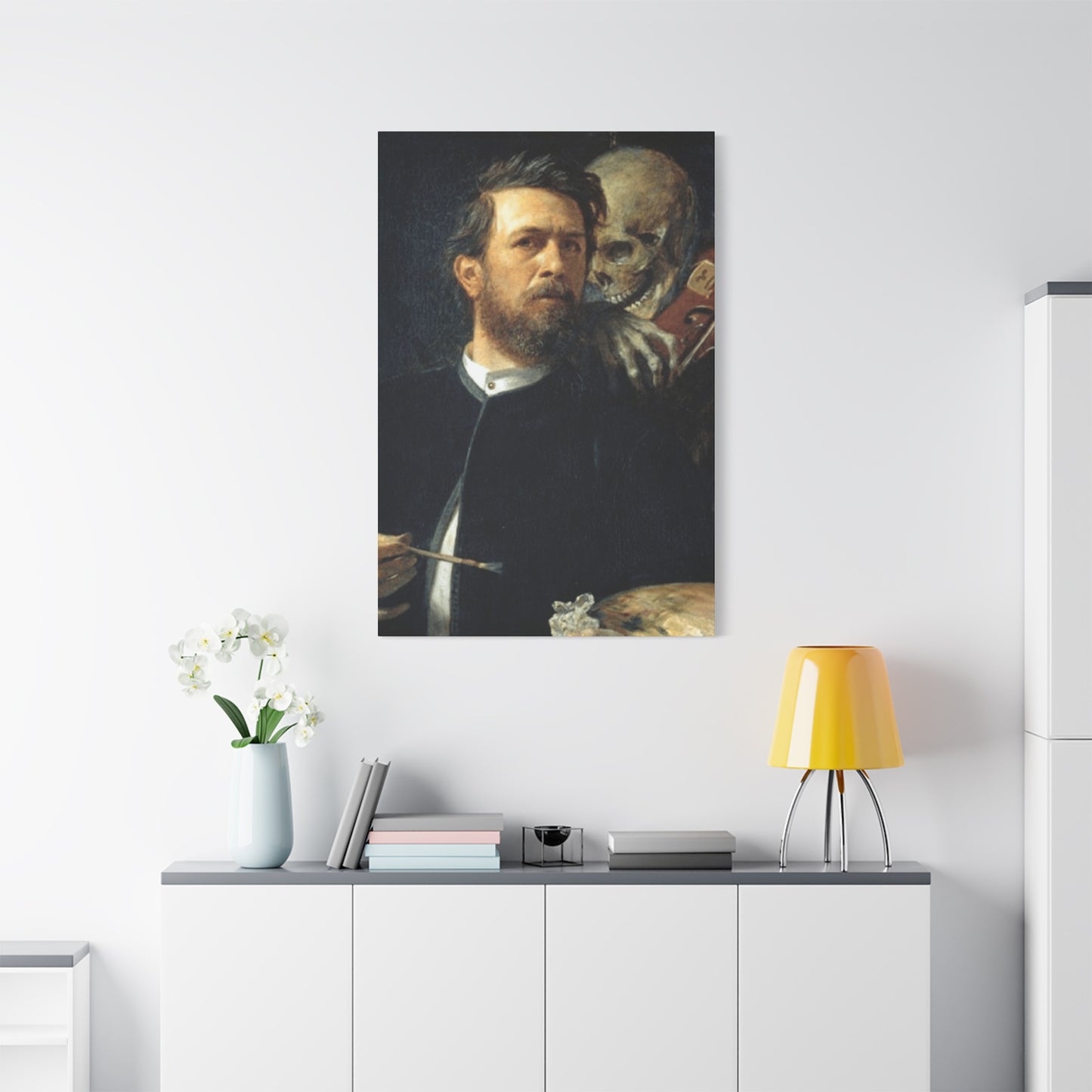
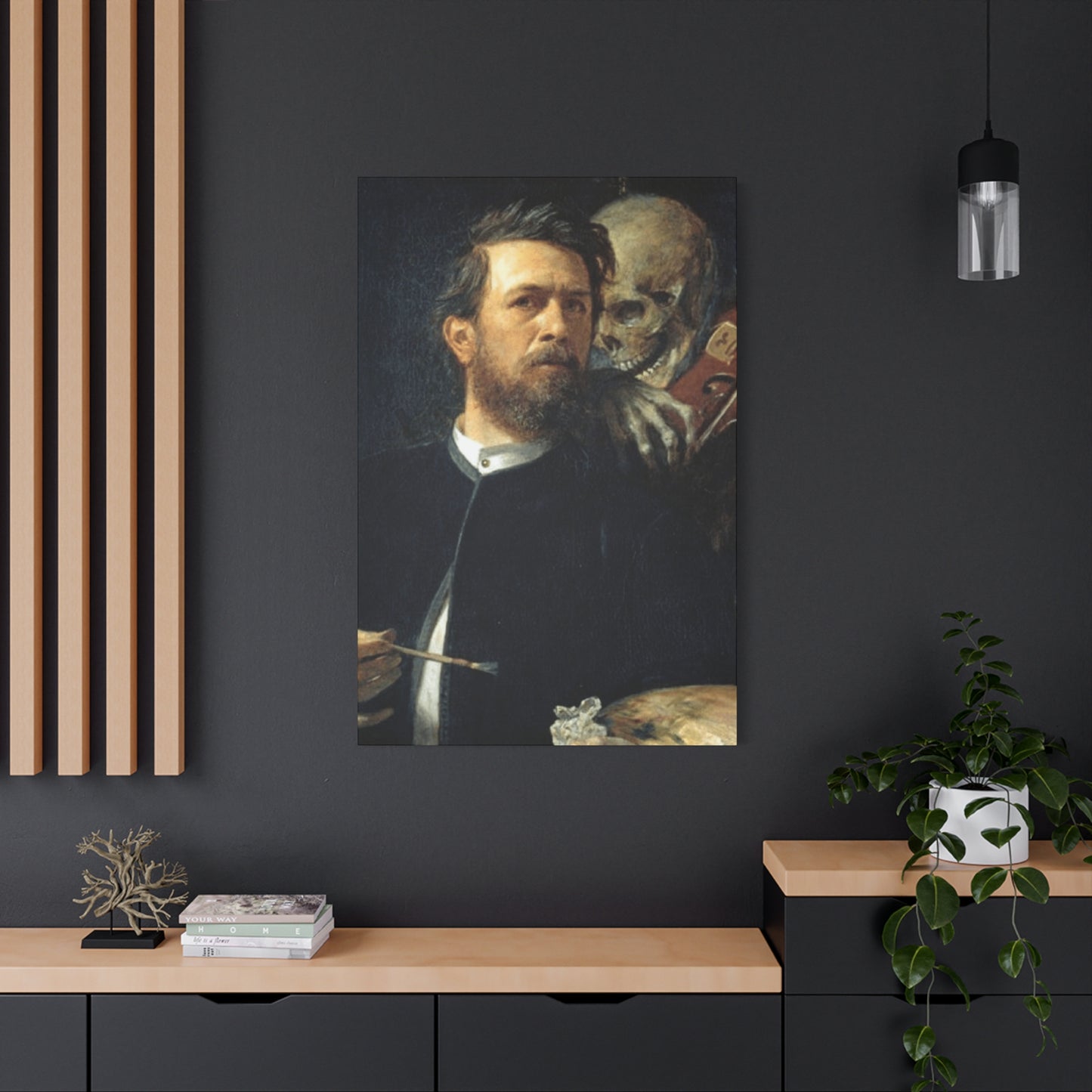
Arnold Böcklin created one of the most haunting and thought-provoking pieces in art history when he painted his self portrait with death playing the fiddle. This Swiss symbolist painter crafted this masterpiece during a period when European art was exploring themes of mortality, human existence, and the relationship between life and death. The painting depicts Böcklin himself listening intently to death, personified as a skeletal figure, playing a violin with an eerie sense of intimacy and inevitability.
The artwork emerged during the late 19th century, a time when symbolism was gaining prominence across Europe. Artists were moving away from pure realism and embracing more philosophical and allegorical representations. Böcklin's decision to paint himself alongside death wasn't merely an artistic choice but rather a profound statement about the human condition and our inevitable mortality. This painting has become one of the most recognizable images in symbolist art and continues to captivate audiences worldwide.
The composition shows remarkable technical skill combined with deep psychological insight. Böcklin portrays himself in a vulnerable position, seemingly unable to escape the haunting melody that death performs. The skeletal musician appears behind the artist, creating a sense of presence that cannot be ignored or dismissed. This positioning speaks volumes about how death follows us throughout our lives, always present even when we try to ignore its existence.
Canvas prints of this remarkable artwork have become increasingly popular among art enthusiasts, collectors, and those who appreciate the darker, more philosophical aspects of visual expression. The availability of high-quality reproductions allows more people to experience this powerful image in their homes and spaces, bringing a piece of art history into contemporary living environments.
Exploring the Symbolism Behind Death Playing the Violin
The image of death playing a musical instrument carries deep symbolic meaning that resonates across cultures and centuries. In this particular painting, the violin serves as more than just a musical instrument; it represents the soundtrack of our existence, the melody that accompanies us from birth to our final moments. The choice of a violin specifically adds another layer of meaning, as this instrument has long been associated with emotional expression and the ability to move the human soul.
Musical instruments in the hands of death figures appear throughout art history, often representing the idea that death calls the tune to which we all must dance. This concept, known as the danse macabre or dance of death, was particularly popular during medieval and Renaissance periods. Böcklin revived this theme with a more personal and intimate approach, making it not about crowds of people dancing to death's tune but about an individual confrontation with mortality.
The fiddle in the painting produces no sound that we can hear, yet the artist's expression suggests he hears every note with crystal clarity. This silent music represents the internal awareness of our own mortality, the knowledge that exists within each person about their eventual end. The music plays not in the external world but in the consciousness of every living being, a constant reminder of life's temporary nature.
When this image appears as wall art in modern spaces, it continues to provoke these same philosophical questions. Viewers find themselves confronting their own relationship with mortality, their own understanding of what it means to be alive knowing that death is inevitable. The canvas print becomes more than decoration; it transforms into a meditation point, a visual anchor for contemplating life's deepest questions.
Why This Painting Resonates with Contemporary Audiences
Despite being created over a century ago, the self portrait with death playing the fiddle continues to speak powerfully to modern viewers. This ongoing relevance stems from the universal nature of its subject matter. Death remains the one certainty that every human being must face, regardless of advances in medicine, technology, or social progress. The painting addresses this fundamental aspect of existence in a way that transcends specific time periods or cultural contexts.
Contemporary audiences often report feeling a strange mixture of emotions when viewing this artwork. There's the initial shock of seeing death depicted so plainly, followed by recognition of the beauty in the composition, and finally a kind of acceptance or peace with the subject matter. This emotional journey mirrors the process many people go through when contemplating their own mortality in serious, meaningful ways.
The popularity of this image as wall art reflects a broader cultural trend toward embracing darker, more philosophical themes in home decoration. Rather than limiting decor to purely cheerful or neutral subjects, many people now choose artwork that challenges them intellectually and emotionally. This painting fulfills that role perfectly, offering beauty, technical excellence, and profound meaning in a single image.
Canvas prints of this work have become particularly popular among younger generations who are exploring existential questions and seeking authenticity in their living spaces. The painting's honest confrontation with death appeals to those tired of superficial decorating choices and looking for art that reflects deeper aspects of the human experience.
The Process of Creating Quality Canvas Print Reproductions
Producing high-quality canvas prints of classical artworks requires sophisticated technology and careful attention to detail. The process begins with high-resolution digital imaging of the original painting, capturing every nuance of color, texture, and brushwork. For paintings like the self portrait with death playing the fiddle, this imaging process must be particularly precise to maintain the atmospheric quality and subtle tonal variations that give the work its power.
Color accuracy represents one of the biggest challenges in art reproduction. The original painting may have changed over time due to aging of materials, environmental exposure, or previous restoration work. Reproduction specialists must research the artist's original intent and use available documentation to ensure that canvas prints reflect how the painting would have appeared when first created, or at least match its current appearance in the most accurate way possible.
The printing process itself uses specialized equipment capable of reproducing fine details and subtle color gradations. Archival-quality inks ensure that the canvas print will maintain its appearance for many years without fading or discoloration. The canvas material itself must be carefully selected to provide the right texture and accept ink properly, creating a surface that resembles an original painting as closely as possible.
After printing, the canvas undergoes stretching and mounting on wooden frames, a process that requires skill to ensure the image remains properly aligned and the canvas maintains appropriate tension. Some producers also apply protective coatings that help preserve the print while maintaining the visual qualities that make canvas such an appealing medium for art reproduction.
Incorporating Dark Art into Modern Interior Design
The rise of alternative and gothic-inspired interior design has created new opportunities for artwork featuring death and darker themes. The self portrait with death playing the fiddle fits perfectly into these aesthetic movements while also appealing to those with more eclectic or intellectual decorating sensibilities. The painting works well in spaces that prioritize substance over convention, where art serves as a focal point for thought and conversation.
When incorporating this canvas print into a room, placement becomes crucial for maximum impact. The painting commands attention and benefits from being positioned where viewers can spend time examining its details. Many people choose to hang it in studies, libraries, or personal spaces where contemplation naturally occurs. The artwork also works well in creative studios or practice spaces for musicians, who may appreciate the metaphorical connection between art, music, and mortality.
Lighting considerations matter significantly when displaying this particular image. The painting's dark tones and subtle contrasts require adequate illumination to be fully appreciated. Track lighting, picture lights, or strategically placed lamps can highlight the details and create the proper viewing conditions. However, direct sunlight should be avoided to protect the canvas print from potential fading or damage over time.
The surrounding decor should complement rather than compete with such a powerful image. Minimalist approaches often work best, allowing the painting to serve as the room's centerpiece without visual clutter diminishing its impact. Color schemes in earth tones, blacks, grays, or deep jewel tones typically harmonize well with the painting's palette and mood.
Musical Symbolism and Its Connection to Life and Death
Music has long served as a metaphor for life in various cultures and artistic traditions. The concept of life as a song or symphony that eventually must end appears in poetry, visual art, and philosophical writings across centuries. In the self portrait with death playing the fiddle, this metaphor becomes literal, with death as the musician controlling the melody of existence.
The violin specifically carries rich symbolic associations. As an instrument requiring skill and practice to master, it represents the refinement and beauty possible in human endeavor. The sound of a violin can express the full range of human emotion, from joy to sorrow, from peace to anguish. Having death play this particular instrument suggests that mortality touches all aspects of life, all emotions and experiences.
Consider also the relationship between musician and listener in this painting. The artist cannot control what death plays; he can only listen and respond. This dynamic reflects the human condition perfectly. We don't choose when or how death comes; we can only live our lives while that inevitable melody plays in the background. The painting captures this powerlessness and acceptance simultaneously.
For musicians and music lovers, this canvas print holds special significance. It acknowledges the deep connection between art and mortality, the way that creating and experiencing beauty becomes even more precious when we recognize its temporary nature. Many musicians report that awareness of life's brevity actually enhances their appreciation for music and motivates them to perfect their craft while time remains.
The Market for Classical Art Reproductions
The market for canvas prints of classical artworks has expanded dramatically in recent years, driven by improvements in reproduction technology and growing interest in bringing museum-quality art into personal spaces. Paintings like the self portrait with death playing the fiddle benefit from this trend, reaching audiences who might never encounter the original but can now own high-quality reproductions.
Several factors contribute to the popularity of classical art reproductions. First, they offer cultural cachet and intellectual substance that mass-produced decorative art often lacks. Owning a reproduction of a recognized masterwork connects individuals to art history and demonstrates appreciation for serious artistic achievement. Second, classical works have proven their enduring appeal over time, offering a safer investment than contemporary pieces whose value may be more speculative.
Quality varies significantly among canvas print producers, making informed purchasing decisions important. The best reproductions use archival materials, accurate color matching, and proper mounting techniques that ensure longevity and visual fidelity. Lower-quality prints may fade quickly, display incorrect colors, or suffer from poor resolution that fails to capture the original's details.
Price points for canvas prints of this painting vary based on size, quality, and seller reputation. While some vendors offer inexpensive options, investing in higher-quality reproductions typically provides better long-term value. A well-made canvas print can last for decades, making the cost per year of enjoyment quite reasonable compared to constantly replacing inferior products.
Understanding the Symbolist Movement in European Art
The symbolist movement emerged in the late 19th century as artists increasingly rejected pure realism in favor of expressing ideas, emotions, and philosophical concepts through symbolic imagery. Arnold Böcklin stood as one of the movement's leading figures, creating works that operated on multiple levels of meaning simultaneously. The self portrait with death playing the fiddle exemplifies symbolist principles perfectly.
Symbolist artists believed that visible reality represented only a surface beneath which deeper truths existed. They sought to visualize the invisible, to give form to concepts and feelings that couldn't be captured through straightforward representation. Death, being both universal and abstract, provided ideal subject matter for symbolist exploration, existing as both concrete reality and philosophical concept.
The movement emphasized mystery, suggestion, and individual interpretation over clarity and objective representation. A symbolist painting intentionally left room for viewers to bring their own experiences and understandings to the work, creating a participatory relationship between art and audience. This approach explains why the painting continues to resonate differently with each person who encounters it.
Understanding symbolism enriches the experience of viewing and owning canvas prints of these works. Rather than looking for a single correct interpretation, viewers can explore multiple meanings and find personal significance in the imagery. This flexibility makes symbolist art particularly suitable for long-term ownership, as the same painting can reveal new dimensions over years of viewing.
The Practical Aspects of Owning and Displaying Canvas Art
Once someone decides to purchase a canvas print of the self portrait with death playing the fiddle, several practical considerations come into play. Proper care and display ensure that the investment provides decades of enjoyment while maintaining its visual quality. Understanding these practical aspects helps art owners protect their purchases and create optimal viewing conditions.
Canvas prints should be hung away from direct sunlight, which can cause fading over time even with quality archival inks. Indirect natural light or artificial lighting provides better conditions for long-term preservation. Rooms with stable temperature and humidity levels also help prevent canvas degradation or warping of the wooden stretcher frame.
Cleaning canvas prints requires gentle methods to avoid damaging the printed surface. Dusting with a soft, dry cloth typically suffices for regular maintenance. More thorough cleaning should be done by professionals who understand proper techniques for canvas care. Avoiding touching the canvas surface directly prevents oil transfer from skin that could attract dirt or cause discoloration over time.
The weight and mounting requirements for canvas prints depend on their size. Larger pieces need secure hanging systems capable of supporting substantial weight. Wall anchors, picture rails, or professional mounting services ensure safety and proper positioning. Taking time to hang the piece correctly prevents accidents and ensures the artwork presents at its best angle and height.
Death as Muse: The Creative Inspiration of Mortality
Many artists throughout history have found mortality to be a powerful creative motivator. The awareness that life is temporary and that we have limited time to create meaningful work can inspire intense focus and productivity. The self portrait with death playing the fiddle can be seen as Böcklin's meditation on this relationship between artistic creation and human mortality.
The painting suggests that death doesn't just end creativity but perhaps influences it throughout an artist's life. The music death plays might represent inspiration itself, the driving force that compels artists to create despite knowing their time is limited. This interpretation transforms the painting from a grim memento mori into something more complex: an acknowledgment of death's role in motivating artistic achievement.
Many creative individuals report that awareness of mortality sharpens their sense of purpose and helps them prioritize meaningful projects over trivial pursuits. The ticking clock of a finite lifespan focuses attention and eliminates procrastination born from the illusion of endless time. In this sense, death serves not as creativity's enemy but as its collaborator, pushing artists to produce their best work.
For creative professionals who choose this canvas print for their studios or workspaces, it can serve as a daily reminder of both limitation and possibility. The artwork acknowledges that time is finite while simultaneously celebrating the human capacity to create beauty and meaning within that limitation. This balanced perspective can fuel sustained creative effort over years or decades.
The Intersection of Gothic Aesthetics and Fine Art
Gothic aesthetics have experienced multiple revivals since the original Gothic period of medieval art and architecture. The self portrait with death playing the fiddle appeals strongly to those drawn to gothic sensibilities, offering the movement's characteristic combination of beauty, darkness, and philosophical depth. The painting bridges classical fine art and subcultural gothic interests in unique ways.
Modern gothic culture embraces themes of mortality, melancholy, and the mysterious aspects of existence. This artwork speaks directly to these interests while maintaining impeccable artistic credentials. Unlike some gothic imagery that prioritizes shock value over substance, Böcklin's painting offers genuine artistic merit alongside its dark subject matter, making it acceptable in contexts where more overtly gothic decor might seem out of place.
The refined execution of the painting demonstrates that darkness and beauty need not be opposites. The technical excellence and thoughtful composition create something genuinely beautiful despite the macabre subject matter. This combination allows the canvas print to work in sophisticated interior settings while still satisfying those drawn to darker aesthetic preferences.
Gothic subculture has historically valued authenticity and depth over superficial prettiness, making this painting an ideal choice for those identifying with these values. The work doesn't shy away from difficult subjects or try to sugar-coat reality. Instead, it presents mortality honestly while still creating something worthy of contemplation and admiration.
The Artist's Personal Philosophy Reflected in His Work
Arnold Böcklin's worldview permeates his artistic output, with the self portrait with death playing the fiddle offering particularly direct insight into his thinking about mortality and existence. Throughout his career, Böcklin returned repeatedly to themes of death, mythology, and the boundary between physical and spiritual realms. These preoccupations suggest an artist deeply engaged with fundamental questions about human existence.
Unlike artists who treated death as purely frightening or as an abstraction, Böcklin approached it with a kind of familiarity. His depictions present death as a presence to be acknowledged and even, in some sense, accepted as part of the natural order. This attitude reflects philosophical traditions stretching back to ancient Stoicism, which advocated for recognizing and accepting aspects of existence beyond human control.
The decision to paint himself with death suggests that Böcklin viewed his own mortality as an appropriate subject for artistic exploration. This willingness to confront personal vulnerability through art demonstrates considerable courage and honesty. Many artists create self-portraits that present idealized or heroic versions of themselves; Böcklin chose instead to show himself in a moment of existential truth.
For those who display this canvas print, understanding the artist's philosophy adds another dimension to the experience. The painting becomes not just an image but a window into one person's attempt to come to terms with the human condition. This personal quality makes the artwork feel more intimate and genuine than more abstract or impersonal treatments of similar themes.
Building a Collection Around Symbolist and Philosophical Art
For those drawn to the self portrait with death playing the fiddle, building a cohesive art collection around similar themes offers opportunities for creating visually and intellectually unified spaces. Symbolist art, memento mori imagery, and philosophical paintings from various eras can work together to create environments that encourage contemplation and meaningful engagement.
When selecting additional pieces to complement this painting, consider both thematic and visual harmony. Other Böcklin works might provide obvious companions, sharing the artist's particular vision and technique. Works by other symbolist painters like Gustave Moreau, Fernand Khnopff, or Odilon Redon could expand the collection while maintaining stylistic coherence.
Beyond symbolism, broader categories like vanitas still life paintings, romantic landscape art, or medieval religious art might complement the collection depending on which aspects of the original painting most appeal to the collector. The musical element might inspire including artwork featuring instruments, while the self-portrait aspect could lead toward collections of artist self-representations across eras.
Building such a collection requires patience and discernment. Not every death-themed or philosophical artwork will work equally well together. Consider the overall mood, color harmony, and level of artistic quality to ensure that each piece contributes to a cohesive whole rather than creating visual or conceptual chaos. Canvas prints make this collection-building more accessible than purchasing original artworks, allowing experimentation and refinement over time.
The Role of Death in Different Cultural Artistic Traditions
While the self portrait with death playing the fiddle emerges from European artistic traditions, death has served as an artistic subject across virtually all cultures and time periods. Comparing these various approaches enriches understanding of what makes Böcklin's treatment distinctive and helps situate it within the broader human fascination with mortality.
Mexican traditions of Day of the Dead art present death quite differently, often with bright colors, celebratory tones, and emphasis on continued connection with deceased loved ones. This contrasts sharply with European memento mori imagery but addresses similar fundamental concerns about human mortality and its meaning.
Asian artistic traditions have produced remarkable death imagery, from Tibetan Buddhist paintings of wrathful deities to Japanese prints depicting ghosts and the afterlife. These traditions often integrate death into larger spiritual frameworks that view mortality as transition rather than ending. The philosophical implications differ significantly from European approaches while still acknowledging death's inevitability.
Understanding these various cultural approaches helps viewers recognize that Böcklin's painting represents one particular perspective on mortality shaped by specific historical and cultural circumstances. This recognition doesn't diminish the painting's power but rather highlights how different societies have grappled with the same universal human experience in diverse ways.
Practical Considerations for Large-Scale Canvas Prints
When ordering canvas prints of the self portrait with death playing the fiddle, size becomes an important decision. Larger prints create dramatic impact and allow viewers to appreciate fine details, but they also present practical challenges in terms of shipping, installation, and spatial requirements. Understanding these considerations helps buyers make informed choices.
Very large canvas prints require substantial wall space and sufficient viewing distance to be appreciated properly. A six-foot canvas print needs a room large enough that viewers can stand back far enough to take in the full composition without feeling cramped. In smaller spaces, more modest sizes often work better, maintaining presence without overwhelming the environment.
Shipping large canvas prints requires special packaging to prevent damage during transit. The larger the piece, the greater the risk of creasing, puncturing, or other damage. Reputable sellers use custom packaging with rigid protection and careful handling protocols, but buyers should verify these protections before ordering expensive large-scale reproductions.
Installation of oversized canvas prints typically requires two people and proper mounting hardware rated for the weight involved. Professional installation services may be worthwhile for particularly large or valuable pieces, ensuring secure mounting and optimal positioning. The investment in proper installation protects both the artwork and anyone who might be underneath if inadequate mounting failed.
The Relationship Between Music and Visual Art in Symbolism
The inclusion of musical elements in the self portrait with death playing the fiddle highlights the important relationship between music and visual art within symbolist circles. Symbolist artists frequently drew inspiration from music, which they viewed as the most abstract and emotionally direct of all art forms. The painting's musical component isn't decorative but rather central to its meaning and impact.
Music's temporal nature contrasts with painting's permanence, creating interesting tensions when visual artists incorporate musical themes. A painting captures a frozen moment, yet when that moment involves music-making, it suggests ongoing sound that viewers must imagine. This imaginative requirement engages viewers more actively than purely visual elements alone.
The specific choice of violin carries significance beyond general musical associations. Violins produce some of music's most emotionally expressive sounds, capable of imitating the human voice's tonal qualities. In death's hands, this instrument becomes a tool for communicating something beyond words, perhaps truths about existence that can only be expressed through non-verbal means.
Symbolist composers like Claude Debussy and Alexander Scriabin were exploring similar territories in music during Böcklin's era, seeking to evoke moods and ideas rather than tell straightforward stories. This parallel development across art forms reveals the era's broader cultural preoccupations with subjective experience, emotional truth, and the limits of realistic representation.
Framing Options and Presentation Styles for Canvas Art
While many canvas prints come stretched and ready to hang without additional framing, some owners prefer to add frames for enhanced presentation or additional protection. Understanding available framing options helps buyers make choices that complement the self portrait with death playing the fiddle while meeting practical needs and aesthetic preferences.
Gallery-wrap stretching, where the canvas wraps around the wooden frame's edges, creates a clean, modern presentation that needs no additional framing. This approach allows the image to stand alone, emphasizing the canvas material itself. For this particular painting, gallery wrap maintains focus on the image without introducing decorative elements that might distract from its powerful subject matter.
Floating frames create a shadow gap between the canvas edge and the frame, producing a contemporary look that adds presence without covering any of the image. These frames work particularly well for darker paintings like this one, as the frame can provide contrast that makes the artwork stand out from walls. The floating effect adds dimensionality and sophistication to the presentation.
Traditional frames that overlap the canvas edges offer maximum protection and a more classical appearance. For those displaying canvas prints alongside traditionally framed paintings or in period settings, this approach maintains visual consistency. Frame choices in dark woods, metals, or simple black finishes typically complement the painting's color palette and serious tone.
Custom framing allows for personalization that reflects individual taste while honoring the artwork's character. Working with professional framers ensures that choices enhance rather than detract from the painting's impact. Quality framing represents an investment that protects the canvas print while elevating its presentation for decades of enjoyment.
The Influence of Germanic and Swiss Cultural Traditions
Arnold Böcklin's Swiss heritage and his connections to broader Germanic cultural traditions influenced his artistic vision significantly. The self portrait with death playing the fiddle reflects cultural attitudes toward mortality and the natural world common in these traditions. Understanding this cultural context deepens appreciation for the painting's themes and execution.
Germanic folklore includes numerous stories of death figures, spectral musicians, and supernatural encounters. These traditions provided Böcklin with a rich imaginative resource that informed his symbolic vocabulary. The painting's matter-of-fact presentation of death as a physical presence reflects folkloric traditions where supernatural beings interact directly with humans rather than existing as pure abstractions.
Swiss culture has historically valued philosophical seriousness, craftsmanship, and direct confrontation with difficult realities. These cultural characteristics appear in Böcklin's work, which combines technical excellence with willingness to address subjects that some might find uncomfortable. The painting doesn't sensationalize or romanticize death but presents it as a fact requiring acknowledgment.
The Protestant Reformation's influence on Germanic and Swiss culture also shaped attitudes reflected in the painting. Protestant thought emphasized individual confrontation with mortality and judgment, encouraging believers to contemplate their eventual deaths seriously. While Böcklin's painting isn't explicitly religious, it carries forward this tradition of personal reckoning with mortality.
Seasonal and Temporal Considerations in Art Display
While the self portrait with death playing the fiddle maintains year-round relevance, some owners choose to feature it more prominently during particular seasons or times. Understanding these temporal associations can inspire creative approaches to art display and rotation within home or office environments.
Autumn naturally connects with mortality themes as nature visibly demonstrates death and decay preceding winter dormancy. The painting's somber tones and philosophical subject matter harmonize with autumn's mood, making it particularly appropriate for prominent display during these months. Some cultures' observances of days remembering the dead also occur in autumn, adding cultural reinforcement to this seasonal association.
Winter's darkness and coldness similarly align with the painting's atmosphere. During months when daylight hours shorten and temperatures drop, artwork that acknowledges life's darker aspects feels seasonally appropriate. The painting can serve as a focal point for the introspection that winter naturally encourages, providing visual accompaniment to the season's contemplative mood.
Some individuals make the painting central to Halloween or Day of the Dead celebrations, using it as a sophisticated alternative to commercial holiday decorations. The artwork's serious treatment of death provides balance to these occasions' more playful or celebratory elements, acknowledging the authentic meaning behind cultural death observances.
Others prefer keeping the painting visible year-round as a constant reminder rather than a seasonal accent. This approach treats mortality awareness as an ongoing practice rather than something reserved for particular times. The choice depends on personal philosophy and how one wishes to integrate memento mori principles into daily life.
Conservation Concerns for Long-Term Canvas Print Preservation
Owners who invest in quality canvas prints naturally want to preserve them for as long as possible. Understanding conservation principles helps protect these investments while maintaining viewing pleasure. The self portrait with death playing the fiddle, with its dark tones and detailed execution, benefits particularly from proper conservation practices.
Environmental stability represents the most critical factor in canvas longevity. Temperature fluctuations cause expansion and contraction that can eventually damage canvas fibers and compromise adhesion between ink and substrate. Maintaining consistent temperature helps prevent these problems. Similarly, humidity variations affect canvas tension and can promote mold growth in extreme conditions.
Light exposure requires careful management. While moderate indirect light enhances viewing, excessive exposure gradually fades even archival-quality inks. Positioning canvas prints away from windows or using UV-filtering glass in frames provides protection. For pieces in brightly lit spaces, rotation with other artworks distributes light exposure, extending each piece's lifespan.
Physical protection from accidental damage matters especially in high-traffic areas. Canvas prints should hang where they won't be bumped by furniture, doorways, or passing traffic. In homes with children or pets, positioning artwork higher on walls prevents damage from curious hands or paws. These precautions seem obvious but prevent many common causes of canvas damage.
Professional conservation assessment every decade or so helps identify emerging problems before they become serious. Conservators can detect subtle deterioration invisible to untrained eyes and recommend preventive measures. While quality canvas prints should last many decades with basic care, professional attention ensures maximum longevity.
The Digital Age and Evolution of Art Appreciation
The internet has transformed how people discover, learn about, and acquire artwork like the self portrait with death playing the fiddle. Online galleries, artist databases, and educational resources provide unprecedented access to art history and contemporary reproduction markets. This digital revolution has both positive and challenging aspects for art appreciation.
Virtual museum tours and high-resolution online images allow people worldwide to view artworks they might never see in person. This access democratizes art education and inspiration, removing geographical and economic barriers that once limited who could engage seriously with visual art. For paintings like this one, digital access introduces it to audiences far beyond those who visit the museums housing the original.
However, digital viewing cannot fully replicate the experience of encountering artwork in person or even in quality physical reproductions. Screen limitations in color reproduction, scale, and texture mean that digital images provide incomplete representations. Canvas prints bridge this gap, offering physical presence and tactile reality that digital images lack while remaining more accessible than original works.
The digital marketplace for canvas prints presents both opportunities and challenges. Online ordering makes finding and purchasing reproductions easier than ever, but it also requires careful evaluation of seller credibility and product quality. Reviews, return policies, and detailed product specifications help buyers make informed decisions when they cannot examine products before purchase.
Social media has created new communities around art appreciation, where enthusiasts share their collections, discoveries, and insights. These communities help sustain interest in classical artworks and introduce them to new generations. The painting has found new audiences through these channels, with younger art lovers discovering it through digital platforms and subsequently seeking canvas prints for their spaces.
Therapeutic Applications of Art in Healthcare Settings
Healthcare facilities increasingly recognize art's therapeutic value for patients, staff, and visitors. However, artwork selection for medical settings requires careful consideration of how images affect people experiencing illness, stress, or grief. The self portrait with death playing the fiddle presents interesting opportunities and challenges for healthcare display.
Some might assume that death-themed artwork would be inappropriate in healthcare settings, potentially increasing patient anxiety or depression. However, thoughtfully selected and contextualized mortality-aware art can actually support healthy psychological processing. Hospice care facilities and palliative care units sometimes include such artwork, recognizing that acknowledging death can reduce the fear and isolation around it.
The painting's contemplative rather than horrific presentation of death makes it more suitable for healthcare contexts than more graphic or disturbing imagery. The artistic excellence and historical significance also frame the subject matter in ways that encourage philosophical reflection rather than visceral fear. These qualities allow the artwork to serve educational and therapeutic purposes simultaneously.
Medical education facilities represent particularly appropriate settings for this canvas print. Medical students and healthcare professionals must develop healthy relationships with mortality as part of their training. Artwork that addresses death thoughtfully can support this psychological preparation, providing focal points for discussions about death, dying, and the limits of medical intervention.
Mental health facilities might use such artwork in therapeutic contexts, helping patients explore their relationships with mortality, meaning, and existence. Art therapy approaches sometimes incorporate responses to existing artworks as starting points for creative expression and psychological exploration. The painting's rich symbolism provides abundant material for such therapeutic applications.
Collecting Death-Themed Artwork
People drawn to death-themed artwork like the self portrait with death playing the fiddle often share certain psychological characteristics and philosophical perspectives. Understanding these patterns doesn't pathologize such interests but rather recognizes legitimate psychological needs that dark art fulfills for some individuals.
Many collectors of memento mori imagery demonstrate high levels of self-awareness and philosophical curiosity. Rather than avoiding difficult questions, they actively seek to understand mortality, meaning, and human existence. Death-themed art supports this quest by providing focal points for contemplation and conversation. The collecting behavior reflects intellectual engagement rather than morbid fixation.
Some individuals find that acknowledging mortality through art reduces rather than increases anxiety. Psychological research supports this counterintuitive finding, showing that moderate mortality awareness can promote mental health and life satisfaction. For these individuals, owning artwork that addresses death directly serves a therapeutic function, normalizing thoughts that society often treats as taboo.
Aesthetic appreciation provides another motivation independent of psychological needs. Some people simply recognize the artistic merit in works like this painting, collecting them for the same reasons others collect landscapes or portraits. The subject matter becomes secondary to technical excellence, historical significance, or visual appeal. This purely aesthetic motivation coexists with deeper psychological purposes for many collectors.
Collectors often report that their death-themed artwork generates interesting social dynamics. Some visitors express fascination and engage in substantive conversations prompted by the art. Others react with discomfort or incomprehension. These varying responses reveal much about different individuals' relationships with mortality, making the artwork a kind of psychological litmus test as well as a decorative element.
Lighting Techniques for Dramatic Art Presentation
Proper lighting transforms canvas print presentation from adequate to outstanding. The self portrait with death playing the fiddle, with its dramatic tones and detailed execution, particularly benefits from thoughtful lighting design. Understanding various lighting approaches helps owners create optimal viewing conditions that honor the artwork's qualities.
Track lighting provides flexibility for highlighting specific artworks while maintaining general room illumination. Adjustable fixtures allow precise positioning of light beams to emphasize the canvas without creating glare or hot spots. For this painting, angling light from slightly above creates depth and reveals details without reflecting off the canvas surface.
Picture lights mounted directly above or below the frame offer dedicated illumination focused entirely on the artwork. These fixtures create gallery-style presentation and ensure consistent lighting regardless of other room conditions. Battery-operated or plug-in options provide installation flexibility, though hardwired fixtures offer cleaner aesthetics for permanent installations.
Ambient lighting from multiple sources creates even illumination that reduces shadows and allows natural color perception. While less dramatic than spotlighting, this approach suits living spaces where artwork shares attention with other activities and decorative elements. The painting remains visible and appreciable without dominating the environment through theatrical lighting.
Dimmer switches enable lighting adjustments matching different times of day, moods, or activities. Bright lighting for detailed examination alternates with subdued illumination for atmospheric evening viewing. This flexibility maximizes the artwork's versatility, allowing it to serve different purposes depending on circumstances and preferences.
The Role of Art Critics and Historians in Shaping Appreciation
Art criticism and historical scholarship significantly influence how artworks are understood and valued by broader audiences. The self portrait with death playing the fiddle has been analyzed extensively by critics and historians, shaping contemporary understanding of its significance and meaning. Engaging with this scholarship enriches personal appreciation while connecting individual responses to broader cultural conversations.
Early critical responses to Böcklin's work varied considerably. Some critics celebrated his imaginative vision and technical skill, while others found his symbolist approach obscure or overly dramatic. These divided opinions reflected broader debates about symbolism's value and the appropriate purposes of visual art. Understanding this historical critical context helps explain why the artist's reputation has fluctuated over time.
More recent scholarship has rehabilitated Böcklin's standing, recognizing his influence on subsequent art movements and his success in creating psychologically resonant imagery. Contemporary critics appreciate the painting's honest confrontation with mortality and its technical excellence. This critical reassessment has contributed to increased interest in his work among collectors and institutions.
Art historians have traced the painting's connections to earlier artistic traditions while analyzing its innovative aspects. This scholarship reveals how Böcklin both drew upon and departed from precedents, creating something that honored tradition while advancing artistic expression. Such historical analysis deepens appreciation by revealing layers of meaning and connection not immediately apparent to casual viewers.
Individual viewers need not defer entirely to critical or historical opinions. Personal response and meaning-making remain valid regardless of scholarly consensus. However, engaging with expert analyses often illuminates aspects of artworks that independent viewing might miss, enhancing rather than replacing subjective experience.
Creating Dialogues Between Multiple Artworks
When displaying the self portrait with death playing the fiddle alongside other artworks, opportunities arise for creating visual and thematic dialogues that enhance appreciation of all pieces involved. Thoughtful juxtaposition creates meanings that emerge from relationships between works rather than residing in individual pieces alone.
Pairing this painting with artworks depicting life, celebration, or vitality creates dialectical relationships that emphasize contrasts while suggesting the interconnection of opposing states. A still life of flowers or fruit alongside the death portrait reminds viewers that life and death coexist and define each other. This pairing can prevent the death imagery from feeling overwhelming while adding philosophical depth to more cheerful subjects.
Grouping multiple death-themed works from different eras or cultures creates comparative opportunities. Viewers can observe how various artists and traditions have addressed mortality, recognizing both universal themes and culturally specific approaches. Such groupings work well in educational contexts or for collectors with extensive death-themed holdings.
Creating thematic exhibitions within homes or offices around concepts like music, self-portraiture, or Swiss art positions this painting within broader categories that emphasize aspects other than death. This contextualization reveals additional dimensions while preventing reductive focus on a single theme. The painting becomes one example of musical art or one instance of introspective self-portraiture rather than simply death imagery.
The physical arrangement of multiple pieces requires attention to practical concerns like spacing, alignment, and sight lines. Gallery walls grouping many artworks create density and visual richness but require careful planning to avoid chaos. More minimal approaches with ample space between pieces allow each work to breathe while still creating relationships through proximity and visual correspondence.
Personal Narratives and Emotional Connections to Art
Beyond historical significance and aesthetic qualities, artworks gain additional meaning through personal associations and emotional connections that develop over time. The self portrait with death playing the fiddle becomes part of owners' life narratives, accumulating memories and associations that deepen its personal significance beyond its objective properties.
An artwork might mark a significant life transition, purchased during a period of change, loss, or growth. These biographical associations mean that viewing the piece triggers memories of that life period, creating emotional resonance distinct from the painting's inherent qualities. The artwork becomes a kind of visual bookmark in personal history.
Conversations inspired by the painting create social memories attached to it. Recalling a particularly meaningful discussion about mortality, art, or philosophy that occurred while looking at the piece adds layers of significance. Over years, these accumulated conversations create rich associational networks surrounding the artwork.
The painting might become associated with particular rituals or practices. Perhaps someone makes a habit of contemplating it during morning coffee, using it as a focal point for meditation, or discussing it with each new guest. These repeated behaviors transform the artwork into a tool or prop within personal practices, making it functionally important beyond its aesthetic value.
For some owners, the painting connects them to broader communities of art lovers, philosophy enthusiasts, or gothic culture participants. Owning recognizable imagery creates shared reference points and conversation starters, facilitating social connections. The artwork serves as a badge of identity, signaling values and interests to others who recognize its significance.
Conclusion:
The self portrait with death playing the fiddle continues to captivate audiences more than a century after its creation because it addresses something fundamentally human that transcends specific historical moments or cultural contexts. Every person must ultimately confront their own mortality, making the painting's subject matter eternally relevant regardless of technological advances or social changes. This universality ensures that the artwork will remain meaningful for generations to come.
Arnold Böcklin's technical mastery combined with his philosophical depth created an image that operates on multiple levels simultaneously. Viewers can appreciate the painting purely for its aesthetic qualities, examining the skillful rendering and compositional choices. They can engage with its symbolic dimensions, exploring what the violin-playing death figure represents about human existence. They can relate to it personally, seeing their own mortality reflected in Böcklin's vulnerable self-portrait. This multidimensional quality gives the artwork extraordinary staying power and allows it to speak to diverse audiences with varied interests and perspectives.
The availability of high-quality canvas prints democratizes access to this important artwork, allowing people who might never visit the museum housing the original to experience its power in their own spaces. This accessibility serves cultural education while meeting personal needs for meaningful art in living and working environments. As reproduction technology continues improving, even more people will be able to engage with masterworks like this one, spreading cultural literacy and philosophical awareness through wider populations.
Choosing to display this painting represents more than an aesthetic decision. It signals a willingness to confront difficult truths about human existence, a commitment to intellectual depth over superficial pleasantness, and an appreciation for art's capacity to address life's most fundamental questions. The painting challenges viewers to consider their own mortality, their priorities, and how they choose to spend their limited time. These challenges make it demanding wall art, but for those willing to engage seriously with its themes, it offers rewards that decorative artwork cannot match.
The relationship between life and death that the painting explores remains as complex and mysterious today as when Böcklin first put brush to canvas. Medical technology may extend lifespans and postpone death, but it cannot eliminate mortality's eventual inevitability. The painting reminds us that acknowledging this truth need not lead to despair but can instead inspire fuller, more intentional living. When we remember that our time is finite, we may choose to use it more wisely, pursuing what matters most while we still can.
For collectors, interior designers, and anyone seeking meaningful artwork, the self portrait with death playing the fiddle offers something increasingly rare in contemporary culture: honest confrontation with difficult reality presented with beauty and skill. The painting refuses to sugar-coat or deny death's existence, yet it does so without sensationalism or gratuitous darkness. This balanced approach makes it suitable for thoughtful display while maintaining its power to provoke reflection and conversation.


