


Expressionism Wall Art & Canvas Prints
Expressionism Wall Art & Canvas Prints
Couldn't load pickup availability


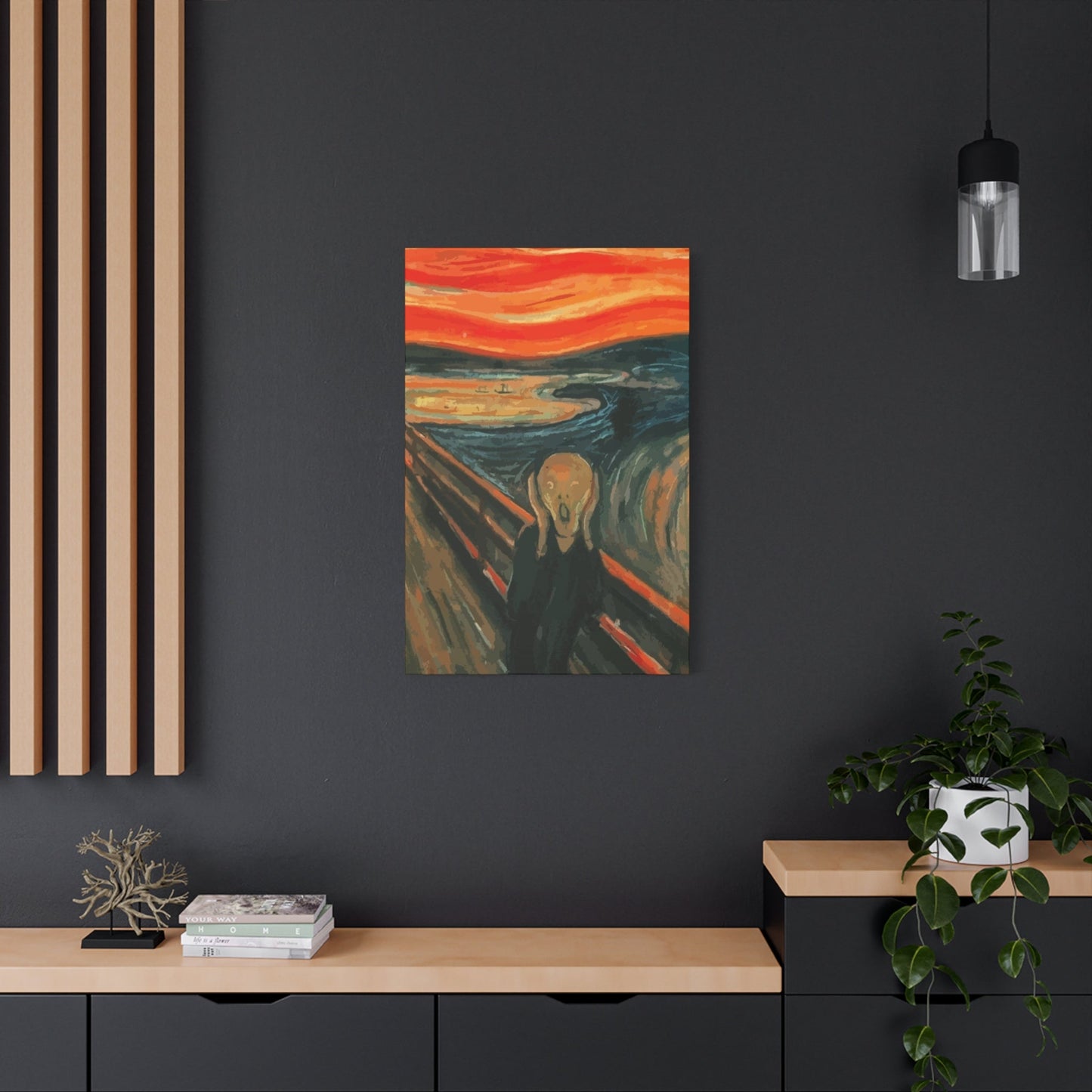
Expressionism Wall Art: Emotional Power Through Bold Artistic Vision
Expressionism, a revolutionary art movement that erupted in Germany in the early 20th century, was not merely a new style; it was a visceral scream against the burgeoning anxieties of the modern world. Emerging from the embers of Post-Impressionism and Symbolism, it rejected the prevailing academic standards of naturalism and beauty. Instead, artists like Ernst Ludwig Kirchner, Wassily Kandinsky, and Edvard Munch sought to externalize their innermost feelings, fears, and spiritual yearnings. They valued subjective, emotional truth above objective, external reality. To achieve this, they employed jarring, dissonant colors, violently distorted forms, and raw, energetic brushwork. Their canvases became arenas for psychological drama, exploring themes of alienation, spirituality, urban decay, and the primal forces of human nature.
This radical departure from tradition has left an indelible mark not only on the trajectory of art history—paving the way for Abstraction, Neo-Expressionism, and countless contemporary practices—but also on the very spaces we inhabit. The principles of Expressionism, with its emphasis on emotional resonance, individuality, and bold statements, have permeated the world of interior design, influencing how we use art to create mood, establish focal points, and tell personal stories within our homes. This article delves into the multifaceted legacy of Expressionism, exploring its dark psychological depths, its surprising adaptability to modern interiors, and its enduring power to connect with the deepest corners of the human condition. From minimalist lofts to creative workspaces, we will journey through the chaotic, harmonious, and profoundly human world of Expressionist art.
Exploring the Dark Themes in Expressionism Art
Expressionism was born from a crucible of social, political, and psychological turmoil. Flourishing in Germany in the years leading up to and following World War I, the movement was a direct response to a world grappling with rapid, disorienting change. The artists felt a profound sense of unease with the effects of industrialization, the soullessness of urban life, and the looming threat of conflict. This societal angst became the fertile ground for the dark, often disturbing themes that define much of the movement's output.
The core of Expressionism is the concept of alienation. Artists from the Die Brücke (The Bridge) group, such as Ernst Ludwig Kirchner, captured the psychological isolation of the individual within the modern metropolis. In his seminal work, Street, Berlin (1913), the figures are not engaged individuals but an anonymous, agitated mass. Their faces are mask-like, their bodies elongated and jagged, and their movements sharp and neurotic. The colors—acidic yellows, jarring pinks, and sickly greens—are non-naturalistic and chosen specifically to evoke a sense of unease and moral decay. The crowded street, rather than being a place of community, becomes a stage for collective loneliness. This was the artist painting the feeling of the city, not its physical appearance.
Another pervasive theme is psychological torment and existential dread. The Norwegian forerunner of the movement, Edvard Munch, is the quintessential artist of this internal struggle. His iconic painting, The Scream (1893), is perhaps the most potent artistic representation of pure, unadulterated anguish in Western art. The skeletal figure clutching its head, the blood-red sky swirling with apocalyptic energy, and the distorted landscape all work in concert to convey a moment of intense psychic horror.
Munch explained the inspiration came from a walk at sunset where he "felt a great, infinite scream pass through nature." He did not paint the scene; he painted the scream itself. Similarly, the Austrian artist Egon Schiele turned his gaze inward, producing a series of raw, unflinching self-portraits. His emaciated, twisted bodies, with their exposed sinews and tortured expressions, are brutal explorations of human vulnerability, sexuality, and mortality. They are uncomfortable to view precisely because they confront the viewer with the raw, often ugly, truths of our physical and psychological existence.
The trauma of war is another dark well from which Expressionism drew its power. Artists like Otto Dix and George Grosz, who served in World War I, created devastating indictments of the conflict and its aftermath. Dix’s portfolio Der Krieg (The War) is a series of fifty etchings that depict the brutal reality of trench warfare with grotesque, unflinching honesty—decaying bodies, skeletal soldiers, and landscapes ravaged beyond recognition.
Grosz, with his satirical, cartoonish style, portrayed the corrupt and decadent society of post-war Weimar Germany, filled with greedy industrialists, maimed veterans begging on the streets, and morally bankrupt politicians. Their work was a powerful form of social critique, using distortion and caricature to expose the societal rot hidden beneath a veneer of normalcy. These artists used their canvases to process trauma, to bear witness, and to scream a warning against the dehumanizing forces of their time.
Canvas Art for Urban Loft Decor
Urban lofts, with their industrial heritage, vast open spaces, and raw architectural elements, provide a uniquely compelling backdrop for Expressionist canvas art. The very nature of a loft—high ceilings, exposed brick walls, visible ductwork, and large factory windows—creates an environment that can handle the scale, intensity, and emotional weight of Expressionist works. This synergy between art and architecture results in a space that feels authentic, sophisticated, and deeply personal.
The most obvious advantage of a loft is scale. The expansive, uninterrupted walls are crying out for large-scale art that would overwhelm a traditional home. A massive Expressionist canvas, perhaps six or seven feet wide, can be hung on a brick wall without feeling crowded. This scale allows the artwork to function almost as an architectural element itself, defining a zone within the open-plan layout (e.g., anchoring the living area) and making a powerful statement. The raw energy of a piece by a Neo-Expressionist like Jean-Michel Basquiat or the swirling chaos of a Chaim Soutine landscape feels perfectly at home in a space that is itself unrefined and monumental. The art doesn't have to be polite; it can be as bold and unapologetic as the space it occupies.
There is also a powerful textural and thematic dialogue between Expressionist art and loft aesthetics. The rough texture of exposed brick, the coldness of concrete floors, and the hardness of steel beams resonate with the raw, often gritty, textures found in Expressionist painting. The movement was, in many ways, a reaction to the alienation and energy of the modern city—the very environment from which the loft apartment was born. A Kirchner street scene, with its depiction of urban anxiety, feels thematically appropriate in a converted warehouse in a bustling city center. The history of the building and the history of the art movement speak a similar language of industry, modernity, and human experience within a built environment.
Expressionist art also serves to humanize and soften the industrial character of a loft. While the raw architecture is a key part of a loft's appeal, it can sometimes feel cold or impersonal. A vibrant Expressionist canvas introduces a powerful dose of color, emotion, and humanity. The passionate reds, deep blues, and sunny yellows in a work by Alexej von Jawlensky can bring warmth and life to a concrete wall. The organic, swirling forms in a Kandinsky composition can provide a beautiful contrast to the rigid geometry of window panes and steel beams. This interplay between the hard, industrial shell of the loft and the soft, emotional core of the artwork creates a dynamic and balanced interior. The art breathes life into the machine of the building, creating a space that is not just a dwelling but a vibrant canvas for living.
How to Choose Expressionism Art for Your Personality
Art is one of the most personal aspects of a home, a direct reflection of the inhabitant's inner world. Expressionism, with its vast emotional range and diverse stylistic approaches, offers a particularly rich palette for matching art to personality. Choosing a piece is less about following rules and more about introspection—identifying what kind of emotional energy you want to live with every day.
For the bold, energetic, and passionate individual, the works of the Die Brücke (The Bridge) artists are a natural fit. Artists like Ernst Ludwig Kirchner and Karl Schmidt-Rottluff used clashing, vibrant colors and jagged, dynamic forms to convey a sense of raw vitality and intensity. Their cityscapes and portraits are filled with movement and a certain nervous energy. Hanging a print of their work is a statement of confidence. It suits someone who is not afraid of color, embraces a bit of chaos, and is drawn to art that sparks conversation and provokes a strong reaction. This personality type thrives on stimulation and would find the powerful, unapologetic nature of these works invigorating.
For the introspective, spiritual, and philosophical personality, the art of the Der Blaue Reiter (The Blue Rider) group offers a different kind of emotional depth. Wassily Kandinsky, the pioneer of abstraction, believed that art should be a gateway to a higher spiritual reality. His compositions, especially from his later period, are visual symphonies of color and form, designed to evoke deep emotional and spiritual responses without relying on recognizable imagery. Franz Marc, another key member, saw a spiritual purity in the animal world, which he depicted using symbolic colors—blue for masculinity and spirituality, yellow for femininity and joy, red for matter and violence. His work is gentle, soulful, and deeply harmonious. These pieces are perfect for someone who seeks a tranquil, contemplative environment and believes art should be a source of meditation and inner peace.
The intense, analytical, and psychologically-minded individual might be drawn to the raw, unflinching work of the Austrian Expressionists like Egon Schiele or Oskar Kokoschka. Schiele’s contorted nudes and self-portraits are exercises in brutal self-examination, exploring themes of mortality, sexuality, and psychological anguish. They are not easy or decorative; they are profoundly challenging and complex. This type of art appeals to someone who is fascinated by the human condition in all its messy reality, who appreciates intellectual rigor, and who is not afraid to confront difficult emotions. It's for the person who would rather have art that makes them think than art that simply looks pretty.
Finally, for the joyful, optimistic, and nature-loving personality, the work of artists like August Macke or Gabriele Münter provides a lighter, more lyrical take on Expressionism. Macke’s paintings are filled with light, color, and a sense of gentle pleasure in the everyday world—people strolling in a park, looking at shop windows. Münter’s landscapes of the Bavarian countryside are charming and vibrant, simplifying nature into bold, cheerful blocks of color. Their work captures a feeling of simple, unadulterated joy. This art is ideal for someone who wants their home to be a bright, happy, and welcoming sanctuary, a space filled with light and positive energy. By looking inward first, you can find an Expressionist piece that doesn't just decorate your wall, but truly represents a part of your own soul.
Evolution of Expressionism in Contemporary Art
Expressionism was not a fleeting historical moment confined to early 20th-century Germany; it was a fundamental shift in the purpose of art, an enduring impulse that has continued to evolve and re-emerge in various forms throughout the last century and into the present day. Its legacy is a testament to the timeless power of raw emotion, subjective vision, and the artist's hand. The "Expressionist impulse" is the recurring need for artists to favor intense personal feeling over objective observation, and its DNA can be traced through many subsequent major art movements.
The most direct descendant of German Expressionism was Abstract Expressionism, which catapulted New York to the center of the art world in the 1940s and 50s. Artists like Jackson Pollock, with his revolutionary "drip" paintings, and Willem de Kooning, with his savage Woman series, took the German Expressionists' emotional intensity and pushed it into complete abstraction. Pollock’s canvases were not pictures of anything; they were the record of an event, the physical manifestation of his psychic energy channeled through the act of painting. De Kooning’s frenzied brushwork and distorted figures clearly echoed the psychological turmoil of artists like Kirchner and Soutine. They shared the core belief that the authentic subject of art was the artist’s inner state, and the canvas was an arena in which to act.
Decades later, in the late 1970s and 1980s, the art world saw a powerful resurgence of these ideas with Neo-Expressionism. Reacting against the cool, impersonal nature of Minimalism and Conceptual Art, artists like Georg Baselitz and Anselm Kiefer in Germany, and Jean-Michel Basquiat and Julian Schnabel in the United States, brought back the figure, monumental scale, and raw, emotive painting.
Baselitz became famous for painting his figures upside down, forcing the viewer to confront the act of painting itself—the color, texture, and raw energy—rather than just the subject. Kiefer created vast, heavily textured canvases that grappled with the dark, mythic history of Germany, embedding materials like straw and lead. Basquiat’s work was a vibrant, chaotic fusion of street art, primitive symbols, and text, a raw commentary on race, power, and identity. These artists, though diverse, were united by a return to the painterly, the personal, and the powerfully symbolic, proving the enduring relevance of the Expressionist approach.
Today, the spirit of Expressionism lives on in the work of countless contemporary artists. Painters like Cecily Brown create large-scale, semi-abstract canvases that seethe with fragmented figures and explosive, gestural brushwork, blurring the line between abstraction and figuration in a way that is deeply emotional and visceral. Artists like Dana Schutz use vivid color and distorted, cartoonish figures to create complex narrative scenes that are at once humorous and unsettling. The enduring legacy of Expressionism is its permission slip: it gave artists the freedom to be messy, to be subjective, to distort reality in service of a deeper emotional or psychological truth. It affirmed that a painting's value could lie not in its technical polish or its faithful depiction of the world, but in its power to convey the raw, unfiltered, and complex experience of being human.
Wall Art for Minimalist Spaces
The pairing of Expressionist art and minimalist design might seem like a study in contradictions. Minimalism champions simplicity, clean lines, neutral palettes, and the ethos of "less is more." Expressionism, conversely, is often characterized by chaotic energy, bold and sometimes clashing colors, and intense emotional expression. Yet, it is precisely this contrast that makes the combination so powerful and visually compelling. In a minimalist interior, a single piece of Expressionist wall art can function as a potent injection of soul, preventing the space from tipping into sterility and imbuing it with personality and focus.
In a minimalist setting, the artwork is not competing for attention. The a room with white walls, uncluttered surfaces, and carefully edited furniture becomes a perfect gallery-like backdrop for a complex piece of art. It allows the artwork to breathe and to be appreciated without distraction. Imagine a serene, monochromatic living room with a simple sofa and a single coffee table. On the main wall, a large canvas print of a work by Wassily Kandinsky or Paul Klee becomes the undeniable focal point. The vibrant colors and dynamic forms of the art piece create a stunning contrast with the tranquil simplicity of the surroundings. This creates a powerful visual tension: the calm of the space amplifies the energy of the art, and the art brings life and warmth to the calm of the space.
This approach is about creating a deliberate and focused emotional impact. A minimalist space can sometimes feel emotionally neutral or detached. The introduction of an Expressionist piece instantly assigns an emotional "key" to the room. A print of Franz Marc's Blue Horse can infuse a quiet, contemplative mood. A work by Chaim Soutine, with its swirling, agitated landscapes, might introduce a feeling of dramatic intensity. This allows the homeowner to curate the atmosphere of their space with a single, decisive gesture. The artwork becomes the emotional heart of the home, a window into the inner world of the person who lives there.
Choosing the right piece is key. While a visually dense and chaotic Kirchner might be too jarring for a truly serene space, an abstract or semi-abstract work often strikes the perfect balance. The early abstract works of Kandinsky, the lyrical color studies of Jawlensky, or the simplified forms of Gabriele Münter offer the emotional and chromatic punch of Expressionism without being overly aggressive in their subject matter. The key is that the art should feel like a conscious choice, a moment of intentional disruption in an otherwise ordered world. It follows the minimalist principle of including only that which is essential or deeply meaningful. In this context, the emotional resonance provided by the Expressionist artwork is not just decoration; it is an essential component of the living experience. It proves that minimalism is not about emptiness, but about making room for what truly matters.
Inspires Abstract Canvas Prints
The journey from Expressionism to pure abstraction is one of the most significant narratives in modern art, and at its center stands the artist and theorist Wassily Kandinsky. While Expressionism began as a distortion of reality to convey emotion, it was Kandinsky who realized that emotion could be conveyed directly through color and form alone, without any reference to the recognizable world. This revolutionary idea, born from the Expressionist desire to make the inner world visible, is the wellspring from which much of modern abstract art flows.
The foundational link is the shared belief that color and form have inherent expressive, psychological, and even spiritual power. The German Expressionists had already broken the rule that a tree must be green and the sky must be blue. They used color subjectively: a red could signify passion or violence, a blue could represent spirituality or melancholy. Kandinsky took this principle to its logical conclusion. In his influential book, Concerning the Spiritual in Art (1911), he systematically explored the emotional properties of color. He described bright yellow as having the sharp, piercing sound of a trumpet, while deep blue evoked the solemn, otherworldly notes of a cello. He believed that certain shapes also had intrinsic qualities; a sharp triangle felt energetic and aggressive, while a circle was calm and spiritual.
Kandinsky’s evolution is a perfect case study. His early work with the Der Blaue Reiter group, like The Blue Rider (1903), is clearly Expressionistic—it depicts a recognizable scene (a rider on a horse) but uses simplified forms and symbolic color to create an atmospheric, dreamlike mood. As he progressed, the recognizable elements began to dissolve. In works like his Improvisations and Compositions, figures and landscapes melt away, replaced by floating, dynamic arrangements of lines, shapes, and color swaths. He was no longer painting a landscape that felt a certain way; he was painting the feeling itself. His Composition VII (1913) is a monumental, cacophonous explosion of color and form, intended to evoke a complex, apocalyptic, and ultimately transcendent spiritual experience in the viewer. It is the pinnacle of this idea: a direct communication from the artist's soul to the viewer's, using a purely abstract language.
This legacy is the fundamental basis for countless abstract canvas prints today. When a contemporary artist creates a non-representational work, choosing colors and composing shapes to create a sense of calm, energy, joy, or tension, they are working within the paradigm that Kandinsky and the Expressionists established. The idea that a canvas with nothing but sweeping strokes of blue and grey can evoke a feeling of a stormy sea, or that a composition of bright, geometric shapes can feel joyful and playful, is a direct inheritance from the Expressionist belief in the autonomous emotional power of the formal elements of art. Expressionism unlocked the door, and abstract art walked through it, forever changing the definition of what a painting could be.
Expressionism Art as a Form of Visual Storytelling
While Expressionist art often rejects the clear, linear narratives of traditional history painting or genre scenes, it is a profound and powerful form of storytelling. However, the stories it tells are not of external events, but of internal states of being. It is a narrative of the psyche, a visual chronicle of emotion, anxiety, and spiritual longing. The "plot" of an Expressionist painting unfolds not in a sequence of actions, but in the immediate, visceral impact of color, line, and distorted form on the viewer's senses and emotions.
Consider Edvard Munch’s The Scream. This painting tells a powerful story, but it is not a story about three people walking on a bridge. It is the story of a moment of existential crisis, a narrative of overwhelming panic where the boundary between the self and the universe dissolves. The characters in this story are not just the figures; they are the blood-red, swirling sky, the sickly fjord, and the disorienting, tilted perspective of the bridge. The protagonist is the raw emotion of dread itself, given form in the skull-like face and silent scream. The story's climax is the overwhelming sensory experience that prompted the artist to paint it. The viewer doesn't just observe the story; they are pulled into it, forced to feel the protagonist's terror.
Similarly, the paintings of the Die Brücke artists tell the story of modern urban life. A painting like Ernst Ludwig Kirchner’s Potsdamer Platz is not a simple snapshot of a Berlin square. It is a narrative about the feeling of being in a crowd yet being utterly alone. The story’s characters are the anonymous, sharp-edged figures, their mask-like faces revealing an inner emptiness. The setting is rendered in jarring, non-naturalistic colors that convey a sense of moral sickness and frantic, nervous energy. The plot is the psychological friction between these figures, the unseen tensions, the fleeting glances, and the overarching sense of alienation that defined the modern city for these artists. The story is one of social fragmentation and the loss of genuine human connection.
Even in the more spiritual works of the Der Blaue Reiter group, a narrative unfolds. Franz Marc’s The Fate of the Animals (1913) tells a dramatic, apocalyptic story. It is a vision of nature in violent upheaval, a premonition of the coming war. The story is told through symbolic color and dynamic composition. We see panicked animals—a blue deer, yellow horses, green foxes—caught in a cataclysmic event represented by shattering, shard-like forms and fiery red rays. It is a visual poem about destruction and suffering, a tragic narrative where the innocent creatures of the forest become symbols for a world on the brink of collapse.
In this way, Expressionist art redefines storytelling. It trades external action for internal drama, objective description for subjective experience, and linear plot for an all-at-once emotional impact. The story is the feeling, and the painting is the raw, unfiltered telling of it.
Combining Prints with Natural Elements
The fusion of bold, emotionally charged Expressionist prints with the calming, organic presence of natural elements creates a uniquely balanced and dynamic interior design scheme. This combination bridges the gap between the raw, psychological intensity of the art and the serene, grounding energy of nature. It’s a design strategy that acknowledges our complex human nature: our capacity for intense emotion and our innate need for connection to the natural world.
The core of this approach lies in the principle of contrast and harmony. An Expressionist print, with its often jarring colors and distorted forms, brings a powerful man-made energy into a room. Natural elements—such as indoor plants, unvarnished wood furniture, stone accents, or textiles made from linen and wool—introduce a softer, more organic counterpoint. Consider placing a large, leafy fiddle-leaf fig tree next to a wall featuring a print of a vibrant, energetic Kandinsky composition. The structured chaos of the painting is balanced by the gentle, living geometry of the plant’s leaves. The organic green of the plant can soothe the eye, providing a restful moment within the visual dynamism of the artwork.
This combination also works on a deeper, thematic level. Many Expressionist artists, particularly those from the Der Blaue Reiter group, were deeply interested in nature, seeing it as a source of spiritual purity and a refuge from the corrupting influence of modern society. Franz Marc, for example, painted animals not in a realistic manner, but as he imagined their pure, untainted souls. A print of his iconic Blue Horse or Yellow Cow would feel perfectly at home surrounded by natural elements. The artwork itself becomes a bridge to the natural world, its themes amplified by the physical presence of plants, wood, and stone. The combination creates a cohesive narrative about finding spiritual harmony through nature.
Practically, this can be implemented in several ways. You can use a color bridge: pull a specific color from the artwork and match it with a natural element. For example, the earthy browns and ochres in a landscape by Karl Schmidt-Rottluff could be echoed in the tones of a wooden console table or a collection of terracotta pots. You can also create a textural dialogue: the rough, painterly texture implied in a print by Chaim Soutine can be mirrored in the grain of a rustic wooden bench or the coarse weave of a jute rug.
Ultimately, combining Expressionism with natural elements creates a space that feels both alive and grounded. The art stimulates the mind and soul, while the natural elements soothe the senses and connect us to the earth. It’s a holistic approach to design that caters to our need for both intellectual stimulation and biophilic comfort, resulting in a home that is as emotionally resonant as it is peacefully restorative.
Incorporate Expressionism into Small Apartments
Living in a small apartment presents unique design challenges, where every square foot counts and the risk of creating a cluttered, overwhelming space is high. While the bold, often chaotic nature of Expressionism might seem ill-suited for such compact environments, it can be incorporated successfully and dramatically with a strategic and considered approach. The key is to leverage the art's impact without letting it dominate the space.
One of the most effective strategies is the "single statement" approach. Instead of trying to fit multiple pieces of art, choose one medium-to-large Expressionist print and make it the undisputed focal point of the room. Hang it on the most prominent wall, perhaps above the sofa in the living room or the bed in the bedroom. This single, powerful piece will draw the eye, create a sense of depth, and inject a huge dose of personality. To prevent it from feeling too heavy, select a piece with some negative space or a less dense composition. For instance, a print of a Franz Marc animal, which often features bold forms against a simpler background, might work better than a cluttered Kirchner city scene.
Another excellent method for small spaces is the gallery wall. This allows you to explore different facets of Expressionism without committing to a single, oversized piece. Curate a collection of smaller prints—perhaps a mix of portraits, landscapes, and abstracts—and arrange them in a tight, cohesive grouping. This can be done on a smaller wall, in a hallway, or in the space above a desk. To maintain a sense of order, use matching frames for all the prints. This creates a unified, intentional look that reads as a single visual element rather than a collection of disparate items. The gallery wall becomes a window into a larger world, adding character and interest without consuming valuable floor space.
Color and composition are crucial considerations. In a small apartment, it's wise to be mindful of the artwork's palette. A piece with an extremely dark or aggressive color scheme could make the room feel smaller and more enclosed. Consider works from the Der Blaue Reiter group, like those by August Macke or Gabriele Münter, which often feature lighter, brighter, and more cheerful color palettes. Their art can bring a sense of light and airiness to the space. Abstract Expressionist pieces, with their focus on form and color rather than heavy subject matter, can also work well, adding energy without a claustrophobic narrative.
Finally, integrate the artwork with the decor. Pull one or two accent colors from the print and use them in small touches throughout the room—a cushion, a throw blanket, a vase. This creates a harmonious link between the art and the living space, making the design feel deliberate and complete. By being selective and intentional, you can successfully harness the power of Expressionism to make a small apartment feel not just larger, but infinitely more soulful.
The Influence of Expressionism on Graphic Art
The influence of German Expressionism on the history and practice of graphic art is profound and multifaceted. This is largely because many of the Expressionists were not just painters but also dedicated printmakers. The woodcut, in particular, with its raw, stark, and powerful aesthetic, became a signature medium for the movement. The principles they established in print—bold lines, high contrast, simplified forms, and direct emotional impact—have echoed through decades of graphic design, illustration, and poster art.
The woodcut revival led by the Die Brücke artists is the most direct point of influence. Before them, the woodcut was often seen as a crude or archaic medium. They, however, saw its potential for raw, direct expression. Unlike the fine, detailed lines of etching, the process of carving into a block of wood encourages simplification and boldness. The resulting prints, like those by Ernst Ludwig Kirchner or Erich Heckel, are characterized by thick, jagged black lines, flattened perspectives, and a powerful interplay between solid black and stark white. This high-contrast, graphically potent style was perfect for conveying their intense, often agitated, vision of the world. This aesthetic laid the groundwork for many subsequent graphic styles that prioritized impact over subtlety.
This influence can be clearly seen in the psychedelic rock posters of the 1960s. Artists like Victor Moscoso and Wes Wilson used vibrating, clashing colors and distorted, hard-to-read lettering to evoke the sensory overload of a rock concert and the hallucinogenic experience. While the subject matter was different, the core principle was the same as the Expressionists': to create a visual equivalent for an intense internal state, prioritizing emotional effect over legibility and traditional harmony.
The raw, DIY aesthetic of the punk and post-punk movements of the late 1970s and 1980s also owes a debt to Expressionist printmaking. The cut-and-paste look of punk zines, with their stark black-and-white photocopied images, ransom-note lettering, and aggressive layouts, shares the same spirit of rebellion and raw immediacy as a Kirchner woodcut. It was a visual language born of necessity and a desire for authentic, unfiltered communication, rejecting the slick, polished look of mainstream corporate design.
In contemporary illustration and graphic novels, the legacy continues. Artists like Ben Shahn in the mid-20th century used a scratchy, expressive line to depict social and political themes with great emotional weight. Today, many illustrators and comic artists, like Art Spiegelman in his groundbreaking graphic novel Maus, use a style that favors emotional truth over realistic depiction. The distorted figures and claustrophobic, heavily inked panels of Maus are a powerful modern-day extension of the Expressionist project—using a raw graphic language to convey deep psychological trauma. In essence, any time a graphic artist chooses a bold, jagged line over a smooth one, or a stark, high-contrast composition over a subtle one, they are tapping into the powerful visual language that the Expressionists forged over a century ago.
Expressionism Wall Art: From Chaos to Harmony
The term "Expressionism" often conjures images of chaos—swirling, agitated brushwork, clashing colors, and distorted figures writhing in existential angst. While this is a valid and vital part of the movement, it is not the whole story. Within Expressionism, there exists a profound duality, a continuous dialogue between chaos and harmony, turmoil and tranquility, the scream and the prayer. Understanding this spectrum is key to appreciating the movement's full emotional range and to selecting art that creates the desired atmosphere in a space.
The "Chaos" in Expressionism is a reflection of a chaotic world and a turbulent inner life. It is the art of psychological crisis and social critique. This is the realm of Ernst Ludwig Kirchner’s frantic Berlin street scenes, where the individual is lost in a neurotic, dehumanizing crowd. It is the realm of Chaim Soutine’s violently agitated landscapes that seem to writhe and convulse as if in pain, and his carcasses of beef, which are brutal meditations on flesh and mortality. This art is intentionally jarring and difficult. It uses compositional instability, dissonant color, and aggressive brushwork to disrupt the viewer’s sense of order and force a confrontation with uncomfortable truths about the modern condition. For an interior, these pieces are powerful, provocative statements. They are best suited for spaces designed to stimulate conversation and intellectual energy, where their challenging nature can be fully embraced.
On the other end of the spectrum lies the search for "Harmony." This is the art of spiritual longing and the quest for a transcendent order beyond the messy reality of the material world. The primary proponents of this path were the artists of the Der Blaue Reiter group. Wassily Kandinsky explicitly sought to create a new kind of visual harmony, a "symphony of color and form" that could elevate the human spirit. His abstract Compositions are meticulously, if intuitively, arranged to create a sense of cosmic balance. Every line, shape, and color is placed to achieve a universal spiritual resonance. This is not the harmony of a peaceful landscape painting; it is a dynamic, cosmic harmony born from the interplay of contrasting forces.
Similarly, Franz Marc sought harmony in nature. He believed animals possessed a spiritual purity that humans had lost. His paintings, with their flowing, rhythmic lines and symbolic, harmonious color palettes, are attempts to depict a utopian, pantheistic vision of the world. His famous blue horses are not just animals; they are icons of spiritual tranquility and connection to the universe. When used in interior design, these works create an atmosphere of calm, introspection, and peace. They are ideal for bedrooms, reading nooks, or any space intended as a sanctuary from the chaos of the outside world.
Ultimately, the journey from chaos to harmony is often present within a single piece. Even in Kandinsky's most explosive compositions, there is an underlying structural logic. Even in Kirchner's most agitated scenes, there is a powerful compositional rhythm. The genius of Expressionism is its ability to contain these multitudes, to hold chaos and harmony in dynamic tension, reflecting the complex and often contradictory nature of our own inner lives.
Expressionism and Its Use of Distorted Forms
One of the most defining—and initially shocking—characteristics of Expressionist art is its deliberate distortion of the human figure and the natural world. Faces are rendered as grotesque masks, bodies are twisted into impossible shapes, and landscapes buckle and heave with unnatural energy. This was not a result of a lack of skill; these artists were classically trained and capable of producing highly realistic work. Instead, distortion was a conscious and powerful tool, wielded to abandon objective reality in favor of a more profound subjective and emotional truth.
The primary motivation for distortion was to externalize internal states. The Expressionists believed that a person's psychological and emotional reality was more significant and "true" than their surface appearance. Thus, they altered forms to make these inner feelings visible. In the portraits of Egon Schiele, figures are often elongated, with bony, angular limbs and contorted hands. This physical awkwardness is a direct visual metaphor for their psychological state—their feelings of anxiety, vulnerability, and inner turmoil. Schiele wasn't painting what his models looked like; he was painting what it felt like to be in their skin, to inhabit their troubled psyche.
Distortion was also used for social critique and satire. George Grosz, a scathing critic of post-WWI German society, used caricature and grotesque distortion to expose the moral corruption he saw around him. He depicted bloated, lecherous capitalists, pig-like politicians, and cynical, robotic military figures. By making their physical forms ugly and repulsive, he was making a powerful statement about their inner moral decay. This was not subtle work; it was a direct, aggressive visual assault intended to shock the bourgeoisie and reveal the rot beneath the surface of the Weimar Republic.
In a more spiritual context, distortion was used to reveal a deeper, mystical reality. Franz Marc was not interested in the zoological accuracy of a horse or a deer. He distorted and simplified their forms, rendering them in flowing, rhythmic lines and symbolic colors, to capture what he saw as their pure, spiritual essence. He believed that by breaking free from the "tyranny of the object," he could paint the world not as it appears to our fallible human eyes, but as it might exist in a more harmonious, cosmic sense. His distortion was a way of seeing through reality to a higher truth.
Ultimately, the Expressionists' use of distorted forms can be compared to the way a child draws. A child might draw a person with a giant head and a tiny body, not because they don't know anatomy, but because the person's face and expression are the most emotionally important part of the image to them. The Expressionists, in a similar way, adopted a "primitive," anti-academic approach to form in order to reclaim this direct, unfiltered emotional honesty. Distortion was their language for speaking the truth of the soul.
How Expressionism Canvas Prints Evoke Mood and Atmosphere
An Expressionist canvas print is more than a decorative object; it is an active agent in shaping the mood and atmosphere of a room. Its ability to do so stems from the core principles of the movement, which perfected the art of using visual elements—color, form, and subject matter—as a direct conduit for emotion. The way these elements are combined allows a single print to radiate a specific, palpable feeling throughout a space, be it tranquility, energy, melancholy, or tension.
Color is the most immediate and powerful tool for mood creation. The Expressionists were masters of color psychology. A print dominated by the deep, spiritual blues of Franz Marc or Alexej von Jawlensky will invariably cast a calm, contemplative, and introspective atmosphere over a room. It encourages quiet thought and is ideal for a bedroom or a library. Conversely, a print featuring the jarring, high-key yellows, reds, and greens of a Kirchner street scene will create a dynamic, energetic, and slightly edgy atmosphere. Such a piece is stimulating and conversation-starting, making it well-suited for a living room or a creative workspace. The very air in the room seems to take on the emotional temperature of the print's dominant palette.
Form and Composition work in tandem with color to define the room's energy. The swirling, agitated, and almost violent brushwork in a print of a Chaim Soutine landscape creates a feeling of intense, restless motion. Even though the image is static, it makes the atmosphere feel charged and dynamic. On the other hand, the harmonious, rhythmic, and often rounded forms in a Kandinsky Composition can create a sense of balance and musicality. The eye is led on a pleasing journey through the canvas, and this visual rhythm translates into a feeling of sophisticated, ordered harmony in the space. The jagged, sharp, and angular forms of the Die Brücke artists create tension and unease, while the flowing, simplified forms of Marc create a sense of peace and unity.
Finally, the Subject Matter, however distorted, grounds the mood in a specific human experience. A print of Edvard Munch’s Melancholy, showing a lonely figure slumped on a shore, will undeniably imbue a room with a pensive and somber atmosphere. It speaks to themes of loneliness and introspection. A print of August Macke’s Lady in a Green Jacket, depicting a fashionable woman in a vibrant park setting, will evoke a lighter, more cheerful mood of leisurely pleasure and urban sophistication. Even when the subject is abstract, the title can guide the mood; a Kandinsky print titled Improvisation feels spontaneous and free, while one titled Composition feels more deliberate and ordered.
By carefully selecting an Expressionist print based on its unique combination of these three elements, one can effectively curate the emotional landscape of a room, transforming it from a mere physical space into an atmospheric experience.
Human Condition in Art
Beyond its stylistic innovations and historical context, the ultimate and most enduring legacy of Expressionism is its profound and unflinching exploration of the human condition. At its heart, the movement was a desperate and passionate attempt to grapple with the fundamental questions of existence in the modern age: What does it mean to be an individual in a world that feels increasingly impersonal and chaotic? Where can one find spiritual meaning in a secular, industrialized society? How do we confront our deepest fears of loneliness, mortality, and the seeming meaninglessness of life?
Expressionism holds a mirror not up to the face of humanity, but to its soul. It strips away the social masks, the polite veneers, and the civilized decorum to reveal the raw, turbulent, and often contradictory emotions that lie beneath. The artists of this movement were not content to simply paint what they saw; they were compelled to paint what they felt in the deepest recesses of their being. This resulted in an art that is not always beautiful in the conventional sense, but is always profoundly human. The jagged anxiety in a Kirchner street scene, the existential terror in a Munch scream, the raw vulnerability in a Schiele self-portrait—these are not just the feelings of one artist in one moment; they are universal aspects of human experience, given a powerful and permanent visual form.
The movement also explored humanity's yearning for connection and transcendence. In an age of growing skepticism and the "death of God" proclaimed by philosophers like Nietzsche, the Der Blaue Reiter artists sought new avenues to the spiritual. They looked for it not in organized religion, but in the purity of nature (Franz Marc), the universal language of color and form (Wassily Kandinsky), and the emotional intensity of the human face (Alexej von Jawlensky). Their art is a testament to the persistent human need to find a connection to something larger than oneself, to find harmony and meaning in a world that often seems to offer neither.
By turning the artistic gaze inward, Expressionism fundamentally changed the purpose of art. It was no longer solely about documenting the external world, celebrating beauty, or telling historical tales. It became a tool for psychological inquiry, a form of visual philosophy, and a means of catharsis for both artist and viewer. It asserted that the subjective experience of the individual—with all its joy, pain, ugliness, and beauty—was a worthy and essential subject for the greatest art. In doing so, Expressionism created a visual language for the inner life that continues to influence artists today and resonates with anyone who has ever grappled with the complex, terrifying, and beautiful business of being human.
Conclusion
Expressionism wall art stands as a raw, evocative force in the world of interior design—one that communicates emotion not through perfect form, but through color, movement, and intensity. Rooted in the desire to portray inner experience rather than outward reality, this style of art breaks traditional boundaries and invites viewers into a deeper, often unfiltered, emotional world. Whether abstract or figurative, chaotic or serene, expressionist pieces challenge us to feel rather than merely see.
In today’s interiors, expressionism wall art provides more than decoration—it delivers impact. With its bold brushstrokes, dramatic contrasts, and often explosive color palettes, this art form turns any wall into a focal point of emotional energy. It allows spaces to feel alive, passionate, and honest—qualities that resonate deeply in a world that often leans too heavily on perfection and symmetry. From modern urban lofts to eclectic home offices and intimate bedrooms, expressionist art adapts with surprising fluidity, injecting personality and raw humanity into any setting.
One of the key strengths of expressionism is its diversity. Whether you're drawn to early pioneers like Edvard Munch or Wassily Kandinsky, or to contemporary expressionists pushing new visual boundaries, this genre offers a wide spectrum of styles and moods. You might opt for turbulent, chaotic compositions that mirror intensity and conflict, or more subdued, contemplative works that evoke subtle emotion and introspection. This emotional range makes expressionist wall art especially powerful in spaces where atmosphere matters—like meditation rooms, studios, or areas meant for thought and creativity.
Moreover, expressionism connects us to the human experience in a deeply personal way. The lack of polished realism opens the door for interpretation, allowing each viewer to find their own meaning and connection in the work. It invites vulnerability, reflection, and conversation. In this way, expressionist art not only enhances your environment visually but also enriches it emotionally.
In conclusion, expressionism wall art is far more than an aesthetic choice—it’s a declaration of emotion, authenticity, and bold artistic vision. It allows you to create an interior that speaks not just to the eye, but to the heart and soul. Whether you're building a space that inspires creativity, encourages reflection, or simply breaks the mold of conventional décor, expressionist pieces offer a powerful, personal touch. Let your walls reflect the depth and complexity of human emotion—unapologetically bold, beautifully imperfect, and unmistakably real.


