


Yamaha RX100 Poster Motorcycle Wall Art & Canvas Prints
Yamaha RX100 Poster Motorcycle Wall Art & Canvas Prints
Couldn't load pickup availability
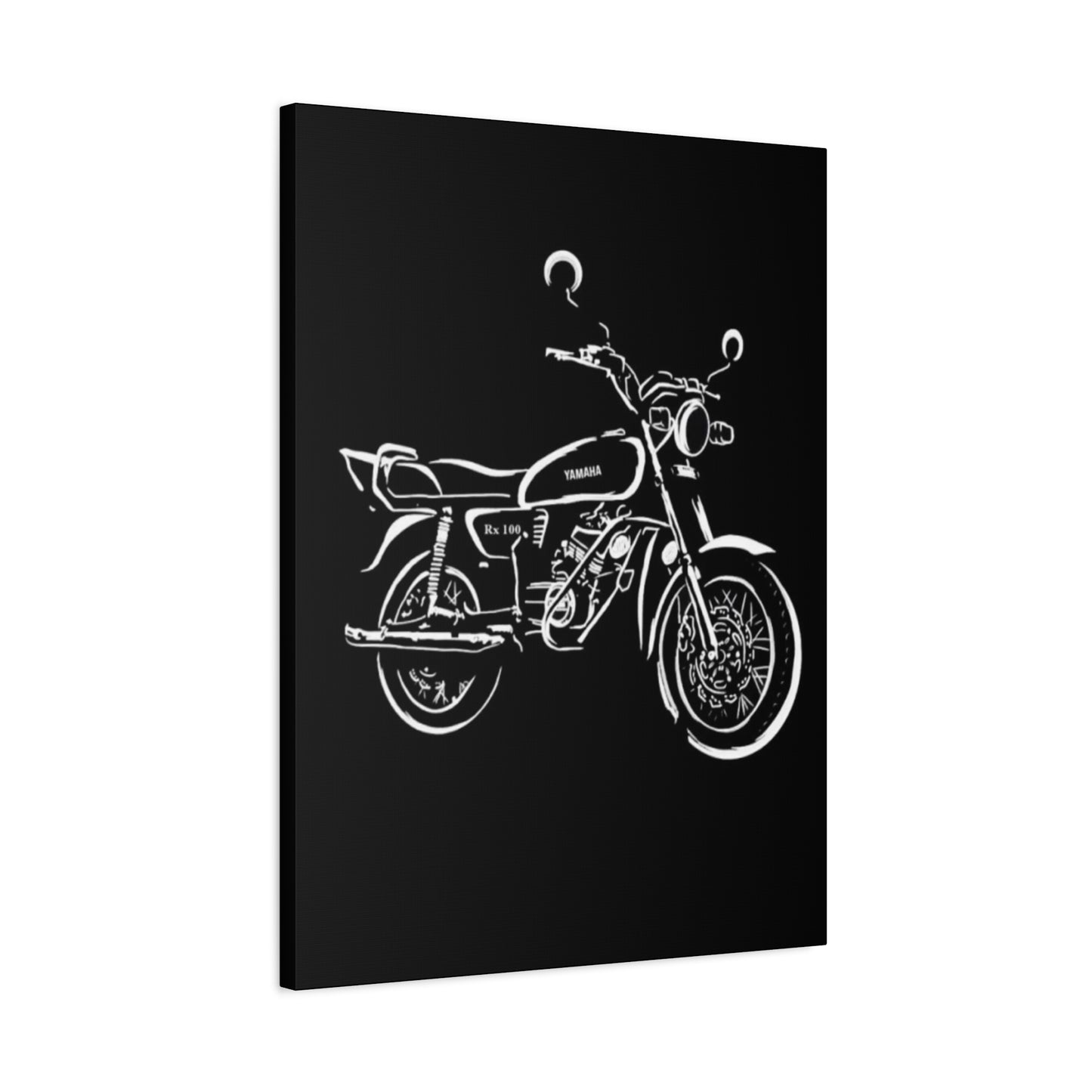
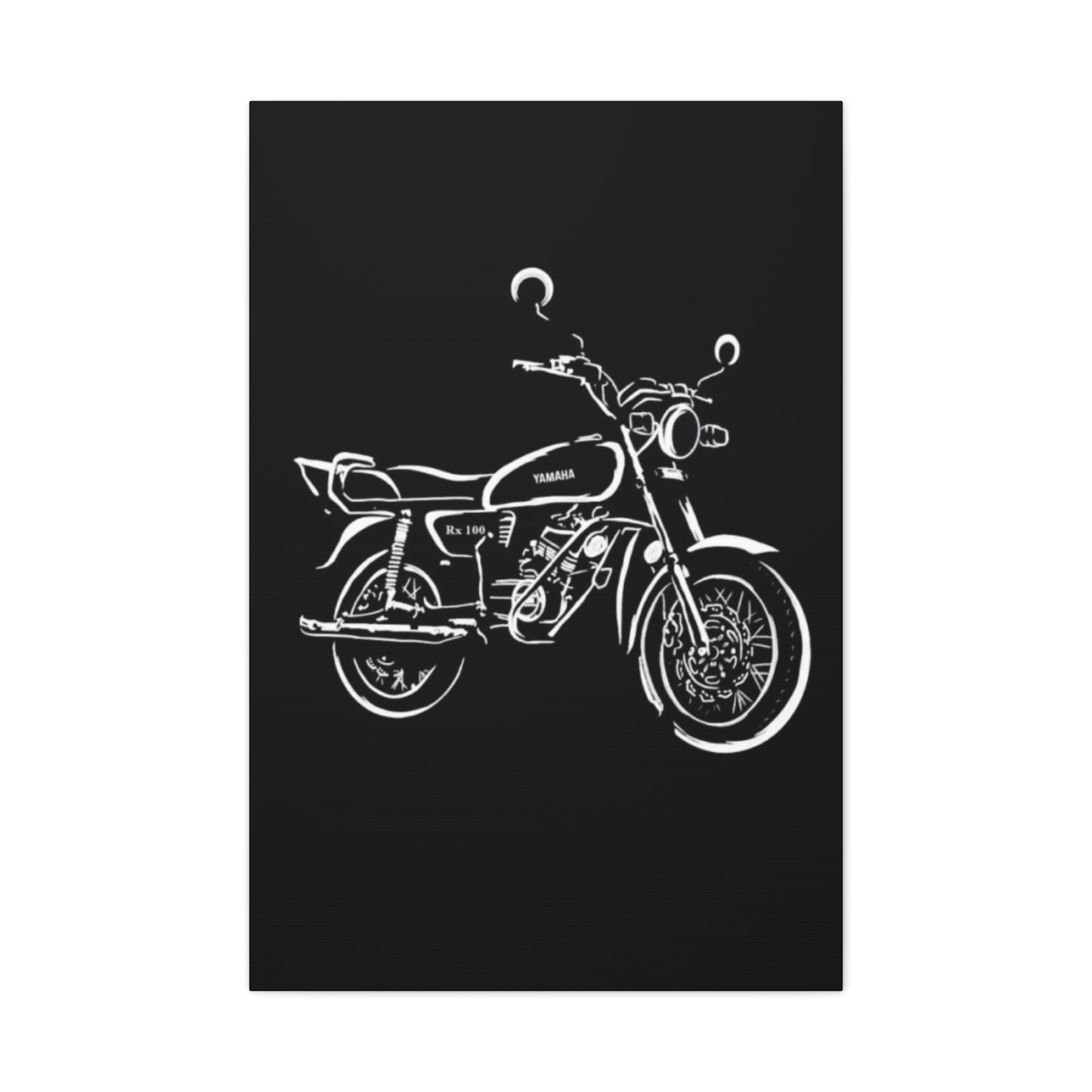
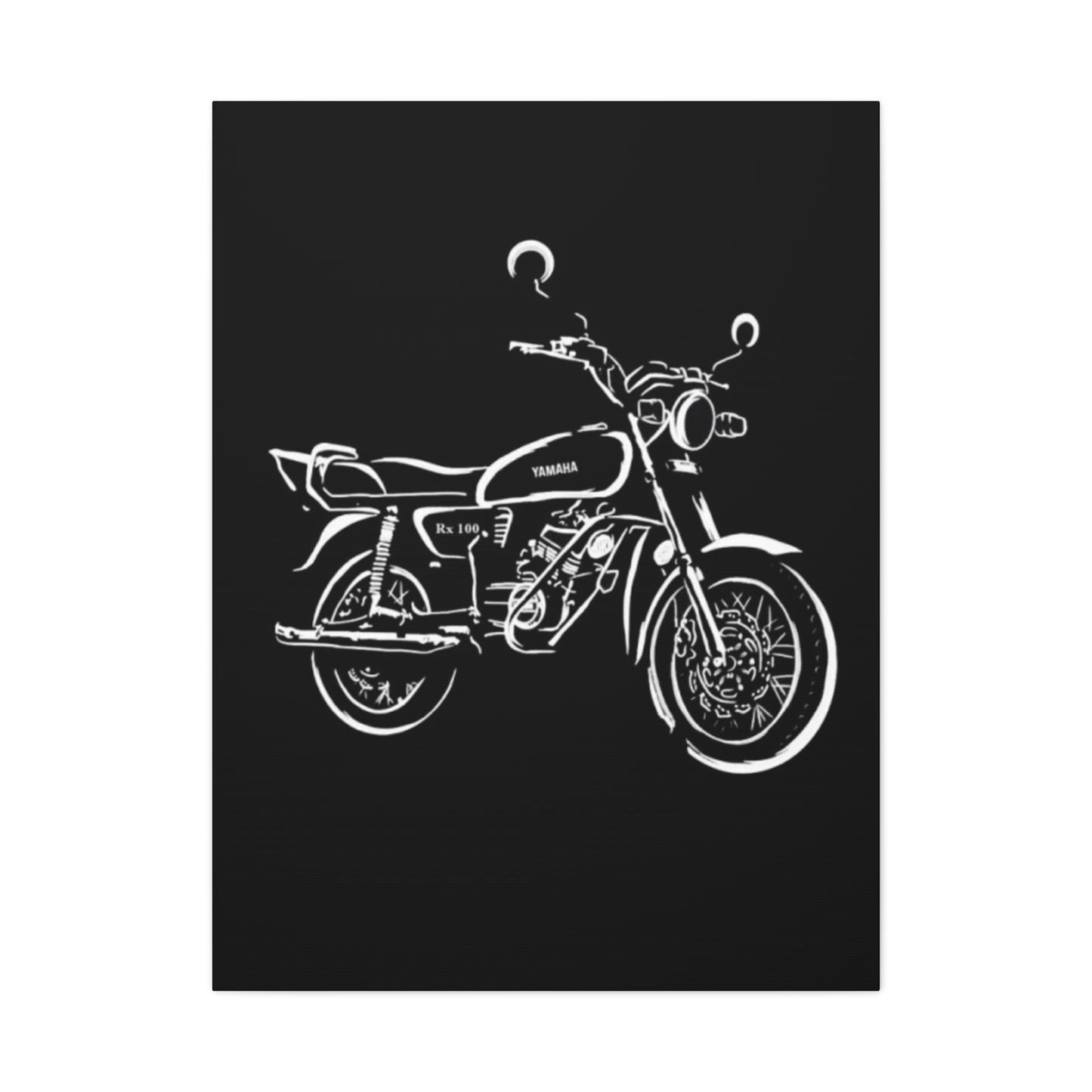
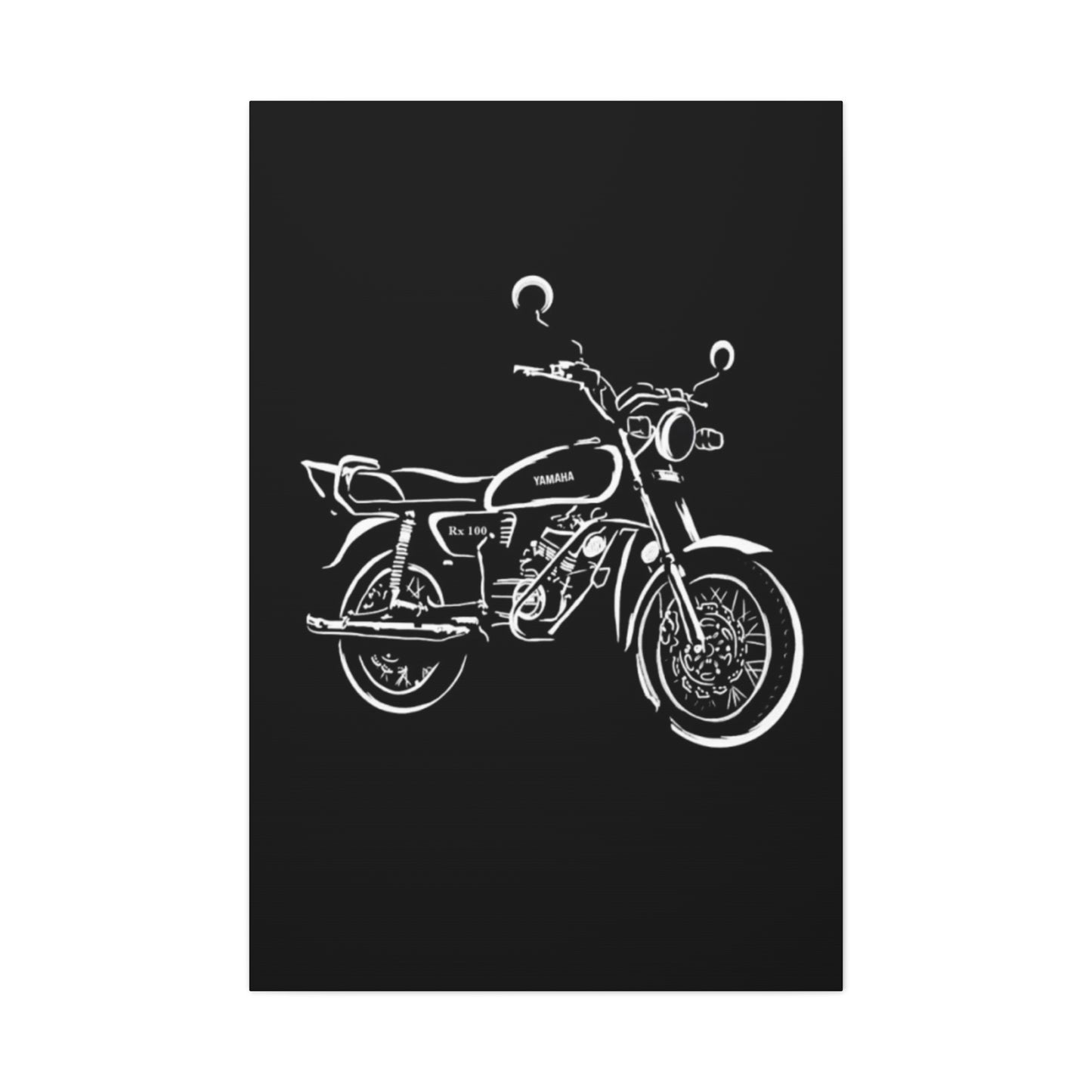
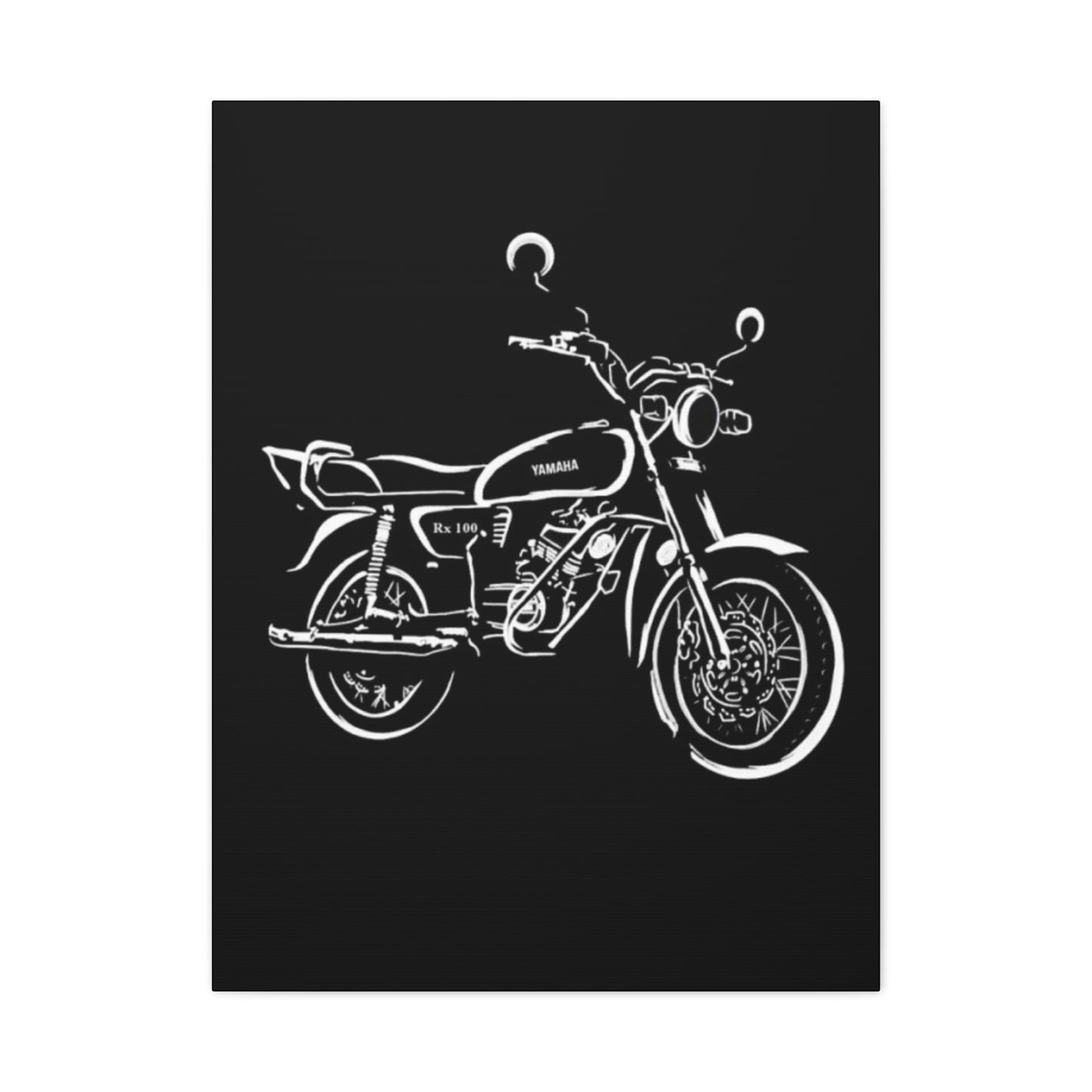

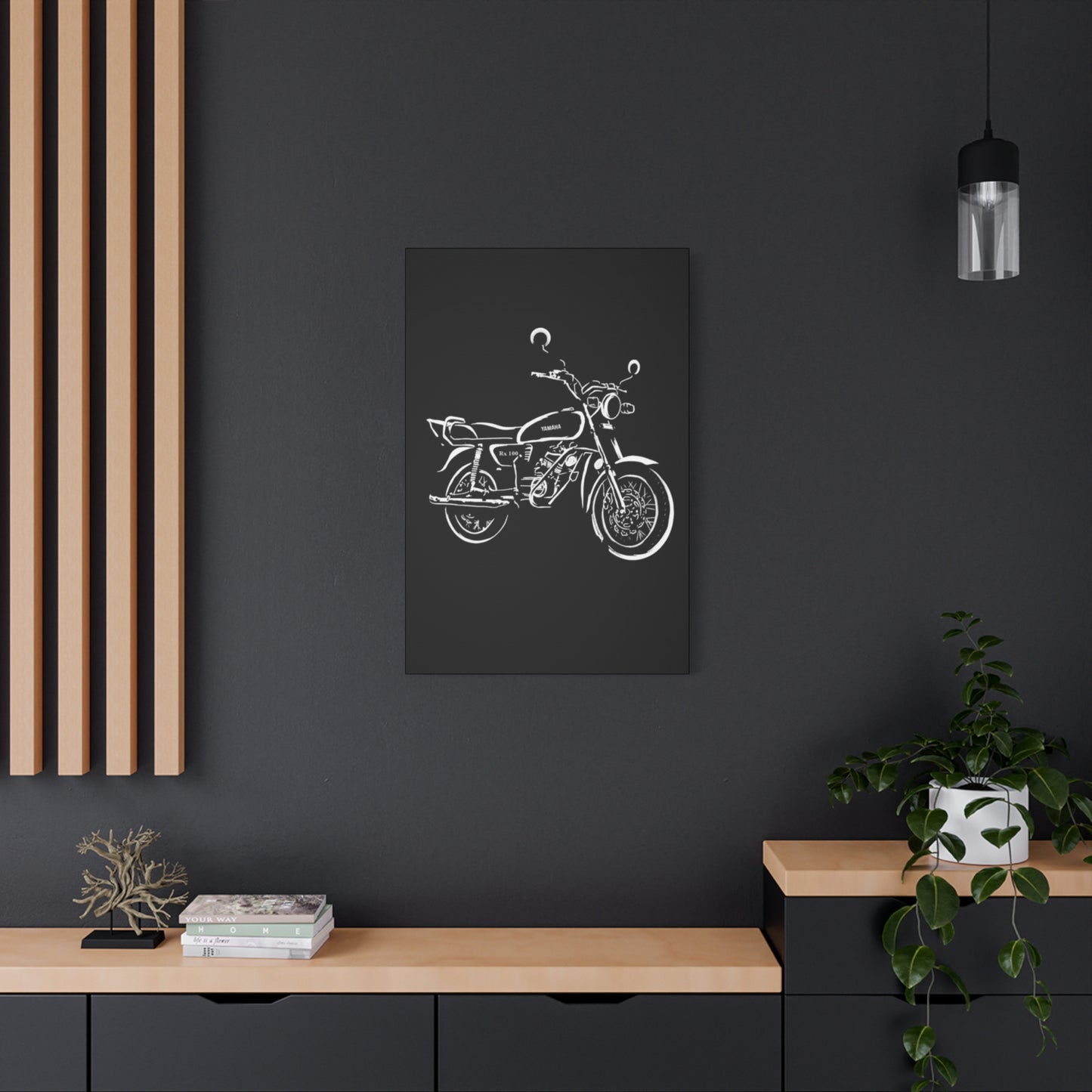
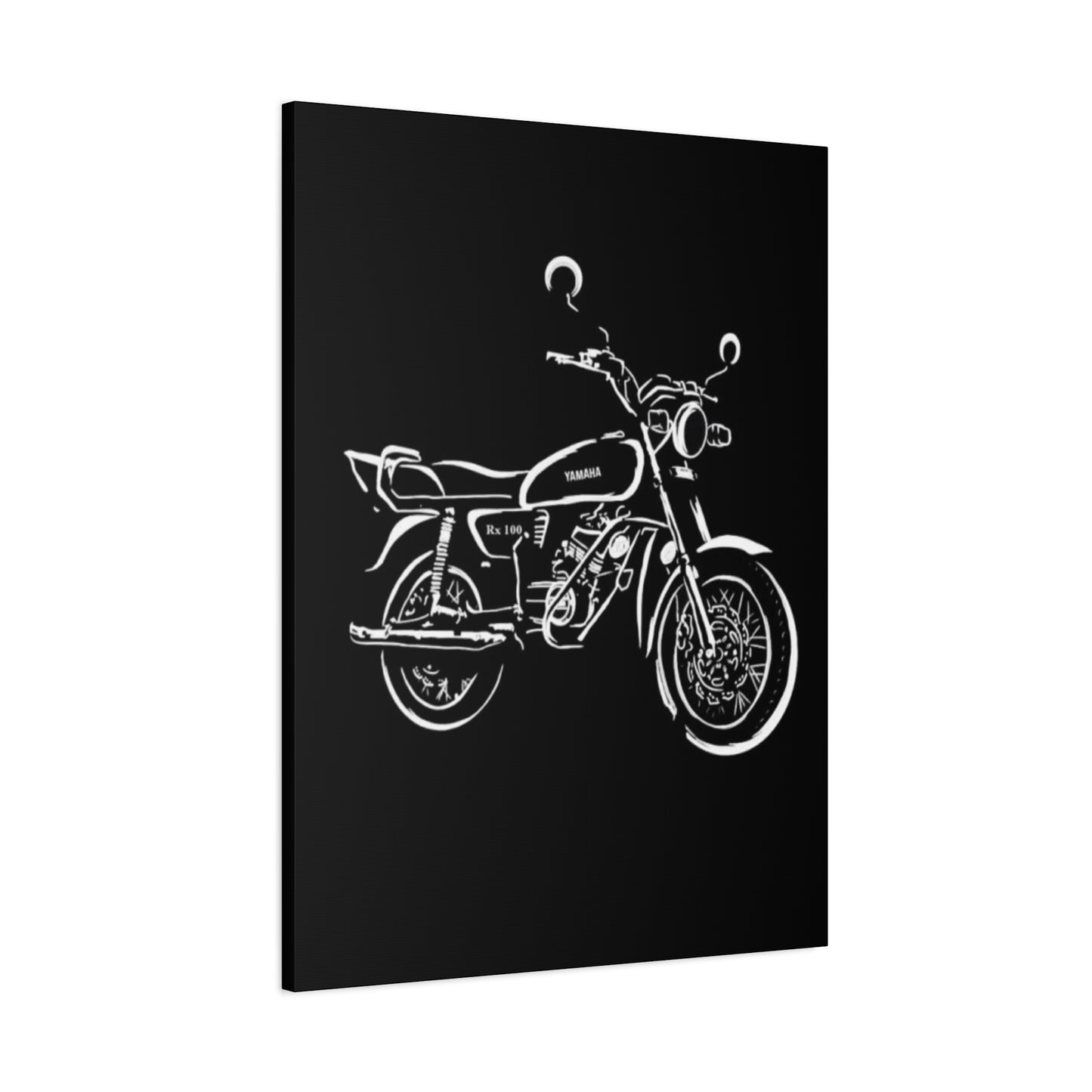
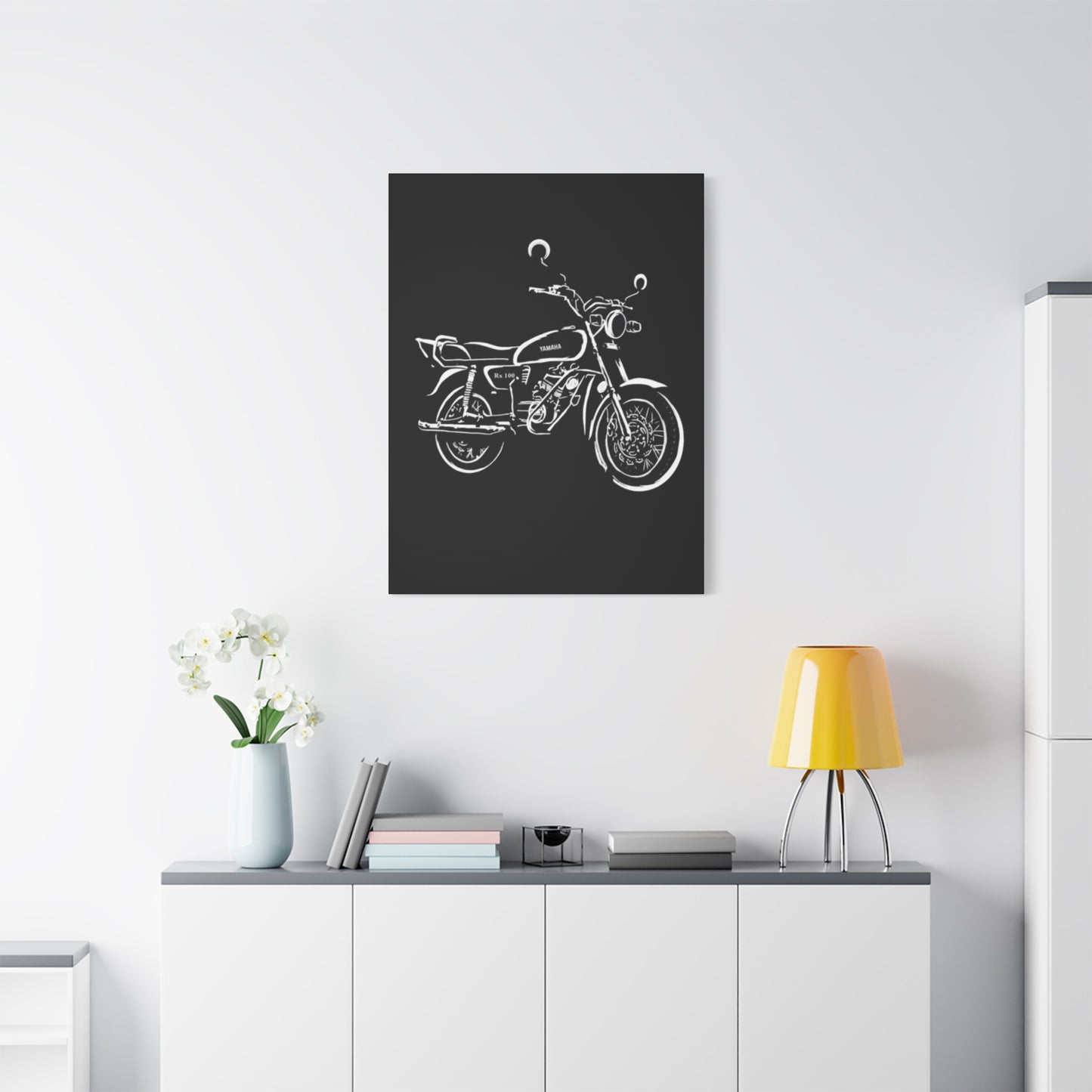
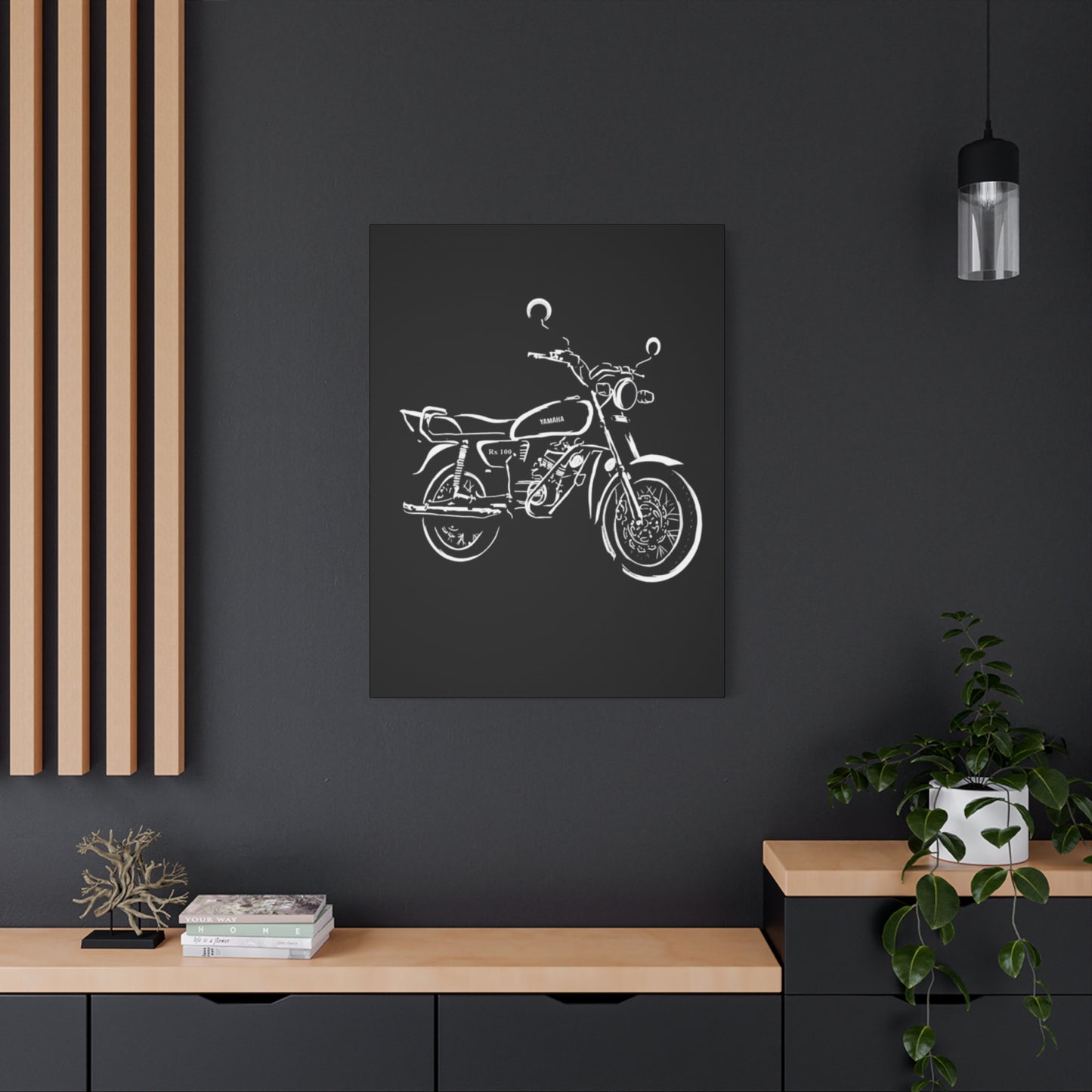
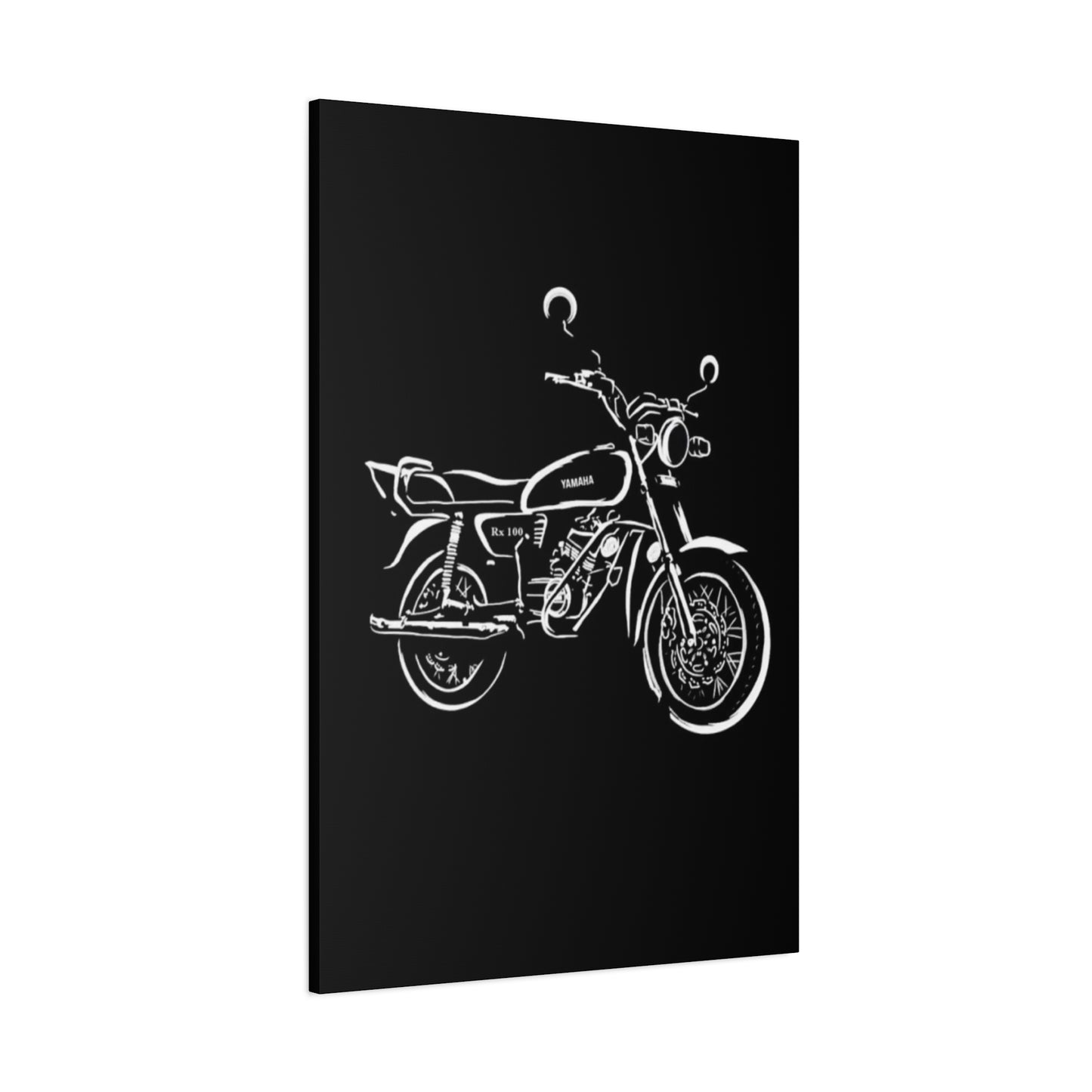
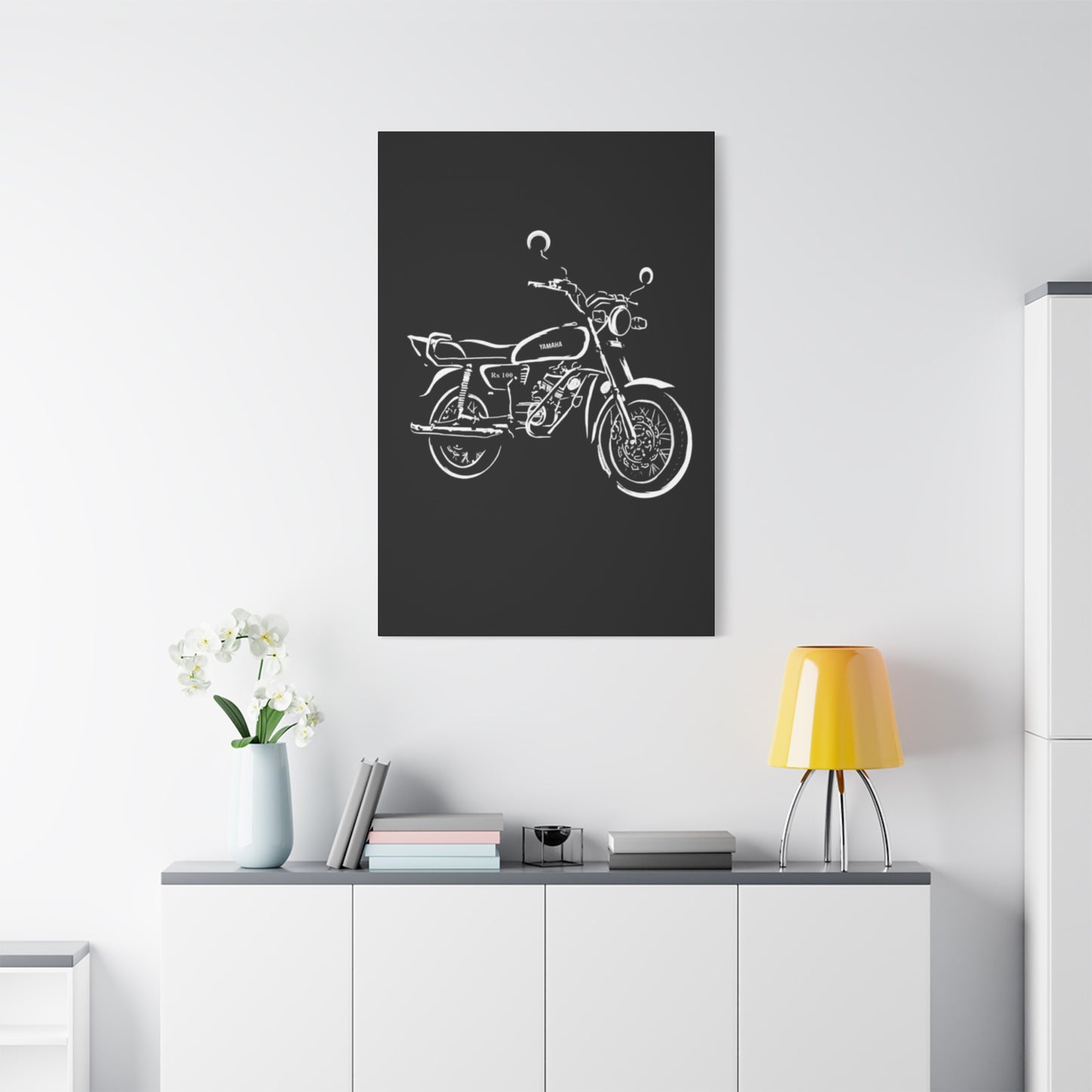
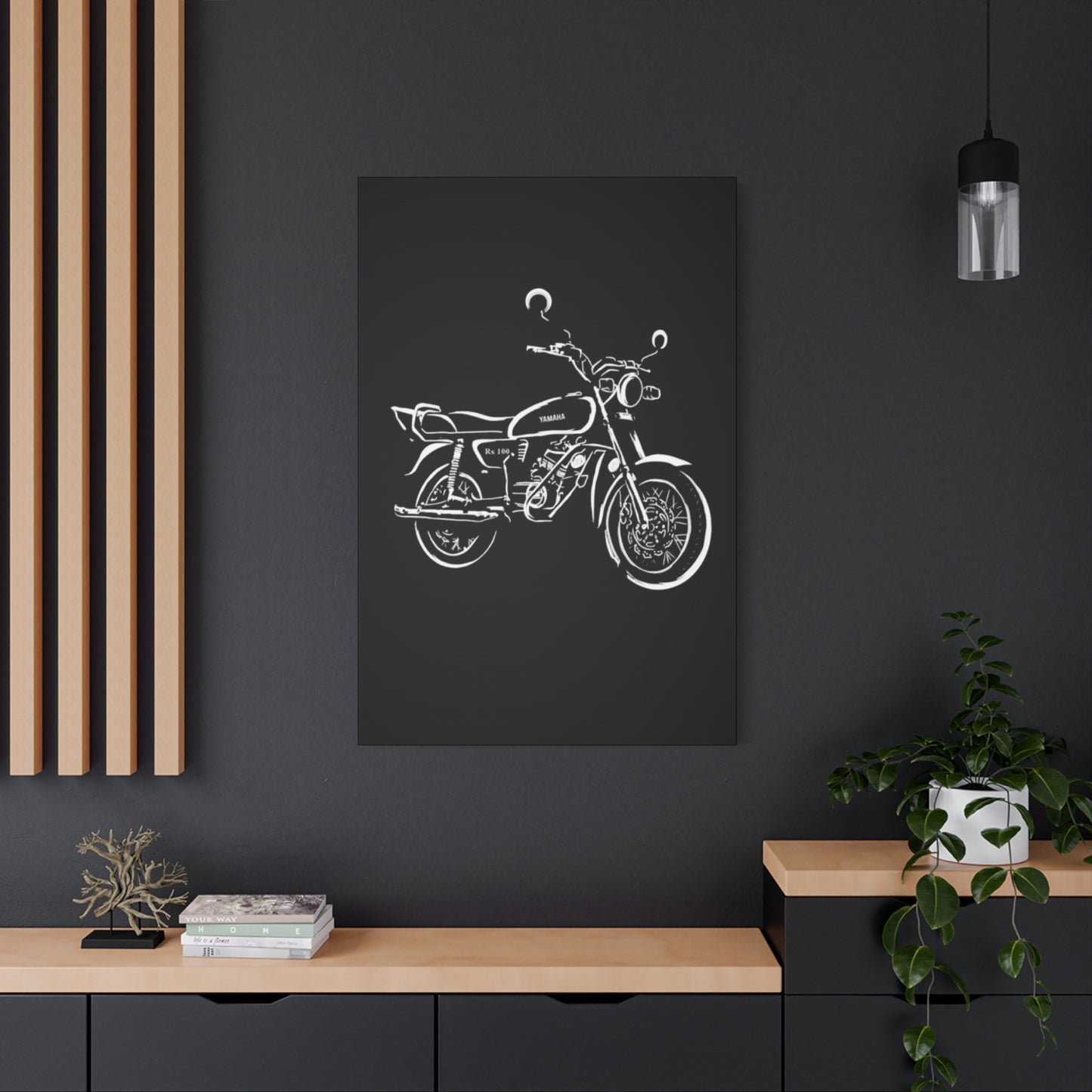
Yamaha RX100: The Legendary Two-Stroke Icon That Defined an Era of Indian Motorcycle Wall art Culture
The Yamaha RX100 remains etched in the hearts of motorcycle enthusiasts across India as one of the most celebrated two-stroke motorcycles ever produced. This remarkable machine transcends its identity as merely a mode of transportation, representing instead a cultural phenomenon that shaped an entire generation's perception of performance motorcycling. The distinctive blue and white livery, the unmistakable two-stroke exhaust note, and the thrilling acceleration created an experience that millions of riders cherish even decades after production ceased.
From its introduction in the Indian market during 1985 to its eventual discontinuation in 1996, the RX100 carved out a special place in motorcycling history that remains unmatched. The motorcycle represented Yamaha's commitment to bringing affordable performance to the masses, democratizing the thrill of high-revving two-stroke engines that were previously reserved for expensive racing machinery or premium motorcycles beyond the reach of average consumers.
The legacy of this iconic machine extends far beyond its production years, continuing to influence modern motorcycle design philosophy and inspiring countless enthusiasts who seek to preserve, restore, and celebrate these mechanical marvels. Poster art featuring this legendary motorcycle has become increasingly popular among collectors, vintage enthusiasts, and interior designers who appreciate the aesthetic appeal of classic machinery combined with nostalgic cultural significance.
The Birth of a Legend in Indian Motorcycling History
The story of how this exceptional motorcycle arrived in India reflects the broader narrative of automotive liberalization and changing consumer aspirations during the mid-1980s. Prior to this period, the Indian motorcycle market remained dominated by relatively conservative designs that prioritized fuel efficiency and low maintenance over outright performance. The arrival of Yamaha's collaboration with Escorts Group in India opened new possibilities for performance-oriented motorcycles that could capture the imagination of younger riders seeking excitement and style.
When Yamaha introduced this model to Indian consumers in 1985, it represented a paradigm shift in what middle-class buyers could expect from a motorcycle in terms of power delivery, build quality, and riding experience. The company adapted the international RX-series platform specifically for Indian conditions, creating a machine that balanced performance with reliability in challenging road conditions and varying fuel quality that characterized the domestic market during that era.
The motorcycle featured a 98cc two-stroke engine that produced approximately 11 horsepower, which might seem modest by contemporary standards but delivered genuinely thrilling performance in the context of its time. The power-to-weight ratio proved exceptional, allowing the lightweight machine to accelerate with an urgency that left much larger displacement four-stroke motorcycles struggling to keep pace. This performance capability, combined with relatively affordable pricing, created an irresistible proposition for performance-minded buyers.
The engineering philosophy behind this motorcycle emphasized simplicity, reliability, and accessibility. Yamaha's engineers created a powerplant that delivered robust performance while remaining mechanically straightforward enough for roadside mechanics and home enthusiasts to maintain and repair. This practical approach ensured that the motorcycle could thrive in the Indian market, where sophisticated service networks were less developed than in more mature automotive markets around the world.
Engineering Excellence Behind the Two-Stroke Powerplant
The heart of this legendary motorcycle was its meticulously engineered two-stroke single-cylinder engine that demonstrated Yamaha's decades of experience in developing high-performance small-displacement powerplants. The company's racing heritage in Grand Prix motorcycle competition directly influenced the design philosophy, translating track-proven technology into a package suitable for everyday road use by ordinary consumers without specialized mechanical knowledge or racing experience.
The engine utilized a piston-port induction system rather than the rotary valve arrangement found in some contemporary two-stroke designs. This configuration contributed to the engine's characteristic power delivery, which built progressively from low revs before delivering a punchy mid-range surge that defined the riding experience. The linear power delivery made the motorcycle accessible to less experienced riders while still providing enough performance to satisfy enthusiasts seeking thrilling acceleration.
Yamaha equipped the engine with a cast-iron cylinder liner that provided excellent wear characteristics and durability even when subjected to the varied fuel quality available across different regions of India during the 1980s and 1990s. The piston design incorporated carefully calculated port timing that balanced low-end responsiveness with top-end power, creating a broad, usable powerband that made the motorcycle enjoyable across diverse riding situations from congested urban traffic to open highway cruising.
The cooling system relied on air-cooling with carefully designed finning on the cylinder barrel that maximized surface area for heat dissipation. The engineering team paid particular attention to ensuring adequate cooling even during sustained low-speed operation in traffic conditions typical of Indian cities, where inadequate cooling could lead to premature engine wear or catastrophic failure. This attention to real-world operating conditions contributed significantly to the motorcycle's reputation for reliability.
The carburetor specification represented another area where Yamaha's engineering expertise shone through clearly. The company equipped the motorcycle with a Mikuni carburetor featuring precise calibration that delivered optimal fuel-air mixture across the engine's operating range. The carburetor design incorporated an accelerator pump that provided crisp throttle response, eliminating the flat spots or hesitation that plagued less sophisticated fuel delivery systems on competing motorcycles during the same period.
The Distinctive Exhaust Note That Became Instantly Recognizable
Perhaps no single characteristic of this legendary motorcycle captured public imagination quite like its distinctive exhaust soundtrack. The high-pitched, crackling exhaust note announced the machine's presence from blocks away, creating an auditory signature that became synonymous with performance motorcycling throughout India. This sound resulted from the fundamental operating principles of two-stroke engines combined with the specific exhaust system design that Yamaha developed for this particular model.
Two-stroke engines fire once per crankshaft revolution, compared to once every two revolutions in four-stroke designs, creating a fundamentally different exhaust pulse pattern that produces the characteristic buzzing quality. The expansion chamber exhaust system utilized carefully calculated dimensions that created pressure waves enhancing engine performance through scavenging effects, essentially using exhaust gas dynamics to improve cylinder filling and increase power output without requiring complex mechanical solutions.
The chrome-plated expansion chamber not only served functional purposes but also became a defining visual element of the motorcycle's appearance. The gleaming exhaust system contrasted beautifully with the dark engine cases and colorful bodywork, creating a purposeful aesthetic that communicated performance even when the motorcycle stood stationary. Many enthusiasts consider the exhaust system design among the most visually appealing elements of the overall package.
The sound quality changed dramatically with engine speed, beginning with a mellow burble at idle, building to an urgent rasp in the mid-range, and culminating in a screaming crescendo as the engine approached its 7,500 rpm redline. This acoustic progression provided riders with intuitive feedback about engine operating conditions, allowing experienced operators to extract maximum performance without constantly monitoring instrumentation. The exhaust note became so iconic that even people with no particular interest in motorcycles could identify this specific model purely by sound.
Chassis Design and Handling Characteristics
While the engine garnered most of the attention and acclaim, the chassis engineering deserved equal recognition for contributing to the motorcycle's legendary status. Yamaha designed the frame, suspension, and running gear to complement the engine's performance capabilities, creating a cohesive package that delivered rewarding handling characteristics alongside straight-line performance. The frame utilized a pressed steel design that provided adequate rigidity while keeping manufacturing costs reasonable and maintaining light overall weight.
The front suspension consisted of conventional telescopic forks that offered limited adjustability but provided decent ride quality and handling precision considering the era and price point. The fork stanchions measured 30mm in diameter, which represented a reasonable compromise between stiffness and compliance for a lightweight motorcycle operating on imperfect road surfaces. The suspension travel specification prioritized road holding over ultimate comfort, reflecting the performance-oriented nature of the overall design philosophy.
At the rear, the motorcycle employed twin shock absorbers with spring preload adjustability, allowing riders to tailor suspension behavior according to load conditions and personal preferences. The swingarm design utilized a simple but effective pressed steel construction that provided adequate strength and rigidity for the performance levels involved. The overall geometry incorporated steering angles and trail measurements that delivered neutral, predictable handling characteristics suitable for riders across a wide range of skill levels.
The wheel and tire specifications reflected the performance intentions clearly. The motorcycle rolled on 18-inch wire-spoked wheels at both ends, with aluminum alloy rims that reduced unsprung weight compared to steel alternatives. The tire dimensions measured 2.75 by 18 inches, which represented standard sizing for performance-oriented motorcycles in this displacement class during the period. The combination of lightweight wheels and appropriate tire sizing contributed to nimble handling and quick steering responses that made the motorcycle feel much smaller and more maneuverable than its actual dimensions suggested.
Braking hardware consisted of drum brakes at both ends, with a 130mm front drum and 110mm rear unit providing adequate stopping power for the motorcycle's performance capabilities and weight. While disc brakes had begun appearing on premium motorcycles during this era, the drum brake specification kept costs manageable while delivering perfectly adequate performance for typical riding situations. The brakes required regular adjustment to maintain optimal performance, but riders who properly maintained their machines enjoyed reliable, progressive stopping power.
Visual Design Language and Color Schemes
The aesthetic design of this iconic motorcycle represented a perfect distillation of 1980s performance motorcycle styling, combining functional elements with decorative graphics that communicated speed and excitement even when the machine sat motionless. The bodywork panels incorporated sharp angles and geometric forms that reflected contemporary design trends while maintaining relatively simple construction methods that kept manufacturing costs under control and replacement parts affordable for owners.
The fuel tank design featured classic teardrop proportions with knee recesses that improved rider ergonomics during spirited riding. The tank capacity measured 10 liters, providing reasonable range between fill-ups considering the two-stroke engine's relatively modest fuel consumption when ridden sensibly. The tank mounting incorporated rubber isolation that minimized vibration transmission to the rider while allowing the tank to move slightly relative to the frame, reducing stress concentrations that could lead to cracking around mounting points.
The side panels incorporated stylized graphics featuring bold typography and aggressive design elements that captured the performance character of the motorcycle. The most iconic color scheme combined deep blue base color with white and red accent graphics, creating a livery that became instantly recognizable and remains closely associated with the model even today. Alternative color schemes appeared throughout the production run, including red and white combinations and later variants featuring more subdued tones, but the classic blue version remains most sought-after by collectors and enthusiasts.
The seat design balanced comfort requirements with sporting aspirations, featuring a relatively flat profile with moderate padding that allowed riders to move fore and aft easily when attacking corners or accelerating hard. The seat height measured approximately 770mm, which accommodated riders of average stature comfortably while remaining accessible to shorter individuals with reasonable inseam measurements. The rear portion of the seat provided adequate space and support for occasional passenger duty, though the performance-oriented nature of the motorcycle meant most owners primarily operated it as a solo machine.
Minor details throughout the design demonstrated Yamaha's attention to quality and finish. Chrome-plated components including mirrors, handlebar controls, and various fasteners added visual interest and premium appearance that elevated the motorcycle above budget alternatives from domestic manufacturers. The quality of plastic components, paint application, and overall assembly precision exceeded expectations for the price point, contributing to the perception of exceptional value that fueled strong sales throughout the production period.
The Riding Experience That Created Lifelong Enthusiasts
Climbing aboard this legendary motorcycle and firing up the engine initiated a sensory experience that created lasting memories for millions of riders across several generations. The process of starting the two-stroke engine required a specific technique that new owners quickly mastered through practice and experience. After turning on the fuel petcock and ensuring the choke lever was properly positioned, riders kicked the starter lever with a smooth, deliberate motion that compressed the mixture and allowed the spark plug to ignite the charge.
When the engine caught and settled into its characteristic idle, the entire motorcycle vibrated with barely contained energy that communicated the performance potential waiting to be unleashed. The clutch lever required moderate effort to operate, with progressive engagement that made smooth launches easily achievable even for relatively inexperienced riders. The gearbox featured a five-speed transmission with a positive, mechanical shift action that provided clear feedback about gear engagement and encouraged deliberate, decisive gear changes.
Acceleration from rest delivered an intoxicating rush as the lightweight motorcycle surged forward with surprising urgency. The engine's power delivery built progressively through the rev range, encouraging riders to explore the upper reaches of the tachometer where the real performance lived. The sensation of speed felt amplified compared to larger, heavier motorcycles due to the immediate throttle response, compact dimensions, and the rider's relatively upright seating position that provided full exposure to the rushing air.
The handling characteristics rewarded active rider involvement, responding crisply to steering inputs and maintaining stable, predictable behavior even when pushed enthusiastically through corners. The relatively narrow profile and light weight made threading through traffic effortless, allowing skilled riders to make rapid progress through congested urban environments that left car drivers frustrated and stationary. The combination of performance, maneuverability, and compact dimensions made the motorcycle an ideal urban commuter that could also deliver genuine entertainment on open roads.
The riding position placed handlebars at a moderate height that allowed comfortable cruising while providing adequate leverage for aggressive riding when desired. The footpeg position offered a slightly forward-set layout that accommodated relaxed riding postures during commuting while still allowing riders to shift their weight effectively when cornering hard. The overall ergonomics suited riders of average build particularly well, though taller individuals sometimes found the ergonomics slightly cramped during extended rides.
Maintenance Requirements and Mechanical Accessibility
One of the most appealing aspects of this legendary motorcycle for Indian consumers involved its relatively straightforward maintenance requirements and mechanical accessibility that allowed owners to perform basic service procedures without requiring specialized tools or extensive technical knowledge. This characteristic proved essential in a market where sophisticated dealer networks remained limited and many owners relied on neighborhood mechanics with basic equipment and varying skill levels for routine maintenance and repairs.
The two-stroke engine design inherently featured fewer moving parts compared to four-stroke alternatives, with no valves, camshafts, or complex timing mechanisms requiring periodic adjustment or replacement. This mechanical simplicity translated directly into reduced maintenance requirements and lower service costs over the ownership lifecycle. However, two-stroke engines did require specific attention to certain areas, particularly the piston rings, bearings, and exhaust system that demanded regular inspection and eventual replacement to maintain optimal performance.
Oil consumption represented an inherent characteristic of two-stroke operation, with lubricating oil mixed directly with fuel rather than maintained in a separate crankcase system. Owners needed to add two-stroke oil to the fuel tank at the specified ratio, typically around 1:25 or 1:30 depending on operating conditions and oil quality. This requirement meant increased fuel costs compared to four-stroke motorcycles but simplified the lubrication system and eliminated the need for periodic oil changes and filter replacements.
The chain and sprocket assembly required regular attention to maintain proper tension and adequate lubrication. The exposed chain design meant that dust, dirt, and moisture could accelerate wear, particularly during monsoon conditions or when operating on unpaved roads. Conscientious owners cleaned and lubricated the chain every few hundred kilometers, while less attentive operators often faced premature chain and sprocket wear that necessitated relatively expensive replacement of the entire drive system.
The carburetor occasionally required cleaning and adjustment to maintain optimal fuel delivery and engine performance. The intake tract's exposure to dusty conditions meant that the air filter needed regular cleaning or replacement to prevent carburetor clogging and maintain proper air flow. Many owners learned to perform basic carburetor maintenance themselves, developing intimate knowledge of their motorcycle's mechanical systems and the satisfaction that comes from maintaining one's own equipment through personal effort and mechanical understanding.
The electrical system featured a simple, robust design with minimal components that could fail. The battery-powered ignition system included a points-based distributor that required periodic gap adjustment and contact surface cleaning. Later production versions incorporated electronic ignition that eliminated points maintenance while improving starting reliability and consistency. The lighting system utilized conventional incandescent bulbs that provided adequate illumination for nighttime riding, though brightness and throw distance fell short of modern LED standards.
The Cultural Impact and Social Significance
Beyond its technical specifications and performance capabilities, this legendary motorcycle achieved cultural significance that transcended its identity as mere transportation. The machine became closely associated with youth culture, rebellion, and the aspiration for freedom and independence that characterized coming-of-age experiences for countless young Indians during the late 1980s and throughout the 1990s. Owning this particular motorcycle signaled taste, discernment, and an appreciation for performance that separated enthusiasts from ordinary commuters.
The distinctive appearance and instantly recognizable exhaust note made the motorcycle impossible to ignore, ensuring that riders attracted attention wherever they went. This visibility appealed to young buyers seeking to make statements about their personalities and values through their choice of transportation. The motorcycle became a prop in the theater of daily life, communicating messages about the rider's character, aspirations, and social position without requiring verbal explanation.
College campuses across India witnessed gatherings of these motorcycles as students congregated to discuss modifications, share riding experiences, and admire each other's machines. These informal communities fostered friendships and connections that often lasted far beyond the college years, creating social networks bound together by shared enthusiasm for a particular motorcycle model. The machine served as a conversation starter and common reference point that bridged differences in background, academic interests, or social circles.
Cinema and popular culture reinforced the motorcycle's appeal by featuring it prominently in films, music videos, and advertising campaigns targeting young audiences. Heroes rode these motorcycles in chase sequences, romantic interests arrived on them for dramatic entrances, and rebellious characters used them to escape authority or convention. These cultural representations amplified the motorcycle's desirability and cemented its status as an icon of youth, freedom, and performance rather than simply another transportation option among many alternatives.
The motorcycle also played a role in courtship rituals and romantic relationships, with young men using their machines to impress potential partners and demonstrate their sophistication, success, and adventurous spirit. Offering rides became a socially acceptable way to spend time together, with the compact dimensions and rear seat accommodating couples comfortably. The machine facilitated countless first dates, marriage proposals, and romantic adventures that participants remembered fondly for decades afterward.
The Collector Market and Restoration Movement
Following the discontinuation of production in 1996, this legendary motorcycle gradually transitioned from everyday transportation to collectible classic, with enthusiasts recognizing its historical significance and cultural importance. The collector market developed gradually as the original owner base aged and younger enthusiasts discovered the appeal of vintage motorcycles that represented earlier eras of motorcycling culture. Today, well-preserved original examples and expertly restored machines command significant premiums over their original purchase prices.
The restoration movement surrounding this motorcycle has created a substantial cottage industry of specialists, parts suppliers, and service providers catering to owners seeking to return their machines to original condition or modify them according to contemporary tastes. Finding original replacement parts has become increasingly challenging as stocks from the production era dwindle and aftermarket manufacturers struggle to justify tooling investments for components with limited demand. This scarcity drives prices upward and increases the value of machines retaining original factory parts.
Restoration projects typically begin with thorough mechanical inspection to assess engine condition, frame integrity, and the overall state of major components. Engines often require rebuilding with new piston rings, bearings, and gaskets to restore original performance levels. The cylinder bore sometimes needs oversizing to accommodate a new piston if wear has exceeded acceptable limits. Experienced rebuilders can return even seriously neglected engines to excellent condition, though costs can escalate quickly when multiple components require replacement or machining.
Cosmetic restoration involves stripping old paint, repairing any rust or damage to metal panels, and applying new paint matching original factory colors and graphics. Authenticity-focused restorers go to great lengths sourcing original decals or having reproductions manufactured that precisely match factory specifications. Seat covers, cables, rubber components, and other consumable items typically need replacement during comprehensive restorations, with varying availability depending on the specific part required.
The finished product of a quality restoration represents a significant investment of time, money, and expertise, often exceeding the current market value of the completed motorcycle. However, enthusiasts undertake these projects for reasons beyond simple financial return, motivated by passion for preserving automotive history, satisfaction derived from mechanical work, and the desire to own and operate a piece of motorcycling heritage that holds personal significance or represents a connection to their youth.
Modifications and Performance Tuning
The mechanical simplicity and robust design of this legendary motorcycle made it an ideal platform for modifications and performance tuning, with enthusiasts exploring numerous approaches to extracting additional power or altering the riding characteristics to suit personal preferences. The modification culture surrounding this model remains vibrant even today, with online forums, social media groups, and local workshops sharing knowledge, techniques, and resources for improving performance beyond factory specifications.
The most common modification involved exhaust system changes, with aftermarket expansion chambers promising improved power output across the rev range. These alternative exhaust systems featured different expansion chamber dimensions and internal configurations calculated to optimize exhaust scavenging effects for increased performance. Some systems emphasized mid-range torque for improved acceleration in typical riding situations, while others focused on peak power at high RPM for maximum top speed. The sound character also changed with different exhaust designs, allowing owners to customize the auditory experience according to their preferences.
Carburetor modifications represented another popular avenue for performance enhancement, with riders installing larger diameter carburetors featuring bigger venturis and main jets that flowed additional fuel to support higher power output. These modifications typically required corresponding exhaust system changes and careful tuning to achieve optimal results, as simply installing a larger carburetor without supporting modifications often degraded rather than improved performance. Experienced tuners understood the interdependencies between intake, fueling, and exhaust systems, approaching modifications systematically for best results.
Port timing modifications involved machine work on the cylinder barrel to alter the size, shape, and timing of the intake and exhaust ports. These modifications changed the engine's power characteristics, typically increasing peak power at high RPM while potentially sacrificing low-speed torque and idle quality. Port work required specialized knowledge and experience, as excessive or improperly executed modifications could destroy engine performance or even cause mechanical failure. Professional tuners with access to flow benches and dynamometers achieved the most successful results.
Reed valve conversions represented a more sophisticated modification that replaced the piston-port induction system with reed valves controlling intake timing. This modification fundamentally altered engine breathing characteristics, potentially improving power output and broadening the powerband. However, reed valve conversions required significant modification work including machining the cylinder and crankcase, fabricating or purchasing specialized components, and extensive tuning to optimize the new induction system. The complexity and cost meant these modifications remained relatively rare compared to simpler exhaust and carburetor changes.
Transmission modifications focused on altering gear ratios to better suit specific riding situations or preferences. Sprocket changes represented the simplest approach, with larger rear sprockets improving acceleration at the expense of top speed, while smaller rear sprockets produced the opposite effect. Some enthusiasts experimented with alternative gearbox internals sourced from related Yamaha models, though compatibility issues and the scarcity of suitable donor parts limited these modifications primarily to dedicated racing applications rather than street use.
The Two-Stroke Engine Debate and Environmental Considerations
The two-stroke engine design that powered this legendary motorcycle and contributed so significantly to its performance characteristics and unique character became increasingly controversial as environmental awareness grew and emission regulations tightened globally during the 1990s and into the 21st century. Two-stroke engines inherently produce higher hydrocarbon emissions compared to four-stroke designs due to incomplete combustion and oil consumption as part of normal operation, leading to their eventual prohibition in many markets.
The two-stroke operating cycle combines intake, compression, combustion, and exhaust into just two piston strokes instead of four, with some overlap between these phases. This overlap means that some fresh intake charge inevitably escapes through the exhaust port before it closes, carrying unburned fuel and oil directly into the exhaust stream. This fundamental characteristic of the two-stroke cycle makes achieving clean emissions extremely challenging without sophisticated direct fuel injection and catalytic converter technology that would dramatically increase manufacturing costs.
The premix lubrication system, where oil is mixed with fuel and burns in the combustion chamber, creates additional emissions as the lubricating oil doesn't burn completely during the combustion process. The blue-tinged smoke visible from two-stroke exhausts consists largely of partially burned lubricating oil, representing both an emission of hydrocarbons into the atmosphere and a waste of lubricant that must be continuously replenished. Four-stroke engines with separate lubrication systems recirculate oil without burning it, eliminating this source of emissions.
Despite these environmental drawbacks, two-stroke engines offer significant advantages that explain their continued use in certain applications even today. The simpler mechanical design reduces manufacturing costs, decreases weight, and minimizes maintenance requirements compared to four-stroke alternatives with their complex valve trains and lubrication systems. The power-to-weight ratio advantages of two-stroke engines make them ideal for applications where minimizing weight is critical, including handheld power equipment, outboard marine engines, and certain motorsport categories.
Modern two-stroke technology has made remarkable progress addressing environmental concerns through innovations like direct fuel injection, electronic control systems, and catalytic converters. These technologies significantly reduce emissions while maintaining the fundamental advantages of the two-stroke cycle. However, the complexity and cost of clean two-stroke technology have prevented its widespread adoption in mass-market motorcycles, with most manufacturers focusing their development resources on four-stroke engines that more easily meet contemporary emission standards.
The discontinuation of this iconic motorcycle in 1996 resulted directly from tightening emission regulations in India that made continued production of the two-stroke design economically unfeasible. Yamaha could have invested in developing a cleaner version incorporating modern two-stroke technology, but the company calculated that developing an entirely new four-stroke motorcycle better served their business interests. This decision saddened enthusiasts but reflected the inevitable reality that technological progress and environmental concerns would eventually supersede nostalgia and tradition.
Competitive Landscape During the Production Era
When this legendary motorcycle debuted in the Indian market during 1985, it entered a competitive landscape dominated primarily by domestic manufacturers producing conservative designs that emphasized fuel economy, low maintenance costs, and affordable pricing over outright performance. The motorcycle immediately stood out from this competition, offering performance and refinement that justified its premium pricing while remaining accessible to middle-class buyers willing to prioritize excitement over pure economy.
The domestic market leaders at the time included well-established manufacturers producing models that had changed little over preceding decades. These motorcycles featured relatively low-tech four-stroke engines producing modest power outputs typically below 8 horsepower. While these machines delivered reliable, economical transportation, they offered little in the way of performance or excitement. The riding experience was utilitarian rather than engaging, with ponderous handling, vague controls, and pedestrian acceleration that frustrated enthusiasts seeking more from their motorcycles.
Several competitors attempted to challenge this model's dominance in the performance segment with varying degrees of success. Some offered larger displacement two-stroke engines producing comparable or even superior power outputs, but these machines typically suffered from inferior build quality, less sophisticated engineering, or significantly higher pricing that limited their market appeal. The sweet spot occupied by this particular motorcycle in terms of performance, quality, refinement, and price proved difficult for competitors to match.
The arrival of four-stroke performance motorcycles from other Japanese manufacturers gradually eroded market share during the early 1990s as buyers gained access to alternatives offering strong performance without the drawbacks associated with two-stroke operation. These four-stroke machines delivered smooth power delivery, eliminated the need for premixing oil with fuel, and provided significantly better fuel economy that reduced operating costs. However, many enthusiasts felt these four-stroke alternatives lacked the characterful engine note and thrilling power delivery that made the two-stroke experience so memorable.
Throughout its production run, this motorcycle maintained strong sales despite increasing competition due to its well-earned reputation for reliability, performance, and value. Word-of-mouth recommendations from satisfied owners proved more valuable than any advertising campaign, with the motorcycle's reputation spreading organically through riding communities and social networks. The combination of strong brand equity and proven product excellence created customer loyalty that sustained sales even as the design aged and newer alternatives appeared.
The Role of Enthusiast Communities and Social Networks
The development of passionate enthusiast communities around this legendary motorcycle has played a crucial role in preserving its legacy and maintaining interest among new generations of riders who never experienced the model during its original production run. These communities exist both in physical spaces where owners gather for rides, meets, and social events, and in digital forums, social media groups, and online platforms where enthusiasts share information, advice, and appreciation for these iconic machines.
Local riding groups organized regular gatherings where owners could display their motorcycles, share modifications and maintenance tips, and embark on group rides through scenic routes or to popular destinations. These events fostered camaraderie among participants and created opportunities for experienced owners to mentor newcomers, passing along accumulated knowledge about maintenance, repairs, and riding techniques. The social aspects of ownership added significantly to the overall experience, transforming motorcycle ownership from a solitary pursuit into a communal activity.
Online forums emerged during the early internet era as valuable resources where owners worldwide could connect regardless of geographic distance. These platforms became repositories of collective knowledge covering every aspect of ownership, from tracking down obscure replacement parts to troubleshooting specific mechanical issues or sharing restoration project documentation. The accumulated wisdom contained in these forums represents an invaluable resource for current owners and historians documenting motorcycling heritage.
Social media platforms have reinvigorated enthusiast communities by making connection and communication even more accessible and immediate. Dedicated groups on various platforms allow owners to share photos of their motorcycles, document restoration projects in real-time, organize impromptu rides or meetings, and maintain ongoing conversations about all aspects of the ownership experience. The visual nature of modern social media platforms particularly suits showcasing these beautiful machines and the passionate community surrounding them.
Younger enthusiasts discovering these motorcycles through social media, vintage motorcycle events, or family connections with older owners have ensured the community continues growing rather than gradually declining as the original owner base ages. These newer enthusiasts bring fresh perspectives, different modification approaches, and enthusiasm for preserving and celebrating motorcycling heritage. Their involvement ensures the community remains dynamic and forward-looking rather than purely nostalgic or retrospective.
Poster Art and Visual Representations
The striking appearance and cultural significance of this legendary motorcycle have made it a popular subject for poster art, wall decorations, and visual representations that appeal to enthusiasts, collectors, and interior designers seeking to incorporate vintage motorcycling themes into residential or commercial spaces. The aesthetic qualities of the motorcycle translate beautifully to two-dimensional representations, with the distinctive blue and white livery, flowing lines, and purposeful mechanical details creating visually compelling images.
Professional photographers and artists have created numerous interpretations ranging from realistic photographic reproductions to stylized illustrations emphasizing particular aspects of the design or character. Some representations focus on capturing the motorcycle in pristine condition against neutral backgrounds that highlight its form and details. Others place the machine in contextual settings that evoke the era of its production or suggest the riding experiences it facilitated, incorporating period-appropriate backgrounds, lighting, or companion elements that tell broader stories.
Vintage-style poster designs that emulate advertising materials from the 1980s and 1990s have become particularly popular among collectors and decorators. These designs incorporate period-appropriate typography, color palettes, and graphic elements that evoke nostalgia while creating visually striking compositions suitable for framing and display. The deliberate retro aesthetic appeals to those seeking to capture the spirit of an earlier era in motorcycling culture and popular design.
Abstract or artistic interpretations take creative liberties with photographic realism to create more stylized representations emphasizing particular emotional qualities or design elements. Some artists reduce the motorcycle to essential geometric forms and bold color blocks that capture its essence rather than detailed accuracy. Others incorporate mixed media approaches combining photography, illustration, and graphic elements for unique compositions that work as contemporary art while celebrating the subject matter.
The market for motorcycle-themed wall art has expanded significantly as vintage and retro design trends have gained mainstream popularity in interior design. What began as a niche interest primarily appealing to hardcore enthusiasts has evolved into a broader phenomenon where even individuals with no particular interest in motorcycles appreciate the aesthetic qualities and cultural significance of iconic designs. This expanded audience has supported professional artists and photographers producing high-quality reproductions suitable for residential and commercial interiors.
Displaying Motorcycle Art in Various Interior Settings
Incorporating motorcycle-themed artwork into interior spaces requires thoughtful consideration of how these pieces interact with overall design schemes, color palettes, and the intended atmosphere of the space. When executed skillfully, motorcycle posters and wall art can serve as compelling focal points that add visual interest, communicate the occupant's interests and values, and create conversation pieces that engage visitors while enhancing the aesthetic quality of the environment.
Residential settings offer numerous opportunities for displaying motorcycle artwork appropriately and effectively. Home offices or dedicated hobby spaces provide natural locations where enthusiast themes feel completely appropriate and help personalize the space according to the occupant's interests. Framing quality prints in styles complementing the overall interior design elevates motorcycle posters from casual decorations to legitimate art pieces worthy of display in sophisticated environments.
Living room and entertainment area applications require more careful consideration to ensure motorcycle artwork complements rather than clashes with the overall design aesthetic. Large-scale pieces can serve as dramatic focal points above seating areas or mantels, while smaller works grouped in gallery wall arrangements create visual interest without overwhelming the space. The key involves treating motorcycle-themed art with the same consideration given to any other artwork, focusing on composition, color relationships, and how the piece contributes to the overall interior environment.
Bedroom applications particularly suit personal interests and passion projects, as these private spaces allow greater freedom to showcase individual enthusiasms without concern for broader audience reactions. Motorcycle posters work beautifully in bedroom settings ranging from teenage spaces to adult primary bedrooms, with appropriate scaling and framing elevating the presentation from adolescent decoration to mature expression of lasting interests and values.
Commercial applications in restaurants, bars, retail spaces, and office environments have increasingly incorporated vintage motorcycle imagery to create distinctive atmospheres that communicate specific values or appeal to target demographics. Establishments seeking to project authentic, heritage-focused, or enthusiast-oriented identities often incorporate motorcycle artwork alongside other period-appropriate design elements. These applications require careful curation to avoid clichéd or overly literal interpretations that feel forced rather than organic.
Man caves, workshops, and dedicated automotive spaces represent the most obvious and natural locations for motorcycle artwork, where enthusiast themes feel completely appropriate and expected. These applications allow for more extensive collections and less formal presentation styles, from simple posters affixed directly to walls to elaborate gallery displays with professional framing and lighting. The casual nature of these spaces permits displaying personal favorites without concern for how pieces might be perceived by visitors less familiar with motorcycling culture.
Photography Techniques for Capturing Motorcycle Subjects
Creating compelling photographic representations of motorcycles suitable for poster production or wall art requires technical skill, artistic vision, and understanding of how to showcase the mechanical subject matter to maximum advantage. Professional motorcycle photographers develop specialized techniques and approaches that reveal the beauty, character, and details of these machines in ways that casual snapshots cannot achieve, transforming ordinary motorcycles into extraordinary visual subjects.
Lighting represents perhaps the most critical technical consideration when photographing motorcycles, as the chrome, painted, and mechanical surfaces respond dramatically to different lighting conditions and directions. Natural light during golden hours shortly after sunrise or before sunset provides warm, directional illumination that creates attractive highlights and shadows revealing form and dimension. Studio lighting with multiple sources allows complete control over how light interacts with the subject, enabling photographers to sculpt the appearance precisely according to their creative vision.
Background selection and management separates professional motorcycle photography from amateur efforts. Simple, uncluttered backgrounds ensure the motorcycle remains the undisputed focal point without competing visual elements drawing attention away from the subject. Some photographers prefer completely neutral backgrounds like seamless paper or fabric that eliminate all context and environmental cues. Others incorporate complementary backgrounds that provide context or suggest narratives without overwhelming or distracting from the primary subject.
Perspective and camera angle dramatically affect how motorcycles appear in photographs and the emotional qualities the resulting images communicate. Low angles shooting upward emphasize power, presence, and imposing qualities while creating dynamic compositions with strong visual impact. Higher angles looking downward showcase overall layout and design while creating more analytical, documentary-style images. Straight-on views from various angles reveal specific details and design elements while maintaining relatively neutral emotional tone.
Detail photography focusing on specific components, textures, or mechanical elements provides opportunities to create abstract compositions celebrating the industrial beauty of motorcycle engineering. Close-up shots of engine cases with cooling fins catching light, the graceful curve of an exhaust pipe, or the intricate details of carburetor or suspension components work beautifully as standalone images or as parts of broader series exploring the motorcycle from multiple perspectives.
Conclusion
The Yamaha RX100 was more than just a motorcycle—it was a cultural icon that transcended its status as a two-stroke machine. With its sleek design, responsive performance, and aggressive exhaust note, the RX100 captured the hearts of motorcyclists across India. This small yet powerful bike didn’t just offer a unique riding experience; it represented freedom, rebellion, and the aspiration to own a piece of motorcycling history.
Released in the 1980s, the RX100 became synonymous with youth, adventure, and the desire for speed. At a time when the Indian motorcycle market was dominated by utilitarian bikes like the Hero Honda CD100 and the Bajaj Chetak, the RX100 stood apart as a symbol of performance. With its 98cc engine, the RX100 boasted incredible acceleration and speed, making it an instant favorite among young riders who sought an adrenaline rush. The distinctive two-stroke sound became a soundtrack to the streets, evoking nostalgia and memories of simpler times.
The RX100’s success went beyond mere performance metrics—it had a unique character that resonated with riders. Unlike other bikes that focused on practicality and economy, the RX100 made a statement. It was a bike for those who craved something more than just commuting. It was about embracing a lifestyle, a culture. Whether it was the way it felt to twist the throttle and watch the road blur or the camaraderie shared among fellow RX100 enthusiasts, the bike brought people together. It became a part of the fabric of Indian youth culture in the late 20th century, much like the classic muscle cars of America or the iconic British motorbikes of the 1960s.
Over the years, as the Indian motorcycle market evolved and newer models came and went, the RX100 retained a loyal fan base. Its reliability, simplicity, and raw, unfiltered performance continued to captivate those who cherished the golden age of two-stroke bikes. The bike also became a canvas for customization, with enthusiasts modifying their RX100s to reflect personal styles—whether through paint jobs, aftermarket exhaust systems, or performance tuning. This customization culture further solidified the RX100’s status as a symbol of self-expression and individuality.
Even though Yamaha discontinued the RX100 in the mid-1990s, the bike’s legacy continues to live on in the hearts of motorcycling enthusiasts. It remains a sought-after classic, with many older RX100s still roaming the streets, a testament to the lasting impact the bike had on Indian motorcycling. For those who owned one, it was more than just a mode of transport; it was a rite of passage, a ticket to freedom, and a symbol of rebellion.
In today’s context, the Yamaha RX100 may be seen as a vintage piece, but its influence on motorcycle culture in India is undeniable. It set the stage for the performance-oriented motorcycles that followed and inspired a generation of riders who appreciated the raw energy that only a two-stroke engine could provide. As motorcycles have evolved in India, the RX100 remains a benchmark—a reminder of a time when motorcycles were more than just machines, but cultural symbols that defined an era.
In conclusion, the Yamaha RX100 was not just a motorcycle; it was a statement of style, power, and rebellion. It played a significant role in shaping India’s motorcycle culture and continues to be remembered with affection by those who experienced its thrilling ride. Even as time moves on and newer technologies emerge, the RX100's place in the annals of motorcycling history is forever secured, continuing to inspire both nostalgia and admiration from enthusiasts and collectors alike.


